Close approaches by Russian satellites to European spacecraft expose a broken orbital traffic system where military shadowing, commercial dual-use hardware, and high-speed debris collide with almost no enforceable rules of the road. When a Russian spacecraft slides within a few hundred meters or tens of kilometers of a European asset, the immediate hazard is rarely a Hollywood-style explosion. The real danger is quieter, cheaper, and far harder to attribute: signal eavesdropping, radio-frequency jamming, command-link spoofing, and forced collision-avoidance burns that burn fuel and blind ground operators.
Orbital mechanics does not forgive polite diplomacy. At low Earth orbit speeds near 7.5 to 8 kilometers per second, two objects separated by a few hundred meters are seconds apart in crossing time and millimeters apart in margin for error. Tracking radars can blur two nearby craft into a single blip. Ground controllers must decide in real time whether a maneuver is routine station-keeping, clumsy flying, or deliberate reconnaissance. For another look, check out: this related article.
Why Close Approaches Are Gray-Zone Leverage
Most coverage treats a close approach as a near-miss between two pieces of metal. That framing misses the strategic point. A maneuvering spacecraft does not need to ram a target to degrade its mission.
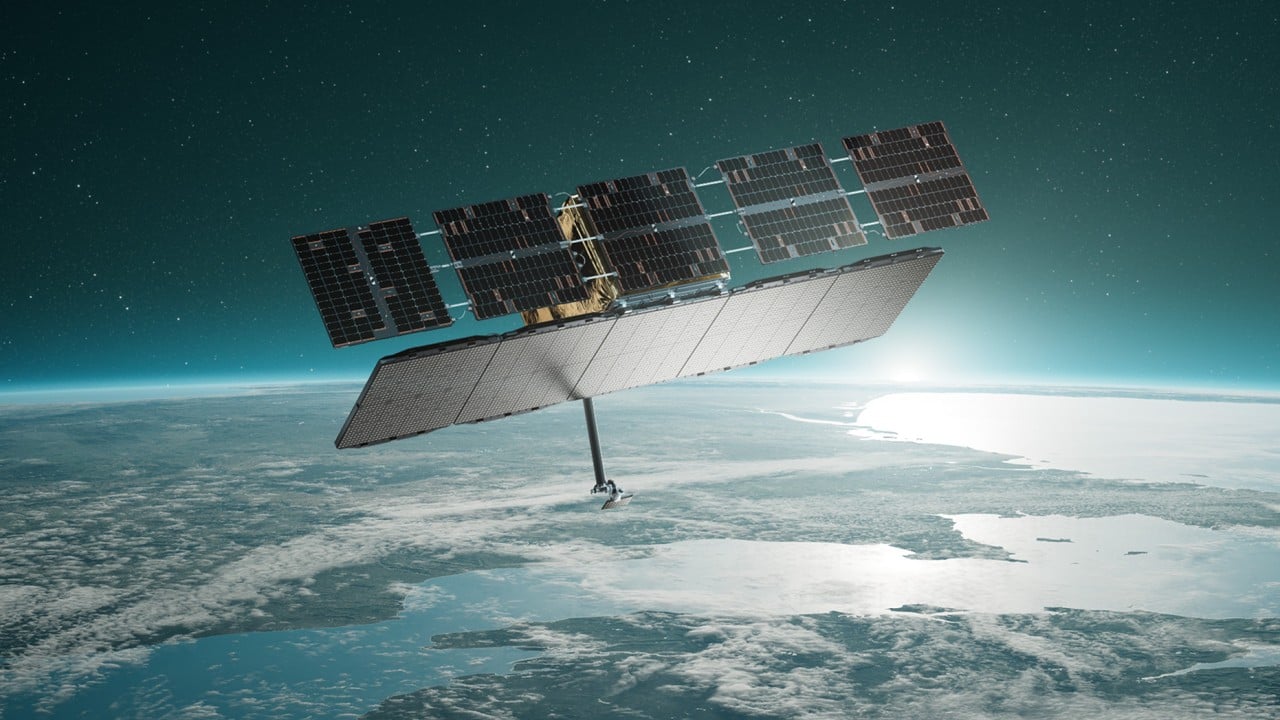
Closer range boosts signals intelligence collection. Antennas can pick up weaker telemetry downlinks, optical or radar sensors can resolve structural details, and proximity allows an adversary to map a satellite's radio footprint. In geostationary orbit, Russian Luch relay and inspection satellites have lingered near commercial and defense craft, drawing warnings from European defense officials over potential interception of command-and-control links. In low Earth orbit, maneuvers such as Kosmos 2612 closing in on an ICEYE synthetic aperture radar satellite tied to European space operations and imagery supply for Ukraine show how commercial imaging nodes sit squarely inside military friction. Further reporting regarding this has been provided by TIME.
A satellite maneuver is cheap compared to a kinetic missile strike, leaves plausible deniability intact, and forces the targeted operator to spend scarce propellant or alter mission schedules.
Consider a hypothetical example to see how operational friction compounds. Suppose a commercial radar operator receives a conjunction warning showing a maneuvering spacecraft closing inside a one-kilometer safety bubble over a contested region. The operator can hold course and risk collision or interference, or fire thrusters to shift altitude. Firing thrusters consumes finite fuel, cuts into mission lifetime, interrupts imaging tasking, and creates new orbital prediction uncertainty for neighboring satellites. Even a false alarm or a non-destructive pass taxes the defender.
The Commercial Dual-Use Trap
European space policy spent years treating commercial satellites as civilian economic engines and public satellites as scientific or sovereign assets. That boundary no longer holds in practice.
Small satellite constellations built for weather monitoring, maritime tracking, or synthetic aperture radar imaging now feed defense intelligence pipelines directly. Radar satellites see through cloud cover and darkness, making them indispensable when weather blocks optical cameras. Once a private company provides actionable imagery to a military coalition, its spacecraft becomes a legitimate intelligence target—or worse, a tempting pressure point—in the eyes of an adversary.
Yet commercial operators rarely have the armor, electronic warfare resilience, or government air-cover equivalents that terrestrial infrastructure enjoys. When the 2022 cyberattack hit Viasat satellite terminals across Europe, spillover effects reached civilian energy infrastructure, including remote wind-turbine monitoring in Germany. Orbit is no longer a detached frontier above the weather; it is an extension of terrestrial critical infrastructure where civilian hardware absorbs military shockwaves.
Space Traffic Management Has No Traffic Cop
Walk through any space policy conference in Brussels, Paris, or Munich and you will hear endless discussion of space traffic management. In plain terms, it means knowing where everything is, predicting where it will go, and enforcing rules so things do not hit each other.
Right now, orbit has plenty of sensors and almost zero enforcement authority. Commercial trackers and government radars spot maneuvers quickly, and conjunction data messages warn operators of potential crossings. What is missing is binding right-of-way protocol, mandatory transparency for active propulsion burns, and clear accountability when a craft enters another operator's keep-out zone without prior coordination.
| Risk Vector | Primary Mechanism | Operational Impact on European Assets | Attribution Challenge |
|---|---|---|---|
| Proximity Espionage | Co-orbital shadowing and sensor stare-downs | Exposure of RF emissions, imaging patterns, and orbit timing | High; often framed as routine orbital maintenance |
| RF & Link Interference | Targeted jamming, spoofing, or telemetry interception | Degraded data links, command risk on older craft, service drops | Moderate to high; signals can originate from ground or orbit |
| Collision & Debris | Uncoordinated passes or fragmentation events | Forced avoidance burns, fuel loss, long-term debris hazard | High unless observed directly by multiple sensors |
| Cyber & Ground Links | Exploiting ground stations or unencrypted commands | Unauthorized tasking, trajectory shifts, or network outages | Complex; requires forensic telemetry and network logs |
The harder truth is that orbital congestion makes accidents look like aggression and aggression look like accidents. A poorly modeled atmospheric drag spike or an unannounced thruster test can produce a scary close approach. Conversely, an adversary can hide a deliberate inspection pass behind "station-keeping" excuses. Without shared standards for announcing maneuvers in advance, operators are forced to guess intent at hypersonic speeds.
Why Legacy Hardware Is the Weakest Link
Many high-value satellites operating over Europe, Africa, and the Middle East were designed in an era when orbital threats meant accidental collision or natural radiation, not deliberate co-orbital proximity. Older command links may lack modern cryptographic hardening. Older bus designs may have tight propellant margins with no spare delta-v for repeated evasive hops.
Replacing an entire fleet overnight is financially impossible. Building a new constellation takes years, launch slots, and hundreds of millions of euros. That leaves a long transition window where brand-new agile satellites share crowded orbital shells with aging hardware that cannot easily dodge or defend itself.
What Europe Actually Needs to Fix
Press releases condemning unsafe maneuvers will not change orbital dynamics. If European governments and commercial operators want real resilience, four practical shifts matter more than grand treaties.
- Mandate link encryption and zero-trust ground segments: Treat satellite telemetry, tracking, and command links as contested networks from day one, and retrofit critical legacy assets where technically feasible.
- Fund autonomous, fuel-efficient maneuver planning: Give operators better automated conjunction assessment and coordinated avoidance protocols so fewer false alarms force wasteful fuel burns.
- Tie commercial intelligence contracts to resilience standards: If a private radar or communications firm supports defense operations, public contracts should help fund hardening, backup links, and rapid replacement capacity.
- Build sovereign multi-sensor tracking: Relying solely on third-party catalogs leaves blind spots during tight maneuvers; independent European optical and radar tracking narrows uncertainty when seconds count.
None of these measures makes orbit risk-free. Physics still rules every altitude band, and no defensive rulebook stops a determined actor from flying close in the dark.
What European space leaders can control is how exposed their networks remain when the next satellite slides into view—and how quickly they stop treating orbital safety as a peacetime side project.