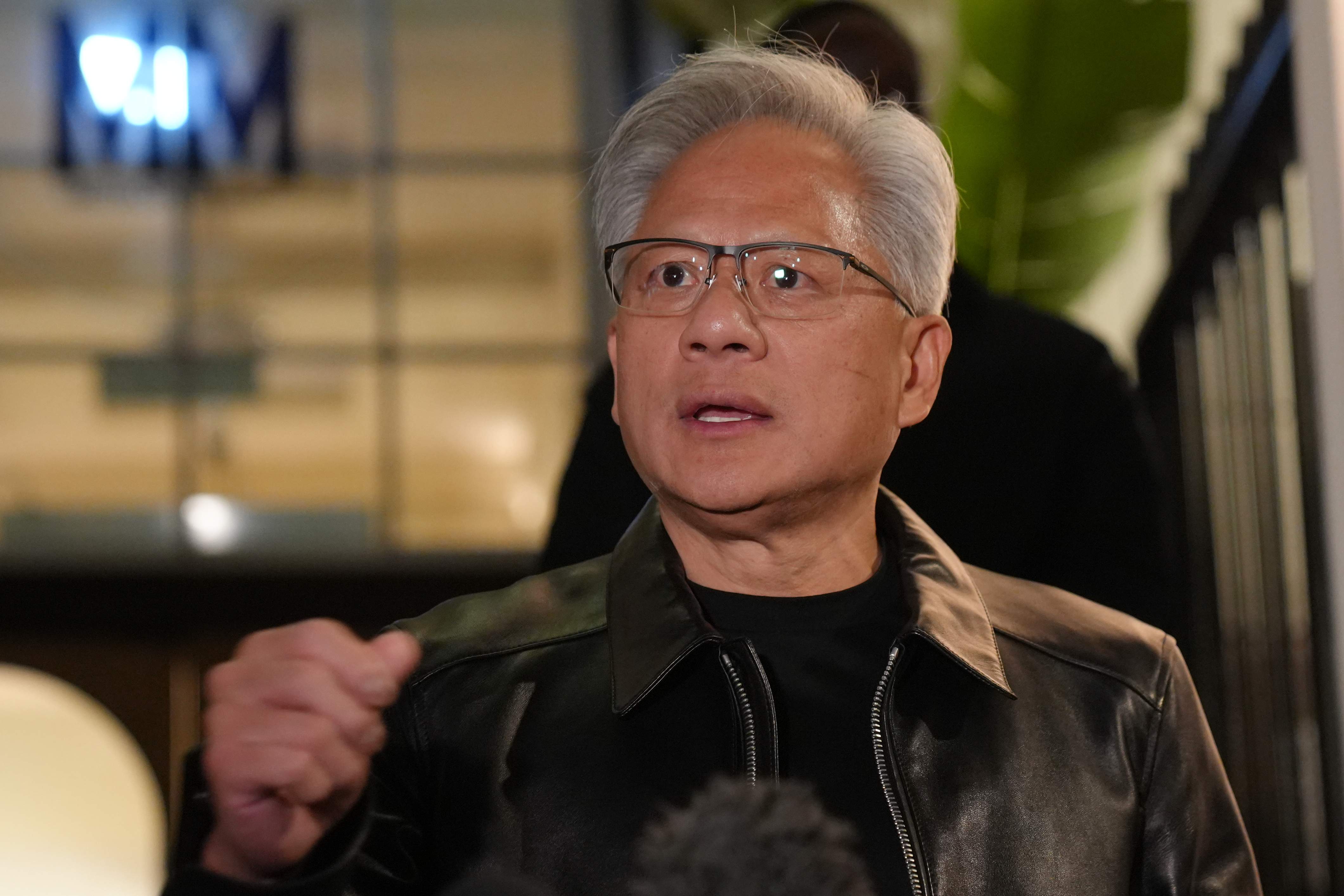
Reports linking Nvidia CEO Jensen Huang to a suspected spy affair scandal stem from a high-stakes convergence of personal proximity, geopolitical rivalry, and aggressive corporate espionage targeting the world’s most valuable semiconductor company. At the center of the controversy are allegations that foreign intelligence operatives attempted to compromise executive circles through social engineering and honey-trap tactics to extract proprietary chip architectures and supply chain secrets. While no criminal charges have been filed against Huang personally, the scrutiny exposes a glaring vulnerability in Silicon Valley—where the personal lives of tech titans have become the primary battleground for state-sponsored intelligence agencies.
The Anatomy of Modern Executive Targeting
Silicon Valley has spent billions hardening its digital perimeters. Firewalls, air-gapped servers, and zero-trust architectures now guard the schematics for next-generation graphics processing units. Yet, the human element remains stubbornly porous.
When traditional cyber intrusion hits a wall, intelligence services revert to the oldest playbook in espionage. They look for access points outside the corporate network. They look at social calendars, private galas, advisory boards, and intimate personal relationships.
In the semiconductor sector, the stakes have outgrown standard corporate competition. Chips are no longer just components for gaming rigs or data centers. They are the foundational infrastructure of military supremacy, economic dominance, and artificial intelligence. Consequently, the chief executive of a dominant chipmaker is treated by foreign intelligence services not merely as a business leader, but as a high-value state asset.
The rumored scandal surrounding Nvidia’s leadership fits a well-documented pattern of non-traditional collection. Rather than deploying trained intelligence officers under diplomatic cover, foreign agencies increasingly rely on intermediaries. These include venture capitalists, academic researchers, public relations consultants, and socialites who move effortlessly through elite tech circles.
How Access Agents Operate in Tech Hubs
To understand how a rumor of a suspected spy affair gains traction, one must examine the mechanics of modern intelligence recruitment. Intelligence agencies rarely approach a target with a briefcase of cash and a demand for blueprints. That only happens in bad movies.
Consider a hypothetical scenario illustrating how an access operation typically unfolds in the Bay Area. A foreign intelligence service identifies a rising executive or a C-suite leader. Rather than approaching the target directly, the agency cultivates an intermediary—perhaps a well-connected entrepreneur or a cultural attaché—who shares genuine professional interests with the target. Over months or years, this intermediary introduces the target to a carefully vetted social circle. Within that circle is a romantic interest or a close confidant whose background has been meticulously scrubbed and backstopped. The relationship develops organically. No secrets are asked for in the first year, or even the second. Instead, the operative simply listens, observes schedules, notes travel patterns, and identifies vulnerabilities—marital strain, ego, financial pressure, or sheer exhaustion—that can be exploited later.
This slow-burn approach makes detection nearly impossible until the damage is done. By the time corporate security or federal counterintelligence notices an anomaly, the operative has often been embedded in the executive’s periphery for years.
Why Nvidia Is the Ultimate Intelligence Target
Nvidia’s meteoric rise from a niche graphics card designer to the undisputed kingmaker of the artificial intelligence boom has painted an unprecedented target on its back. Every major nation-state is currently racing to build sovereign AI capabilities. That race runs entirely through Nvidia’s silicon.
Export controls imposed by the United States government have choked off direct legal access to Nvidia’s most advanced processors, such as the H100, H200, and the Blackwell architecture, for several geopolitical rivals. When legal supply chains close, illicit acquisition networks open.
Espionage targeting Nvidia is not just about stealing a single blueprint. It is about mapping the entire ecosystem. Intelligence agencies want to know:
- Architectural roadmaps detailing performance leaps three to five years before public release.
- Software moats, specifically how the CUDA programming platform locks developers into Nvidia hardware.
- Supply chain bottlenecks at foundries like TSMC, including packaging capacity and wafer allocation.
- Customer allocation lists revealing which governments or tech giants are receiving priority shipments.
If an adversary can obtain early architectural data, they can shave years off their own domestic research and development timelines. If they can learn the exact specifications of upcoming export-compliant chips before they are announced, they can prepare shell companies to buy up inventory the moment it hits the market.
The Blur Between Business Diplomacy and Espionage
Jensen Huang’s leadership style relies heavily on personal diplomacy. Unlike more reclusive tech founders, Huang is famously visible. He travels constantly, meets with heads of state, attends sprawling industry conferences, and maintains deep personal ties across Asia, Europe, and North America.
This visibility is a massive asset for Nvidia’s business. It cements partnerships with sovereign wealth funds, telecom giants, and cloud providers. However, it also creates an immense attack surface for counterintelligence teams.
When a CEO operates as a global statesman, the line between legitimate business networking and intelligence gathering blurs. Foreign governments routinely use state-backed investment funds and joint ventures as vehicles for technology transfer. An executive dining with a prospective partner in Taipei, London, or Dubai may be speaking to a genuine investor, a state-directed intelligence asset, or someone who is simultaneously both.
Separating Rumor From Verified Counterintelligence Reality
Whenever whispers of a "spy affair" hit the financial press, markets twitch, and speculation runs wild. Yet, seasoned industry observers know that information warfare is a two-way street. Rumors of personal scandals involving top executives do not always originate from actual caught spies. Sometimes, the rumor itself is the weapon.
In the brutal arena of semiconductor competition, reputational sabotage is a proven tactic. Planting a story—or exaggerating a tangential security investigation into a salacious personal scandal—can achieve several strategic goals without a single line of code being stolen:
- Distraction at the top: Forced into crisis management, an executive loses focus on product execution and strategic deals.
- Boardroom friction: Even unsubstantiated allegations force corporate boards to launch internal audits, creating distrust between directors and management.
- Regulatory scrutiny: Scandal invites deeper government oversight, potentially slowing down mergers, acquisitions, or export license approvals.
- Talent hesitation: Top engineers and executives may think twice before joining a company perceived to be under a counterintelligence cloud.
Counterintelligence agencies, including the FBI, regularly brief major tech CEOs on foreign targeting threats. These defensive briefings are standard procedure for companies holding critical national security technologies. However, to an outsider or a sensationalist media outlet, news that federal agents have briefed a CEO about a suspected foreign operative in their orbit can easily be twisted into a headline claiming the CEO is embroiled in a personal spy scandal.
The Counterintelligence Dilemma for Public Companies
Publicly traded companies face a legal and ethical tightrope when dealing with suspected espionage. Under securities laws, companies must disclose material risks to investors. Yet, counterintelligence investigations are classified by nature.
If the FBI informs a board of directors that an individual close to the CEO is a suspected foreign intelligence officer, the board cannot simply issue a press release. Doing so would blow a federal investigation, alert the foreign intelligence service, and potentially endanger human sources. Instead, the company must quietly sever the relationship, audit potential data exposure, and tighten internal access controls—all while pretending to the public that nothing is wrong.
This enforced silence breeds speculation. When sudden personnel departures occur, or when an executive abruptly changes travel patterns and security protocols, observers fill the vacuum with theories.
The Structural Vulnerability of Founder-Led Tech Giants
The Nvidia controversy highlights a deeper governance issue across Silicon Valley. Many of the world’s most powerful technology companies are still run by their founders or long-tenured CEOs who wield near-absolute authority.
In traditional defense contractors like Lockheed Martin or Northrop Grumman, security protocols are rigid and institutionalized. Executives operate within strict compartmentalized environments. Their travel is vetted, their communications are monitored, and their personal associations undergo continuous security clearance reviews.
Tech giants operate differently. Despite holding technologies far more consequential to global power than a new fighter jet, companies like Nvidia retain the cultural DNA of fast-moving startups. The CEO is the ultimate decision-maker, the chief salesperson, and the primary visionary. Few people inside the organization have the standing to tell a billionaire founder who they can meet, where they can travel, or which personal relationships pose a security risk.
Corporate security teams at major tech firms often complain privately about this dynamic. They can lock down the laptops of ten thousand junior engineers, enforce biometric authentication at every data center door, and monitor every slack message. Yet, if the top executive carries an unsecured personal phone into a private dinner overseas, or shares candid strategic thoughts with an unvetted confidant, every technical safeguard becomes irrelevant.
The Role of Industrial Policy and Export Controls
The timing of the scrutiny surrounding Nvidia is not coincidental. Over the past several years, Washington has transformed export controls from a sleepy bureaucratic tool into a primary instrument of foreign policy.
By restricting the sale of advanced AI chips to geopolitical rivals, the U.S. government effectively turned Nvidia’s sales ledger into a matter of national security. Every time an export loophole is closed, the incentive for espionage spikes. When you make a product illegal to buy, you guarantee that intelligence agencies will try to steal it.
This dynamic has placed Nvidia in an impossible position. The company’s fiduciary duty to shareholders demands maximum revenue growth and global market share. Meanwhile, U.S. national security apparatus demands strict containment of its core technology. Caught between commercial ambition and geopolitical containment, Nvidia’s leadership is constantly walking a razor’s edge. Any misstep—whether a compliance failure by a third-party distributor or an unguarded personal association—is immediately viewed through the lens of national security.
What Corporate Boards Are Changing Behind Closed Doors
Regardless of how the specific allegations surrounding Nvidia’s leadership ultimately resolve, the episode has already sent shockwaves through corporate boardrooms across the semiconductor and AI sectors. Security postures are shifting rapidly from passive defense to active counterintelligence.
Audit committees at major hardware firms are now demanding comprehensive executive threat assessments. These go far beyond traditional physical bodyguards. They involve continuous digital footprint monitoring, deep background vetting of personal acquaintances, and strict compartmentalization of sensitive R&D data—even from senior executives who do not strictly need to know technical specifications to do their jobs.
Some firms are implementing "clean device" policies for all international travel, requiring executives to leave personal phones and laptops behind and use hardened, single-use hardware that is wiped upon return. Others are quietly hiring former senior counterintelligence officials from the CIA, FBI, and MI6 to run internal insider-threat programs.
The era of the carefree tech mogul mingling openly in global capitals without a security shadow is over. Artificial intelligence has turned silicon into the new uranium, and the executives who control its production are now permanent targets on the geopolitical chessboard. Whether the latest scandal proves to be a genuine intelligence breach, a thwarted recruitment operation, or a calculated smear campaign, the underlying reality remains unchanged: the war for AI supremacy is no longer being fought just in research labs and server farms, but in the private lives of the people at the very top.