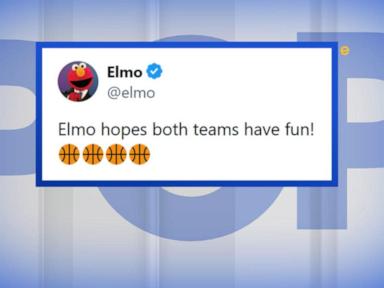
The New York Knicks are currently three wins away from ending a brutal 53-year championship drought, yet the loudest conversation in basketball this week centers on a red puppet. When the official social media account for Elmo tweeted a completely neutral statement ahead of Game One—"Elmo hopes both teams have fun!"—it triggered an immediate, hyper-aggressive backlash from a fanbase pushed to the brink by decades of sporting misery.
What looked like a minor piece of internet absurdity is actually a textbook case study in the modern sports-entertainment industrial complex. The incident exposes the volatile intersection of algorithmic fan culture, corporate brand strategy, and the raw pressure cooker of New York sports fandom. When a corporate mascot attempts to play the middle ground in a high-stakes market, the audience no longer accepts the compromise.
The Myth of Neutrality in a Tribal Market
Sports fandom has transformed into an intense exercise in online tribalism. When Sesame Street debuted in 1969, the boundary between children's television and professional sports was cleanly defined. Today, those boundaries are completely gone, managed by corporate marketing teams seeking cross-platform visibility.
Because Sesame Street is canonically located in Manhattan, Knicks fans immediately claimed the Muppet as a local asset. The reaction to his neutral statement was swift and merciless. Fan accounts demanded the character pick a side, with some jokes veering into hostile territory, telling him not to forget his roots and wishing him priced out of the city and forced to move to New Jersey.
This aggressive pushback forced a rapid corporate retreat. By Thursday, the account posted a pun-filled backtrack, screaming "KNICKS that last message!" and claiming he didn't mean to "SPUR" anyone on. It was a calculated attempt to patch up a marketing misstep, but it highlighted a glaring reality for modern brand managers. In a hyper-partisan digital environment, mandatory neutrality is dead.
Why Corporate Mascots Fail the Fandom Test
Corporate social media managers treat massive sporting events like a giant tent pole to hang their content on. They want the impressions, the engagement, and the algorithmic lift that comes with trending hashtags like the NBA Finals. However, they frequently fail to understand the emotional stakes of the people living inside those trends.
- The Fifty-Year Weight: Knicks fans are carrying over five decades of institutional trauma, near-misses, and terrible front-office management. They do not want an corporate lecture on sportsmanship when they are fighting for their first title since the Nixon administration.
- The Authenticity Gap: Audiences can spot a hollow engagement play instantly. A multi-billion-dollar media property pretending to be a naive toddler wishing everyone "has fun" feels deeply cynical to a fan who spent thousands of dollars on a single ticket at Madison Square Garden.
- The New York Factor: New York sports culture thrives on an us-against-the-world mentality. If an entity claims New York identity, even a fictional puppet on public television, absolute loyalty is expected.
The strategy backfired because it attempted to extract value from a community without paying the emotional tax required to belong to it.
The True Cost of Algorithmic Engagement
Every major brand operates under the belief that any metric increase is a positive sign. The initial neutral tweet garnered millions of likes and views. By pure corporate metrics, the campaign was a massive success.
Yet, the actual sentiment analysis reveals a different story. The backlash became so intense that it dominated the sports talk radio cycle, distracting from Jalen Brunson’s brilliant 30-point performance that secured a 105-95 comeback win over the San Antonio Spurs in Game One. The corporate entity achieved its coveted reach, but it did so by poisoning the well of organic fan celebration.
This dynamic is creating an environment where brand safety teams are constantly at war with their own social media departments. The social teams want to drop into the cultural zeitgeist to remain relevant. Meanwhile, the brand safety teams are left cleaning up the mess when a fanbase treats a gentle tweet like an act of betrayal.
The Frictionless Corporate Future vs Raw Emotion
The entire incident serves as a stark warning for the future of entertainment marketing. As leagues like the NBA look to expand their global audience, they rely heavily on crossover appeal, family-friendly branding, and safe corporate partners. They want a clean, sanitized product that can be packaged for international distribution without friction.
Real sports fandom is nothing but friction. It is loud, irrational, territorial, and frequently impolite. When a highly manufactured corporate voice steps into that arena, it exposes the massive gap between the executives who run these entertainment properties and the people who actually buy the jerseys.
The lesson here is simple. If a brand wants to play in the arena of high-stakes sports culture, it must accept the rules of engagement. You cannot demand attention from a city during its most stressful sporting moment in half a century and expect to escape without choosing a side. The streets of New York aren't interested in sportsmanship; they are interested in winning.