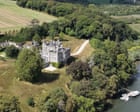
Meta chief executive Mark Zuckerberg and his wife, Priscilla Chan, have purchased the historic Strancally Castle estate in County Waterford, Ireland. The off-market transaction, valued by local property analysts between €20 million and €30 million, transfers ownership of a 440-acre riverside property from private investment figures Michael and Giancarla Alen-Buckley to Silicon Valley royalty. This move places a prominent American tech billionaire directly onto the lush banks of the River Blackwater, adding to a quiet, accelerating land rush by global ultra-high-net-worth individuals snapping up historic Irish estates.
Why Ireland? Why now? The official narrative from Meta representatives points to convenience. Meta maintains its international headquarters in Dublin, alongside operations in Cork and a data center facility near the capital. Having a private compound within striking distance of European regulatory bodies and corporate hubs offers undeniable utility. Yet, reducing this acquisition to a simple corporate pied-à-terre misses the deeper currents shifting through global elite asset accumulation. Meanwhile, you can find similar events here: Why The Canada US Tariff Stand-off Is Far From Over.
The Fortress Strategy Of Modern Billionaires
Castles are no longer just romantic architectural anomalies. They are ultimate defensive assets. Strancally Castle, a Gothic Revival structure built in 1827, provides total seclusion behind natural topographical barriers and sprawling acreage.
Modern tech moguls face unprecedented public scrutiny, security concerns, and privacy erosion. Buying a standard luxury home in a metropolitan suburb invites constant exposure. Acquiring a 440-acre estate tucked away in rural Waterford creates an impenetrable buffer zone. You cannot easily photograph a residence hidden deep within a mature wooded river valley flanked by private security protocols. To explore the bigger picture, we recommend the recent analysis by Investopedia.
Other titans have noticed the appeal. Vacuum billionaire James Dyson recently acquired nearby Ballynatray House. Other historic holdings in the region belong to prominent international financiers and industrialists. County Waterford is quietly transforming into an exclusive redoubt for the global hyper-elite. They do not live there year-round. They curate a portfolio of hard physical assets that offer absolute privacy when they choose to drop out of sight.
Navigating The Irish Regulatory And Tax Matrix
Ireland presents a fascinating paradox for foreign capital. While the nation functions as the corporate gateway to the European Union through notoriously favorable corporate tax structures, its property market operates under strict local scrutiny, particularly regarding agricultural land and historic preservation.
The previous owners spent two decades meticulously restoring Strancally Castle. Historic Irish properties come with profound bureaucratic obligations. Local planning authorities fiercely protect architectural integrity. You cannot simply bulldoze a Gothic Revival masterwork to install modern glass wings.
By committing to "continue caring for this historic home," Zuckerberg's camp speaks the exact language required to appease local heritage boards. Wealthy buyers quickly learn that community goodwill in rural Ireland cannot be bought with a check alone. It requires visible stewardship. When an estate possesses centuries of local lore, incoming owners must position themselves as custodians rather than conquerors.
The Reality Behind Off-Market Transactions
Deals of this magnitude rarely touch public listing sites. The Strancally transaction was finalized privately, shielded from public bidding wars and speculative press cycles until the ink was dry.
Off-market sales protect both seller and buyer. For sellers like the Alen-Buckleys, who spent twenty-five years shaping the estate, avoiding a public spectacle preserves personal privacy. For a buyer like Zuckerberg, keeping valuations opaque prevents political blowback. In an era marked by intense populist anger over housing shortages and wealth inequality, broadcasting a multi-million-euro castle purchase invites immediate populist critique. Keeping the exact purchase price unverified dampens immediate public outrage while allowing the transaction to process smoothly through legal channels.
What This Means For The Rural Property Market
The influx of foreign tech wealth into rural Irish counties alters local economic dynamics. Prices for prime agricultural and historical tracts decouple completely from local median incomes. Local farmers and regional buyers find themselves entirely priced out of monumental heritage properties.
At the same time, maintaining a 440-acre estate requires an army of local labor. Landscapers, stone masons, security personnel, estate managers, and domestic staff benefit directly from billionaire ownership. It creates a micro-economy dedicated entirely to servicing the ultra-rich.
Zuckerberg's arrival in Waterford signals a permanent maturation of the tech elite into traditional landed gentry. The digital pioneers who once claimed they would disrupt every old-world institution are now eagerly adopting the oldest symbols of feudal power. They are trading the open-plan transparency of Silicon Valley campuses for thick stone walls, iron gates, and centuries of guarded isolation by the Blackwater.