In southern Alberta, living with a bad heart is a statistical gamble. Residents in the south zone of the province are 15.5 percent more likely to suffer a heart attack than other Albertans, and they face a staggering 26.6 percent higher chance of dying from a cardiac event.
On July 15, 2026, the Chinook Regional Hospital Foundation announced that its Bringing Hearts Home campaign successfully hit its ambitious $30 million fundraising goal. It reached this milestone in just 24 months, shattering its original 30-month timeline. While local officials and community leaders celebrated the fast cash influx, the underlying narrative is not just a feel-good story of prairie philanthropy. It is a stark indictment of systemic regional healthcare disparities that left a population of more than 160,000 people relying on charity to secure basic, life-saving infrastructure.
[Image of the human cardiovascular system]
The Fatal Geographic Gap in Alberta Healthcare
When a cardiac event occurs, time is muscle. Every single minute that passes without intervention increases the risk of permanent tissue death or mortality.
Yet, for decades, cardiac patients in southern Alberta have been forced to make a dangerous pilgrimage. With no local cardiac catheterization laboratory, elective angioplasty, or specialized cardiac intensive care unit in Lethbridge, the only option for advanced care has been the Foothills Medical Centre in Calgary.
That is a two-hour drive in perfect summer conditions. In the dead of a southern Alberta winter, when prairie blizzards shut down the highway, it is a roll of the dice.
Every year, close to 1,300 patients are transported or must travel out of the south zone to receive specialized cardiac care. Many are too sick to make the journey safely, while others are forced to make the exhausting trip up and down Highway 2 dozens of times for chronic management.
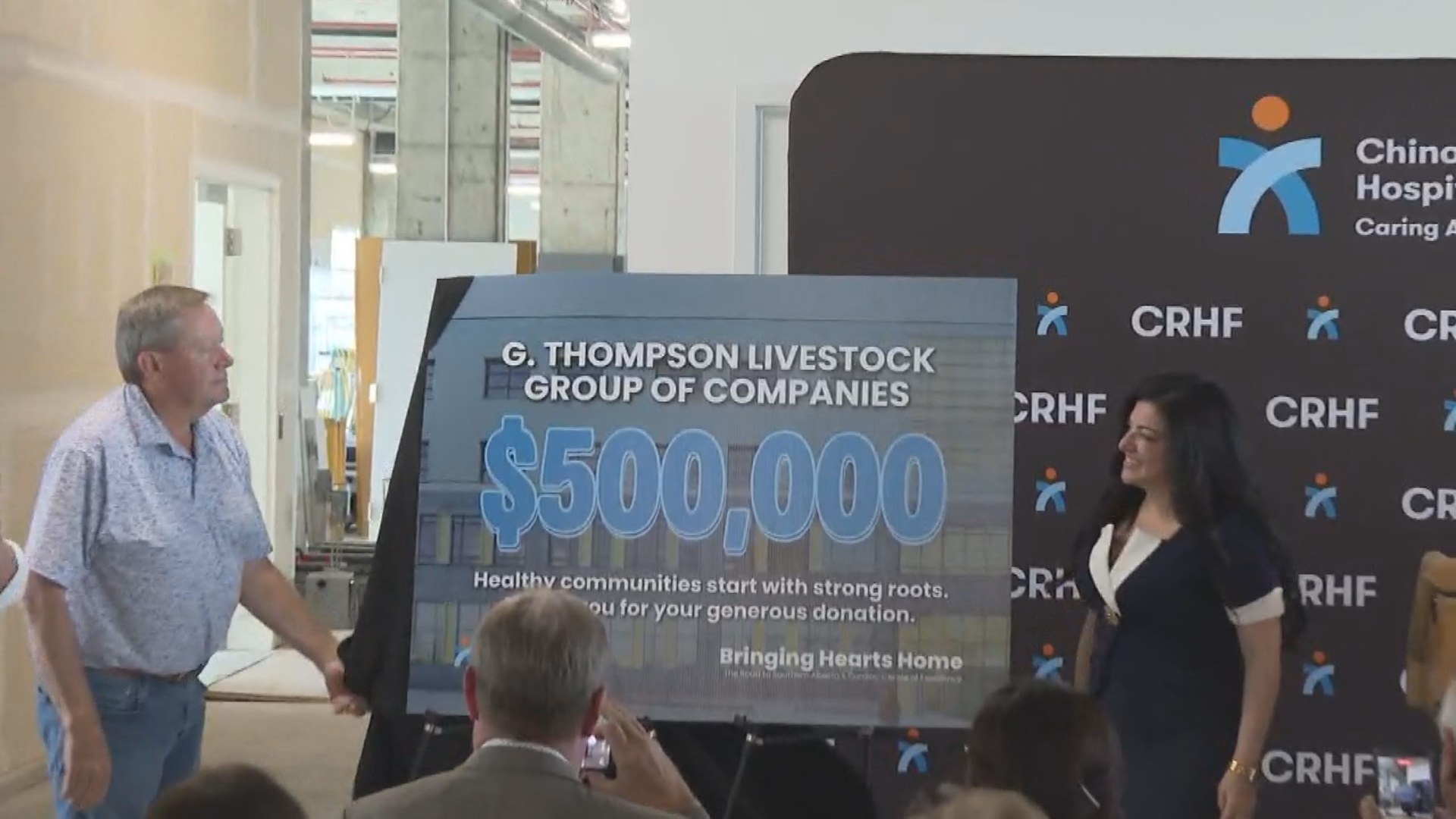
Glen Thompson, the founder of G. Thompson Livestock Co., became the catalyst for finishing the campaign on Wednesday with a final $500,000 donation. His motivation was intensely personal. Having had to make the trek to Calgary eight times to resolve his own heart issue, he experienced firsthand the stress, cost, and physical toll that rural patients bear just to stay alive.
The $445 Million Reality Check
The $30 million raised by the community is a drop in the bucket compared to the total cost of building a comprehensive regional cardiac network. The projected cost for the new Southern Alberta Cardiac Care Centre of Excellence, which will be built on the fifth floor of the Chinook Regional Hospital, is currently estimated to be around $445 million.
While the grassroots campaign has wrapped up early, the actual implementation depends heavily on public coffers. The provincial government has committed $59 million over the next three years to initiate the design and initial construction phases. The rest of the funding must come through future government budgets, shifting the battleground from community charity to provincial political will.
Where the Grassroots Dollars Go First
Rather than waiting for the multi-year construction of the major facility, the foundation is putting the community-raised dollars to work immediately to plug critical gaps.
- Immediate Resuscitation Upgrades: Roughly $500,000 of the funds will immediately go toward a major resuscitation project within the existing Chinook Regional Hospital emergency department, set to be implemented within the next six months.
- Procuring High-Tech Diagnostic Equipment: Advanced diagnostic tools like cardiac-focused MRI machines and CT scanners require rapid procurement cycles that government bureaucracy often delays. Private funds cut through this red tape.
- Attracting Top-Tier Specialists: Building a clinic is useless without the hands to run it. The fund acts as a recruiting nest egg to bring highly trained cardiologists, technicians, and specialized nurses to Lethbridge, a city that historically struggles with medical specialist retention.
The Invisible Cost of Rural Medicine
The success of the Bringing Hearts Home campaign exposes a deeper, structural issue within the Canadian healthcare model. Rural and mid-sized urban centers are increasingly forced to run massive, highly coordinated marketing and fundraising drives to secure services that major urban centers take for granted.
Lethbridge is Alberta's third-largest city, yet its residents have lived with cardiac care standards that are decades behind Edmonton and Calgary. The regional reliance on corporate heavyweights, like the Murray Auto Group and local agricultural enterprises, highlights an unequal burden. A resident's survival rate during a heart attack should not depend on the fundraising prowess of their local hospital foundation or the deep pockets of local livestock operators.
Dr. Sayeh Zielke, the local cardiologist who championed the campaign, has spent years warning that the travel required for critically ill cardiac patients is too dangerous. While the community has done its part by opening its wallets, the spotlight now shifts directly to Alberta Health Services to deliver on the remaining $386 million required to make the Centre of Excellence a fully functioning reality. The grassroots campaign achieved the impossible six months early, but the real test of provincial commitment is only just beginning.