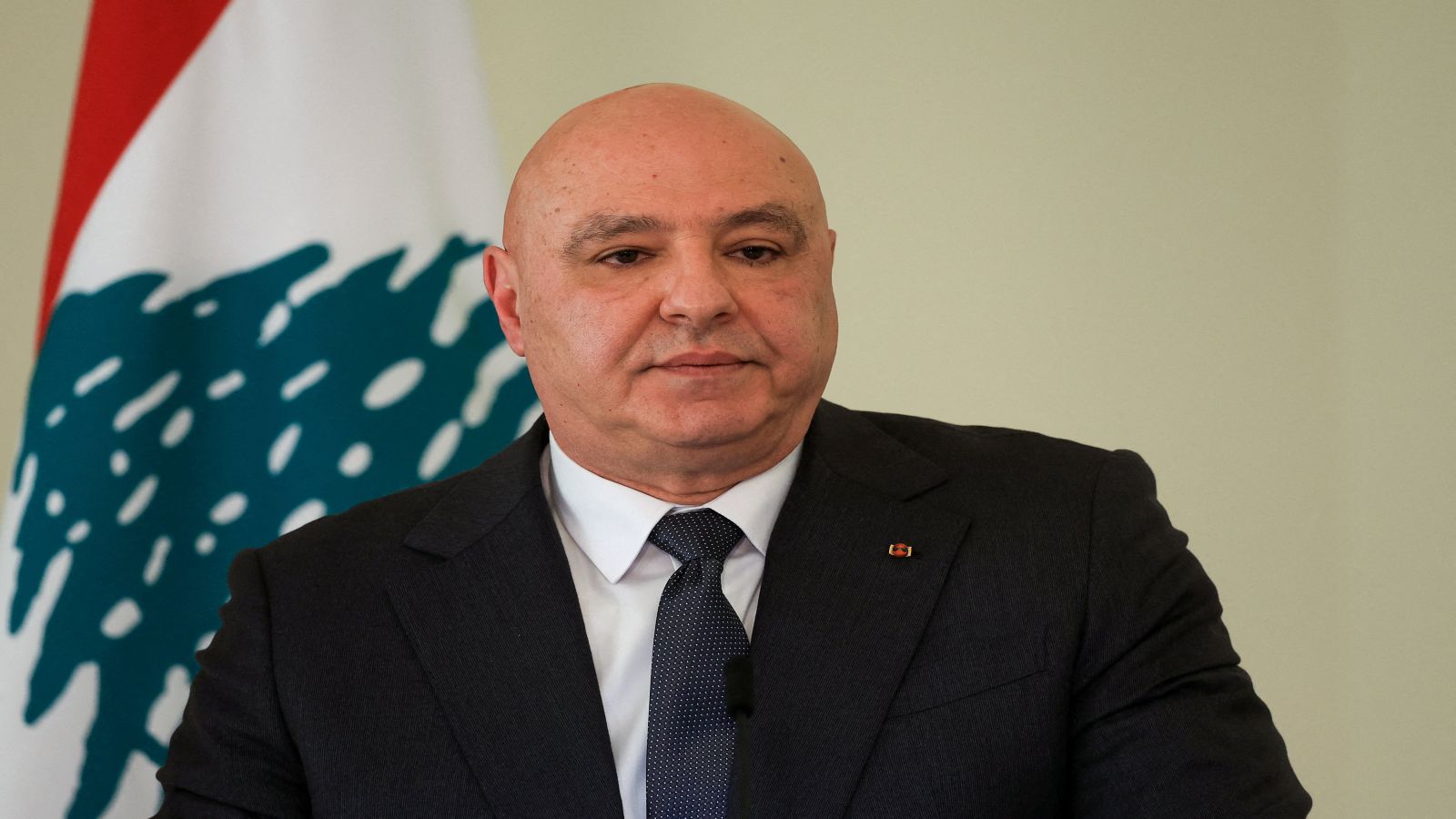
Lebanese President Joseph Aoun has arrived in Washington carrying a high-stakes written proposal for U.S. President Donald Trump, aiming to secure a permanent Israeli military withdrawal by guaranteeing the wholesale disarmament of Hezbollah. The mission represents the first White House visit by a Lebanese head of state in nearly two decades, framing a desperate bid by Beirut to reclaim its national sovereignty. Under a U.S.-brokered framework agreement signed on June 26, the Lebanese Armed Forces are slated to deploy into "pilot zones" in the south, theoretically absorbing territory held by the Israel Defense Forces.
The entire architecture rests on an assumption that has repeatedly broken Middle Eastern diplomacy: that a weakened Lebanese state can force a heavily armed, battle-tested militia to surrender its weapons.
While Washington and Beirut attempt to finalize execution details following recent rounds of trilateral talks in Italy, the realities on the ground tell a far darker story. Israel remains dug into a ten-kilometer-deep security zone inside southern Lebanon, insisting it will not cede an inch of territory until Hezbollah is fully decommissioned. Concurrently, a breakdown in the broader U.S.-Iran ceasefire threatens to trigger a wider regional escalation, potentially rendering Beirut's diplomatic maneuvering obsolete before the ink dries on Aoun's proposal.
The Illusion of the Southern Pilot Zones
The core mechanism of the June 26 framework depends on a phased handoff. The Lebanese Armed Forces have begun intensifying patrols in frontier villages like Froun, preparing to step into the vacuum left by any potential Israeli pullback. The theory is straightforward: by establishing state military dominance in these selected pilot zones, Beirut can demonstrate to the international community that it is a viable security partner capable of securing its own borders.
This strategy ignores the asymmetric reality of Lebanese power dynamics. For decades, the national army has operated under an implicit doctrine of non-conflict with Hezbollah to avoid triggering a catastrophic sectarian civil war. The militia's infrastructure is deeply embedded within the social and geographical fabric of southern Lebanon. Expecting army patrols to successfully seize hidden weapons caches or dismantle underground fortification networks without a massive firefight is highly unrealistic.
Furthermore, Israel's political leadership has shown zero inclination to accept superficial security guarantees. Jerusalem's stance is unyielding: the IDF will maintain its occupation of the southern border belt until Hezbollah's military wings are entirely eradicated.
Why Beirut Belongs to the Highest Bidder
President Joseph Aoun's elevation to the presidency followed a grueling two-year political vacuum, ending a period where state institutions lay paralyzed under the shadow of Hezbollah's political bloc. A former military commander who steered the army through the country's historic 2019 financial collapse, Aoun has built his platform on restoring the state's total monopoly on violence. The systemic collapse of neighboring Syria's regime, combined with the severe attrition suffered by Hezbollah during recent campaigns, opened a narrow political window for the political class in Beirut to assert itself.
Yet, this sudden assertiveness highlights a structural weakness. Aoun is turning to Donald Trump because the Lebanese state lacks any internal leverage to enforce its own laws. By offering a formal written plan to decommission Hezbollah, the presidency is trying to trade a promise it cannot guarantee for immediate American pressure on Prime Minister Benjamin Netanyahu.
"The Lebanese presidency is trying to leverage Washington's desire for a regional diplomatic victory to force an Israeli withdrawal, but they are writing checks that the Lebanese army simply cannot cash on the ground."
The geopolitical landscape complicates this gamble. With U.S. forces currently engaging in direct military friction with Iranian assets across the region, Washington’s focus has dramatically shifted. Trump has previously hinted at an unorthodox solution involving a revamped role for Damascus in stabilizing the northern border, an idea that has revived deep historical anxieties within Lebanon regarding its sovereignty.
The Threat of a Collapsing Regional Ceasefire
The immediate obstacle to Aoun's White House strategy is the fragile state of international agreements. The broader U.S.-Iran diplomatic track is fracturing, directly impacting regional proxies. If Tehran feels cornered by ongoing American pressure, it will almost certainly activate its remaining networks in the Levant and Yemen to shift the strategic calculations.
Hezbollah has already publicly rejected the June 26 framework and castigated the Lebanese government for engaging in direct talks with Israel. While the group has kept a lower profile inside the country following severe leadership losses and structural degradation, it maintains a vast arsenal of short-range rockets and hidden cells. A single coordinated drone launch or anti-tank missile strike from outside the pilot zones would give Jerusalem the immediate justification required to scrap the framework agreement entirely.
The strategy pursued by the Lebanese state relies on a dangerous assumption: that regional actors will cooperate with a text written in Washington. If the pilot zones fail to remain completely clear of militia activity, the southern security belt will harden into a permanent border, cementing the partition of Lebanese territory and rendering the state's grand diplomatic push entirely irrelevant.