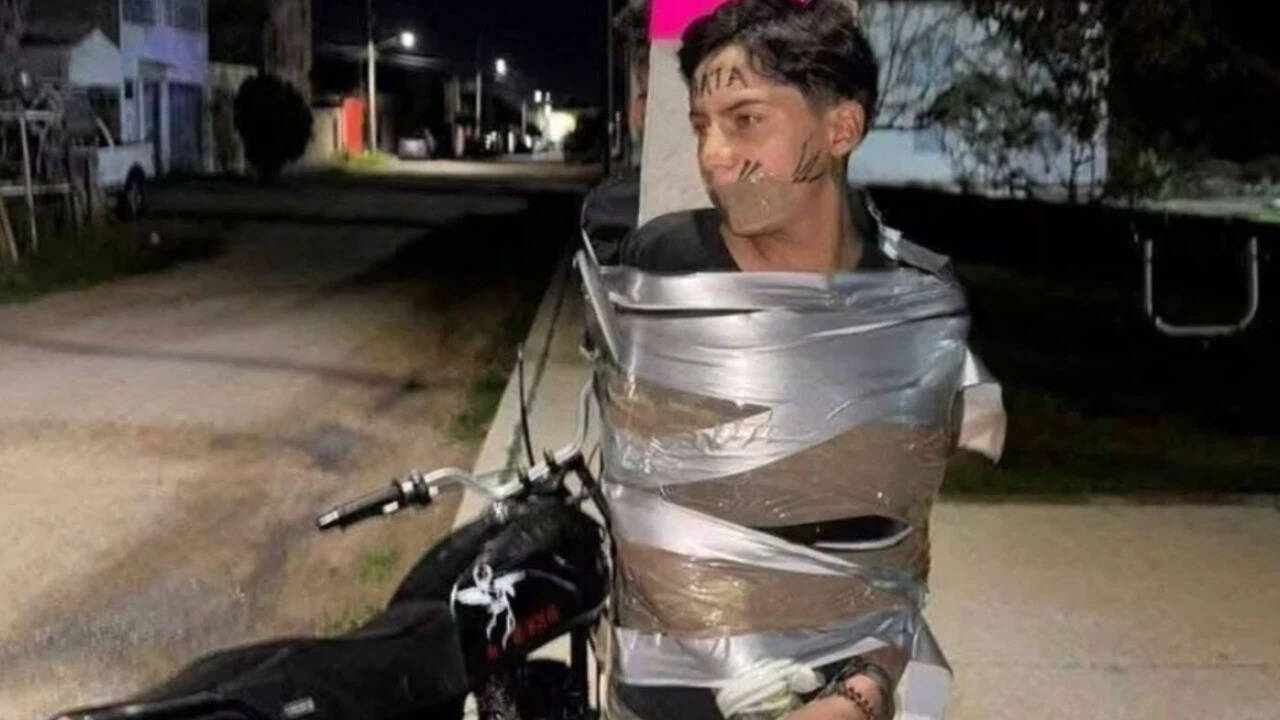
A masked vigilante dressed as Batman is tying alleged motorcycle thieves to lampposts in Jalisco, Mexico, wrapping them in plastic wrap and painting their faces like the Joker. While local media treats this as a bizarre pop-culture spectacle, the phenomenon reveals a catastrophic collapse of institutional trust in western Mexico. This is not a quirky comic book storyline come to life. It is the direct consequence of a broken judicial system where vehicle theft carries near-total impunity, forcing desperate citizens and shadowy local actors to bypass the state entirely.
The reality on the ground in municipalities like Tlaquepaque and Guadalajara is grim. For the average working-class resident, a motorcycle is not a weekend hobby. It is an economic lifeline, a tool for delivery gigs, and the sole means of avoiding a crumbling public transit network. When a bike vanishes, a family's livelihood goes with it.
When those families turn to the authorities, they encounter a wall of bureaucratic indifference.
The Economics of Impunity in Western Mexico
To understand why a masked figure wrapping people in industrial cellophane commands public sympathy, you have to look at the numbers. State security data reveals an abysmal clearance rate for property crimes in Jalisco. Over 90 percent of vehicle thefts go unpunished. Filing a report requires hours of waiting in poorly ventilated government offices, only for the paperwork to sit in a dusty filing cabinet.
For the thieves, the calculus is simple. High reward, low risk.
For the victims, the calculation is devastating. The cost of a stolen motorcycle often equals six months of minimum-wage labor. Insurance is a luxury few can afford, and even when policies exist, payouts are delayed by months of administrative red tape. This economic desperation creates a fertile breeding ground for street justice. When the state fails to protect private property, the vacuum is invariably filled by anyone willing to swing a fist or carry a roll of tape.
The Mechanics of the Street Wrap
The vigilante's methodology is efficient and highly theatrical. The target is ambushed, stripped of weapons, and bound tightly to concrete utility poles in high-traffic commercial districts.
The choice of materials is deliberate. Industrial stretch wrap is cheap, nearly impossible to break out of without a blade, and highly visible. By painting the suspects' faces with crude green and red makeup, the perpetrator ensures the scene attracts immediate attention from passersby.
This is theater designed for the smartphone era. It relies on the certainty that bystanders will record the scene and upload it to social media within minutes.
The public humiliation serves a dual purpose. It acts as a crude deterrent to other neighborhood thieves, and it sends a clear message to the local police department that their absence has been noted. The crowd that gathers around these bound suspects rarely shows sympathy. Instead, videos show onlookers mocking the thieves, kicking their shins, and taking selfies.
The Shadow of Organized Crime
Mainstream coverage paints this vigilante as a lone eccentric, a rogue citizen pushed to the brink. That narrative is dangerously naive.
In territories heavily monitored by dominant cartels, independent actors do not operate with impunity for long. Armed groups maintain a strict monopoly on violence. Anyone patrolling the streets at night, detaining individuals, and creating public disturbances would immediately draw the attention of local criminal syndicates.
There are two distinct possibilities that veteran security analysts discuss behind closed doors.
- The PR Campaign: Local criminal factions frequently use vigilante-style justice to win the hearts and minds of the civilian population. By punishing petty criminals, they position themselves as the true protectors of the community, contrasting their efficiency against the uselessness of the municipal police.
- The Corporate Clean-up: Delivery dispatch networks and local business associations, weary of losing fleets of vehicles, may be quietly financing private security teams to clean up specific transit corridors using theatrical tactics to maximize the psychological impact.
The lone-wolf theory falls apart under scrutiny. Navigating these neighborhoods at night while hunting active criminals requires deep local intelligence, logistical support, and a guarantee that the police will not intervene during the capture.
+-------------------------------------------------------------------+
|               The Cycle of Extrajudicial Justice                  |
+-------------------------------------------------------------------+
|  State Failure -> High Impunity -> Vigilante Action -> Social Media |
|       ^                                                      |    |
|       |                                                      v    |
|       +----------------- Institutional Decay <---------------+    |
+-------------------------------------------------------------------+
The Dangerous Illusion of Public Order
The immediate reaction from local residents is often celebratory. Comments sections on regional news pages overflow with praise for the masked figure. People feel a sense of cathartic relief seeing a suspected predator rendered helpless.
This relief is a trap.
Extrajudicial punishment offers a temporary illusion of security while actively eroding the rule of law. There is no due process on a street corner. No evidence is presented. No witnesses are cross-examined. The person taped to the pole might be a career criminal caught red-handed, or they might be someone caught in the wrong alley during a personal dispute.
When a society normalizes vigilante violence, it hands over judicial power to whoever is strongest on any given night. Today it is a figure targeting motorcycle thieves. Tomorrow it could be a neighborhood committee settling a property boundary dispute with violence.
Local police find themselves in an embarrassing position. They are forced to respond to calls where the criminal has already been apprehended, essentially serving as a cleanup crew for a masked civilian. This public humiliation further degrades morale within a force that is already underpaid, undertrained, and outgunned.
The state government has issued standard, sterile statements urging citizens not to take the law into their own hands. These declarations ring hollow to someone who just watched their livelihood ride away on two wheels while a dispatcher put them on hold.
Breaking the Cycle Beyond the Mask
Stopping the rise of street justice requires addressing the systemic failures that make a masked vigilante look like a reasonable alternative.
The solution does not lie in deploying more riot police to guard lampposts. It requires a fundamental overhaul of how property crime is handled at the municipal level. Specialized investigative units dedicated entirely to tracking stolen vehicles and dismantling the illegal chop shops that fuel the trade would yield immediate results.
   [Stolen Bike] ---> [Chop Shop Network] ---> [Black Market Sales]
                            ^
                            |
               (The True Target for Reform)
Targeting the individual street thief is a temporary fix; the demand for cheap, untraceable spare parts is the engine driving the entire crisis. Until the state targets the commercial networks buying these stolen vehicles, the incentive structure remains intact.
The figure in the mask will eventually vanish, either neutralized by rival criminal elements or arrested by a state eager to save face. But the conditions that created him will remain. As long as the justice system remains a bureaucratic black hole, the citizens of Jalisco will keep looking to the shadows for protection, and the rolls of plastic wrap will keep spinning.