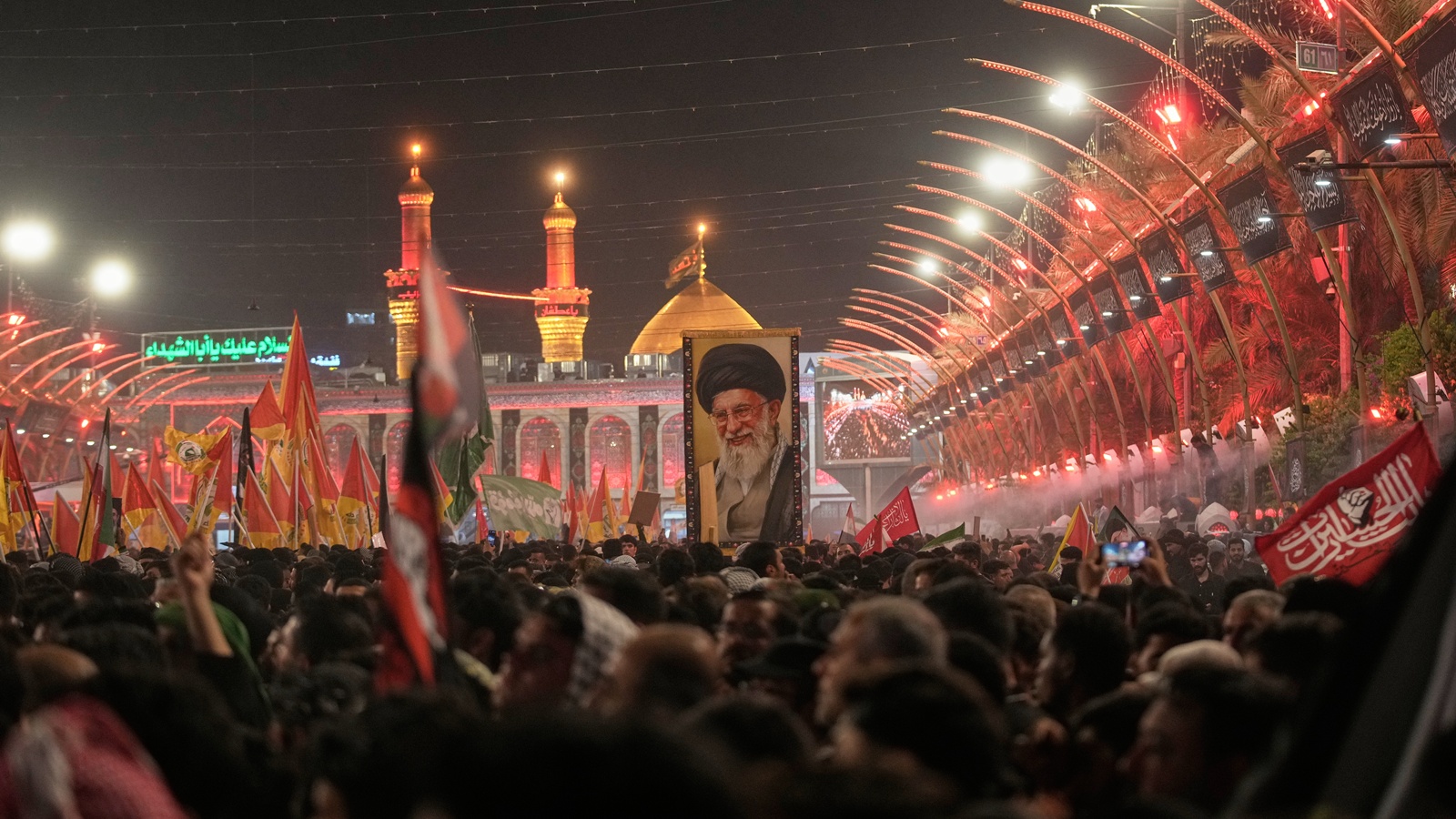
The four-month delay between the death of Ayatollah Ali Khamenei and his burial this week in Mashhad was not merely a logistically challenging period of state mourning. It was a calculated pause by an regime teetering on the edge of structural collapse, desperately buying time to resolve an unprecedented crisis of succession while a devastating war with the United States and Israel raged around it. While thousands of black-clad mourners lined the streets of Mashhad and Najaf, the real story was unfolding behind the scenes. The new Supreme Leader, Mojtaba Khamenei, remained entirely hidden from public view during the entire week-long procession. This bizarre dynamic reveals a deep fracture within the Islamic Republic that Washington and its allies are completely misjudging.
The regime used advanced nitrogen gas and dry ice preservation technologies to hold the former leader’s body for more than 120 days while military commanders and clerics argued over power.
The Illusion of Continuity
State media broadcasted images of a unified nation gripped by grief. They showed millions of people chanting anti-Western slogans, demanding retribution for the daylight airstrikes that decapitated Iran's clerical and military command on February 28. But outside the carefully managed camera angles, the atmosphere inside Iran is profoundly polarized.
In cities like Isfahan, Karaj, and Shiraz, underground videos captured a vastly different reality. Citizens quietly celebrated the end of a 37-year iron rule, while security forces patrolled the streets with live ammunition to suppress any spontaneous uprisings. The regime's primary objective during this four-month delay was not to honor a fallen martyr, but to prevent a domestic rebellion while trying to finalize a fragile political transition under fire.
The Phantom Leader
Mojtaba Khamenei’s absence from his own father’s funeral rites is an extraordinary tell. Although he has been proclaimed the successor, his refusal to appear in public underscores the extreme vulnerability of his position.
- The Security Threat: Stepping into the open makes him an immediate target for the same intelligence network that tracked his father to a Tehran compound.
- The Legitimacy Deficit: Unlike his father, Mojtaba lacks religious credentials and broad support among the senior clerics in Qom, who view his ascension as a crude dynastic inheritance.
- The Military Shadow: The Islamic Revolutionary Guard Corps (IRGC) has effectively assumed control of state functions during the war, rendering the office of the Supreme Leader dependent on military backing like never before.
How the War Rewrote the Rules
The Western coalition initiated this conflict believing that eliminating the top tier of Iranian leadership would force an immediate capitulation. That assumption was flawed. Instead of crumbling, the fragmented remaining elements of the IRGC consolidated power into a decentralized military junta.
When the US-led strikes eliminated over fifty senior officials and commanders in a single wave, it inadvertently erased the bureaucratic bottlenecks that usually slow down Iranian decision-making. The remaining mid-level commanders, raised entirely within the Axis of Resistance framework, do not possess the diplomatic nuance of their predecessors. They view the current temporary truce not as a path to peace, but as an opportunity to reload.
[Decapitation Strike (Feb 2026)]
              │
              ▼
[4-Month Preservation & Succession Crisis]
              │
              ▼
[Decentralized IRGC Command Structure Takes Control]
The regional dynamics have also decoupled from Tehran's direct oversight. In Iraq, the Popular Mobilization Forces managed the funeral processions through Najaf and Karbala entirely on their own terms, turning the event into a massive show of force that highlighted their independent political power. They no longer look to Tehran for daily operational commands; they are operating autonomously.
The Fragile Truce and What Comes Next
The burial at the Imam Reza shrine marks the formal end of an era, but it resolves none of the underlying triggers for regional escalation. The United States and Iran negotiated a temporary halt to active hostilities last month, yet this arrangement is built on quicksand.
The fundamental issue is that the newly configured Iranian state requires permanent external conflict to justify its harsh domestic crackdown. With the economy crippled by decades of sanctions and the added devastation of a four-month air campaign, the regime cannot offer its population financial stability or social freedom. Its only remaining currency is ideological resistance.
Western intelligence agencies are currently celebrating the apparent containment of the conflict, viewing the massive funeral crowds as a final, desperate gasp of a dying ideology. This is a dangerous misreading of the situation. The true danger lies in a regime that has realized its own mortality and now possesses nothing left to lose.
Mojtaba Khamenei will eventually have to emerge from the shadows to claim his authority, or the IRGC will dispense with the clerical facade entirely. When that moment comes, the fragile truce will dissolve, and the region will find itself plunged right back into open warfare.