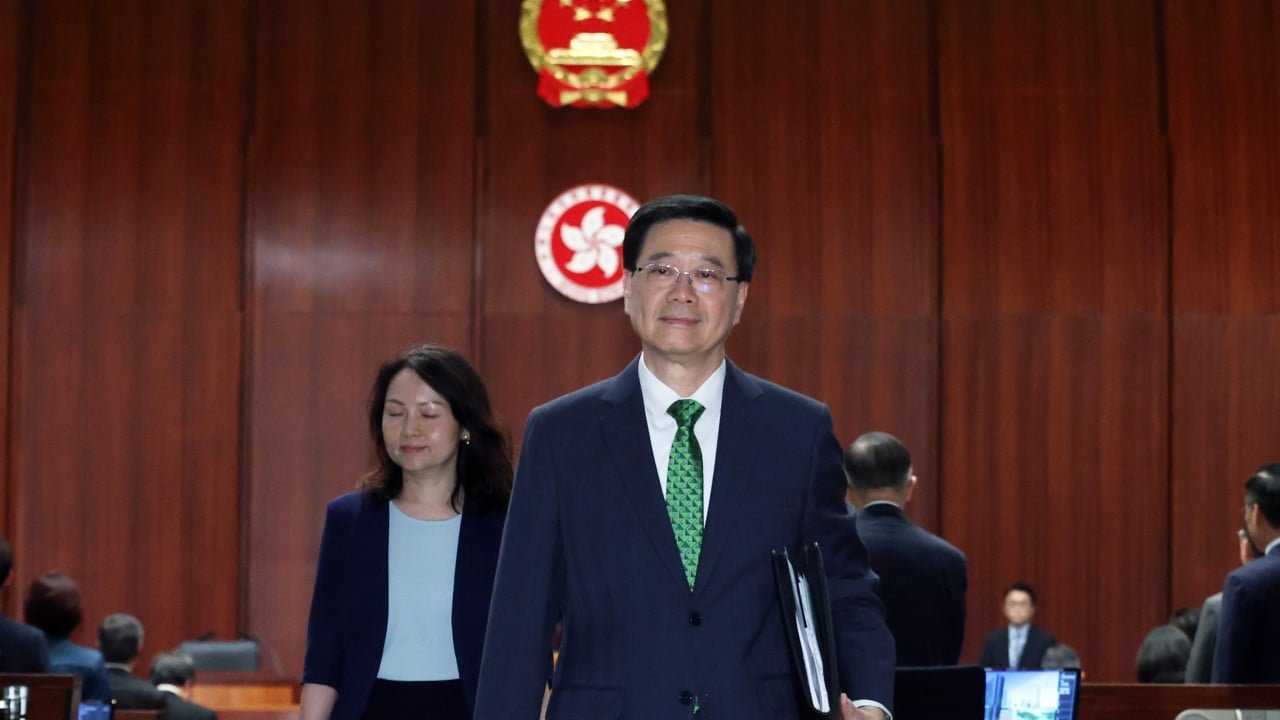
Hong Kong local media organizations face an aggressive government push to expand their international reach, navigating a complex landscape of shifting commercial pressures, digital migration, and changing geopolitical narratives. Chief Executive John Lee outlined specific policy initiatives designed to assist professional media entities in scaling their overseas footprints. The strategy aims to help local outlets project narratives further afield, opening international business avenues while sustaining traditional journalistic institutions. Yet, translating administrative directives into genuine global market share requires confronting economic headwinds that no policy address alone can easily clear.
For decades, the commercial engine of Hong Kong journalism relied on a dense, hyper-local domestic market. Print circulations once fueled profitable corporate structures, and advertising revenue sustained extensive newsrooms capable of deep investigative reporting. Those revenue models eroded permanently under the weight of digital aggregation and social media disruption. Outlets now fight for fractured attention spans against global tech platforms. When the administration proposes helping local media go global, it addresses an existential symptom of a shrinking domestic monetization base. Recently making news in related news: The Structural Mechanics of Political Disintermediation: Analyzing the Republican Midterm Convention Strategy.
Expanding beyond a home territory demands capital, operational scaling, and distribution infrastructure that most regional outlets lack. A mid-sized news organization operating out of Wan Chai or Quarry Bay understands local audience habits intimately. Translating that localized expertise into a viable product for readers in London, Sydney, or Vancouver introduces severe friction. Content must adapt to regulatory environments, cultural contexts, and distinct competitive dynamics abroad. Without deep financial reserves, foreign expansion often functions as a cash drain rather than a revenue savior.
Government backing for international expansion generally manifests through diplomatic networks, trade delegations, and cultural promotion boards. Public bodies like the Trade Development Council and overseas Economic and Trade Offices offer logistical nodes. Media executives can theoretically utilize these channels to secure foreign partnerships, establish distribution agreements, and court international advertisers. Additional information on this are covered by The New York Times.
Skepticism from media analysts centers on editorial independence and market reception. Foreign audiences evaluate foreign news products through critical lenses, demanding clear firewalls between state-supported initiatives and independent editorial judgment. If overseas readers perceive state-backed narratives as heavy-handed propaganda rather than objective reporting, trust evaporates immediately. Credibility remains the ultimate currency in international media markets. Once compromised, it cannot be recovered through administrative endorsement or promotional funding.
Consider a hypothetical mid-tier broadcaster trying to establish an international digital bureau. Renting studio space in a major Western capital, hiring foreign correspondents, and navigating local labor laws requires millions of dollars in upfront capital expenditure. Advertising yields on digital platforms rarely cover those operating costs during early growth phases. Without sustained commercial backing or alternative revenue streams, the venture stalls before capturing critical mass.
Commercial viability dictates survival in the international arena. Domestic competitors in target markets already dominate local search engine rankings and subscription models. Breaking into those spaces demands distinct value propositions, such as unmatched regional expertise or exclusive data insights on Asian markets. General interest reporting rarely travels well across borders unless it concerns high-stakes geopolitical developments or financial market movements.
Financial institutions and corporate sponsors in Hong Kong increasingly view media investments through risk-management frameworks. Advertisers allocate budgets based on algorithmic efficiency and targeted reach, favoring global tech monoliths over traditional publishing houses. The policy address framework attempts to alter this calculus by encouraging cross-sector partnerships, urging banks and chambers of commerce to include media entities in broader overseas delegation tours.
Digital transformation strategies within legacy newsrooms remain uneven. While executive boards endorse internationalization on paper, legacy workflows often slow down agile adaptation. Traditional print operations consume disproportionate resources compared to digital product development. Transitioning a legacy newsroom into a modern multinational digital publisher requires technological upgrades, data analytics integration, and cultural overhauls that veterans often resist.
International media markets are fiercely saturated. Legacy global publications set high benchmarks for digital storytelling, interactive graphics, and investigative depth. Hong Kong outlets entering this arena must compete directly with well-funded western syndicates and rapidly expanding digital-native platforms from across Asia. Incremental policy support provides a foot in the door, but editorial excellence and relentless audience acquisition strategies determine ultimate survival.
The push toward global expansion also intersects with broader geopolitical realities. Operating across Western and Eastern jurisdictions introduces compliance challenges related to data security laws, cross-border data transfers, and shifting regulatory frameworks. Media organizations must navigate these legal minefields without falling foul of local jurisdictions where they attempt to distribute content. Compliance departments suddenly become as vital to a newsroom as investigative desks.
Smaller independent outlets often find themselves excluded from large-scale government-backed delegations, which typically prioritize major legacy media groups with established brand recognition. This dynamic risks consolidating state-favored narratives within a handful of massive conglomerates while niche and independent voices struggle to secure the resources needed for international scale. Diversity of perspective suffers when policy initiatives disproportionately benefit large institutional players.
Cooperation with media organizations along major trade corridors, such as regions linked by regional development frameworks, offers an alternative path. Joint ventures, content-sharing agreements, and co-production models reduce financial exposure while testing foreign markets. Radio Television Hong Kong and other public entities explore these cooperative channels to foster cultural bonds and expand distribution footprints without bearing the full weight of foreign bureau overheads.
Audience habits abroad favor localized digital curation. International readers rarely seek out Hong Kong news outlets for global affairs; they look to them for specialized insights on Greater China finance, property markets, and regional trade logistics. Capitalizing on this specific niche offers a pragmatic blueprint for global reach. Trying to out-compete global wire services on general international news is a failing strategy.
Media executives evaluating international expansion must weigh the cost of capital against potential returns. Investors demand clarity on monetization timelines, whether through subscription models, sponsored content, or data services. Relying purely on goodwill or government-facilitated introductions will not satisfy quarterly financial targets.
Structural reforms within news organizations must precede any international push. Streamlining editorial operations, investing in robust content management systems, and training journalists in multimedia production are foundational prerequisites. Without these internal fixes, foreign expansion efforts will amplify existing operational inefficiencies rather than solve them.
The transition from a domestic news provider to a global digital brand requires ruthless prioritization. Leadership teams must identify core competitive strengths and shed legacy deadweight. Outlets that cling to outdated organizational structures while attempting to chase international markets will find themselves overextended and underfunded.
External support mechanisms can grease the wheels of international commerce, but they cannot manufacture demand where none exists. The global media marketplace rewards utility, speed, and analytical rigor above all else.
Hong Kong media enterprises stand at a historical crossroads. The path outward is fraught with financial peril, regulatory hurdles, and fierce international competition. Navigating this terrain demands strategic clarity, aggressive digital adaptation, and an unwavering commitment to editorial integrity that resonates across diverse cultural boundaries. The policy framework provides an initial spark, but the heavy lifting of global survival belongs entirely to the newsrooms themselves.