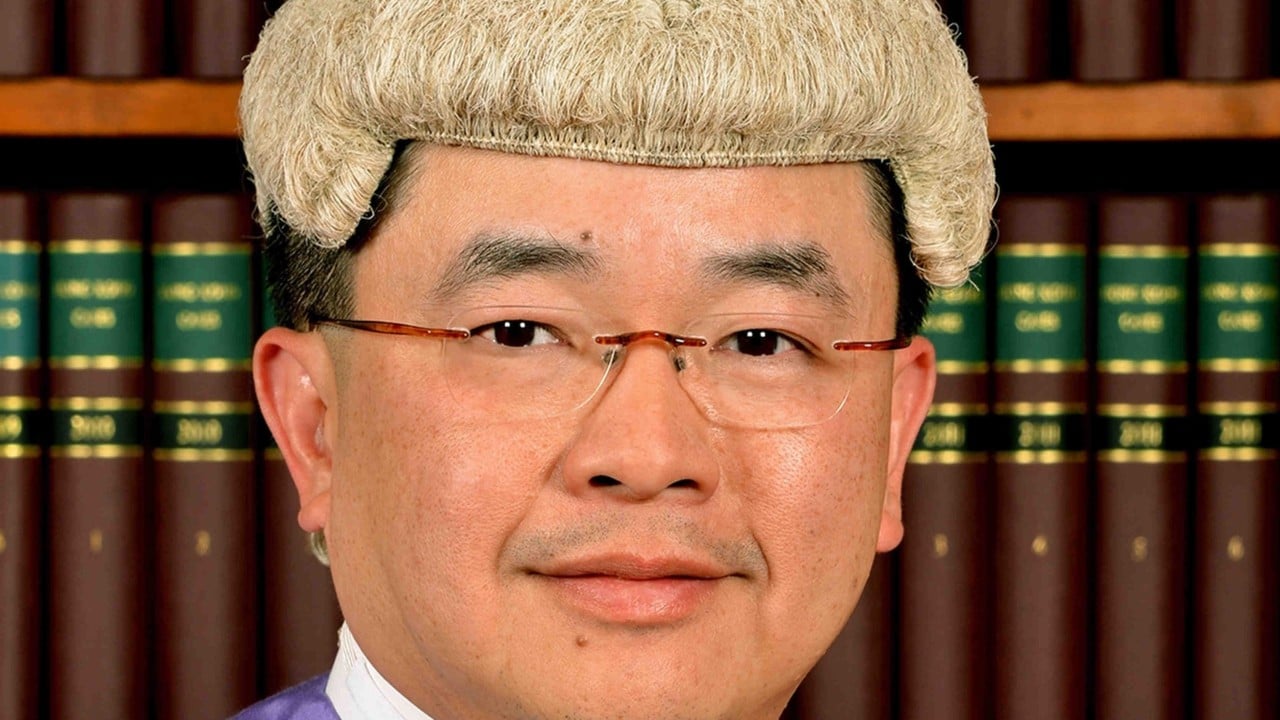
Hong Kong's Court of Appeal has ordered yet another full retrial after High Court Judge Wilson Chan Ka-shun lifted nearly 95 percent of his written judgment directly from defence counsel submissions. The ruling, handed down in July 2026, involves a high-stakes corporate share dispute where the judge failed to demonstrate an independent judicial mind. This marks the second time in three years that Chan has been caught engaging in massive, verbatim judicial copying. The breach shatters assurances from senior legal officials that previous reprimands had permanently solved the systemic problem.
When a High Court Ruling Is 95 Percent Copy-Paste
The underlying dispute centered on a HK$40 million share conflict involving Nam Tai Property founder Koo Ming-kown and his former brother-in-law Charles Chu Chia-chin. The legal arguments were dense, spanning decades of corporate history, contested verbal agreements, and conflicting testimony regarding a 1992 transaction. When Judge Wilson Chan issued his decision in favor of the defence, the defeated plaintiffs appealed on a singular, startling ground: the judge had barely written a word of his own. Don't miss our earlier coverage on this related article.
A panel of three appellate judges examined the judgment and verified the charge. Almost 95 percent of the text was copied verbatim or near-verbatim from the closing submissions submitted by the defence counsel. The original court failed to analyze the conflicting evidence presented by the plaintiffs, omitted crucial counterarguments, and provided no indication of independent reasoning.
The appellate court held that a fair-minded observer would conclude the judge never brought an independent mind to resolve the case. The verdict was overturned entirely, forcing both parties back to square one under a different judge. To read more about the context here, The Washington Post offers an excellent summary.
The waste of resources is staggering. Litigants in Hong Kong spend millions of dollars in legal fees expecting a judge to weigh evidence, assess witness credibility, and deliver a reasoned, impartial verdict. When a trial judge simply copy-pastes one side's legal brief, the entire trial process turns into an expensive facade.
The Broken Promise of Judicial Self-Correction
This is not an isolated lapse in judgment. It is a repeat performance.
Back in 2023, the Court of Appeal threw out another of Chan’s rulings in a major trademark lawsuit involving the famous Wong To Yick Wood Lock Medicated Balm. In that instance, Chan copied more than 98 percent of his written judgment directly from the plaintiff's submissions. The defendants pointed out that among the remaining two percent of the text, there was not a single complete sentence composed by the judge himself.
That 2023 scandal triggered a public uproar. Chief Justice Andrew Cheung issued a formal, stern reprimand against Chan. Secretary for Justice Paul Lam publicly assured citizens that the court system had demonstrated its ability to rectify its own mistakes. Lam insisted at the time that the incident was an unfortunate anomaly, expressing full confidence that such conduct would not happen again.
The July 2026 appellate ruling proves those promises were empty.
"Wholesale copying undermines public confidence that a judge has independently determined the key issues in a dispute." — Hong Kong Court of Appeal
Despite formal reprimands, official promises, and public scrutiny, the same judge committed the exact same infraction in another multi-million-dollar lawsuit. The appellate mechanism works to catch these failures, but catching a mistake on appeal is a remedy, not a cure. It does not erase years of wasted litigation time, nor does it restore lost faith in the trial courts.
Systemic Pressure and the Reality of Judicial Workload
To understand why a senior judge resorts to raw copy-pasting, one must look at the mechanics of modern courtroom operations.
Judges in major common law jurisdictions handle heavy case dockets. They face constant pressure to reduce backlog, clear long-standing files, and produce written judgments within strict administrative deadlines. In complex commercial cases, legal teams submit hundreds of pages of written arguments, statutory citations, and precedent analyses.
The temptation to adopt a prevailing party's submissions is structural.
The Fine Line Between Efficiency and Judicial Laziness
- Acceptable Reference: A judge synthesizes arguments, quotes relevant precedent cited by counsel, and adopts factual summaries that are undisputed.
- Permissible Agreement: A judge clearly states that they agree with a specific party's reasoning on a distinct point of law, explaining why that reasoning holds up against counterarguments.
- Impermissible Judicial Copying: A judge lifts block paragraphs verbatim, including stylistic quirks and formatting, without engaging with the opposing party's evidence or offering original analysis.
When a judge crosses into impermissible copying, efficiency turns into professional dereliction. Drafting a judgment requires synthesizing opposition arguments, detailing why one witness was believed over another, and explaining the rejection of key evidence. Copying legal briefs deletes the opposing party from the legal record.
If a judge simply accepts one party's brief verbatim, the losing party is effectively denied a hearing on the merits. They receive a judgment written by their opponent's lawyers, stamped with a judicial signature.
The High Cost to Hong Kong's Legal Reputation
Hong Kong’s international standing relies heavily on its reputation for an independent, rigorous judicial system. Foreign investors, multinational corporations, and local businesses choose Hong Kong as a dispute resolution hub because they trust its common law judiciary to deliver impartial, well-reasoned decisions.
Plagiarism scandals chip away at that trust.
When commercial disputes end in forced retrials due to judicial negligence, foreign businesses take notice. Retrials double litigation costs, delay commercial certainty by years, and signal that judicial quality control is slipping.
Furthermore, Judge Wilson Chan is not a junior magistrate sitting on minor infractions; he is a High Court judge who was also designated to handle national security cases. When a judge holding high-profile responsibilities repeatedly engages in cut-and-paste jurisprudence, the credibility of the entire bench takes a hit.
Appellate courts can continue overturning these compromised judgments, but appellate correction is an expensive safety net. True accountability requires systemic reforms in how judicial performance is evaluated, monitored, and disciplined.
Accountability Gaps in the Judicial Structure
The repeat offense raises uncomfortable questions about judicial accountability and administrative oversight.
When an attorney plagiarizes or engages in gross negligence, they face disciplinary proceedings, fines, or disbarment from the Law Society or Bar Association. When a judge engages in systemic judicial copying twice, the response from the judiciary has remained largely administrative: private stern reprimands, public statements of confidence, and ordering retrials at the expense of the litigants.
The current setup relies heavily on the self-correcting nature of the appellate process. But appealing a judgment requires time, immense legal costs, and willingness to endure years of further uncertainty. Many litigants, exhausted by trial expenses, simply cannot afford an appeal. They are left stuck with plagiarized judgments because they lack the funds to challenge them.
Relying on the appellate court to police trial judge laziness creates a tiered system of justice. Litigants with deep pockets can afford to expose judicial copy-pasting and win a retrial. Litigants without capital are forced to absorb bad rulings generated by judicial shortcuts.
Real reform requires looking beyond simple reprimands. The judiciary must institute stricter internal auditing for draft rulings, introduce workload relief mechanisms for overwhelmed judges, and establish clear consequences for repeated judicial misconduct. Until judicial oversight addresses the root cause of judicial copying, the integrity of Hong Kong's courts will remain exposed to preventable, self-inflicted damage.