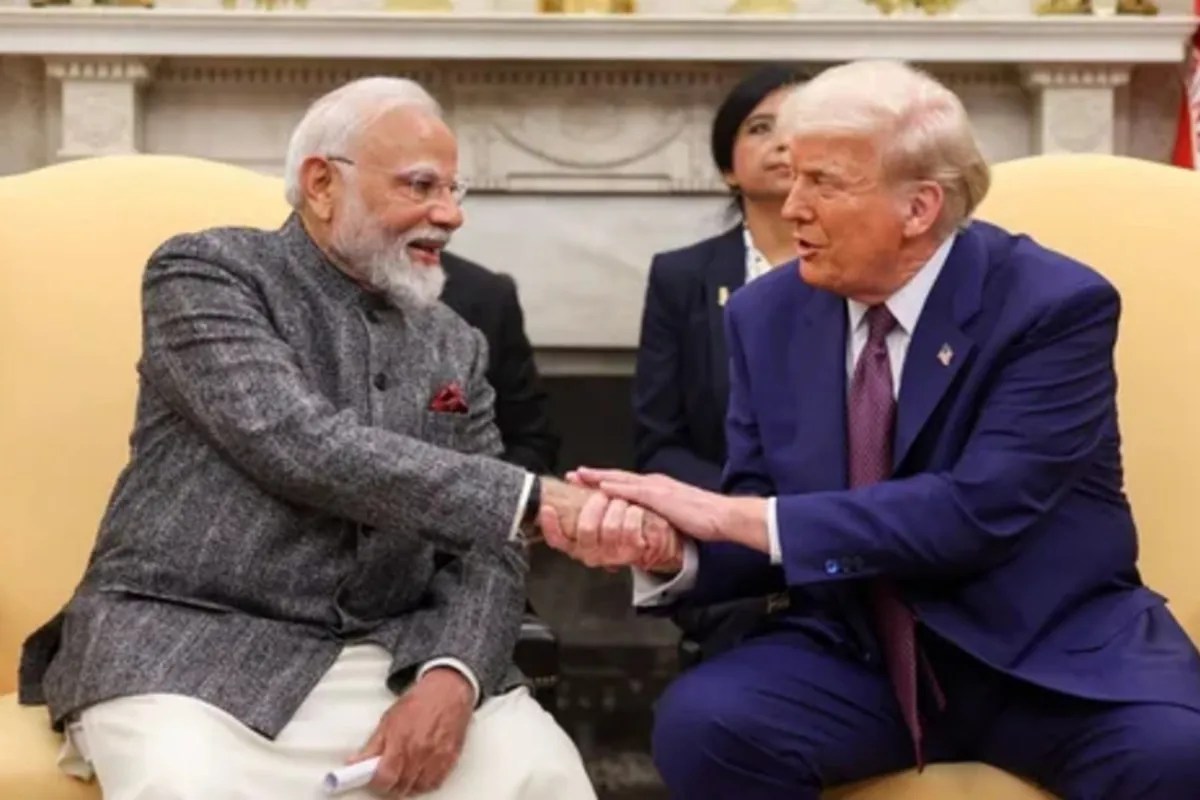
IBM Chairman and CEO Arvind Krishna says President Donald Trump remains strongly positive about the long-term friendship between India and the United States. Yet behind that diplomatic optimism sits a harder economic reality. Trade friction, tariff disputes, and energy disagreements have tested bilateral ties during Trump's second term, even as negotiators work toward a first-phase trade framework and top technology executives push Washington and New Delhi to stay aligned.
I have spent decades covering technology supply chains and geopolitical dealmaking from boardrooms to policy summits. When a chief executive of Krishna's standing speaks publicly about presidential sentiment, the quote is rarely just a courtesy. It signals how large American enterprises are trying to protect cross-border engineering, capital spending, and market access in a turbulent political climate.
What Arvind Krishna Actually Signal About Washington and New Delhi
Surface-level coverage of bilateral commentary often treats a supportive remark as proof of smooth sailing. That reading misses how modern corporate diplomacy works. Krishna leads a company whose identity spans deep American hardware and research roots on one side and massive global engineering, cloud, and enterprise software operations on the other.
When Krishna points to Trump's positive posture toward long-term India-US ties and the accomplishments of the Indian diaspora, he is speaking from direct exposure to Washington decision-makers. He has sat in White House discussions around artificial intelligence, quantum computing, and semiconductor priorities, and he has watched trade negotiations move slowly through complex commercial bottlenecks.
A supportive tone at the top does not erase friction below it. Governments can value long-term strategic alignment while fighting fiercely over tariffs, market entry rules, procurement standards, and energy sourcing. For executives running global operations, presidential warmth buys room to negotiate. It does not guarantee frictionless trade.
Why Diplomatic Optimism Collides With Trade and Energy Friction
Relationship headlines often lag behind commercial reality. Even as officials in India and the United States worked through a first-phase trade framework in 2026 aimed at expanding market access, tensions over tariffs and energy policy have repeatedly surfaced in bilateral coverage.
Energy choices and import duties create immediate political pressure in both capitals. Washington focuses heavily on domestic manufacturing, trade balances, and strategic leverage. New Delhi balances domestic industrial protection, energy security, and autonomous foreign policy instincts. Those priorities overlap in many areas, particularly counterbalancing regional rivals and building resilient supply chains, yet they collide whenever tariffs bite a specific sector or when energy trade draws scrutiny.
Consider a hypothetical example to see how this plays out for an industrial supplier. Suppose an American manufacturer sources specialized power components from a plant in Gujarat and sells finished systems to utilities in Ohio. A sudden tariff hike or customs delay does not just raise a line-item cost on a spreadsheet. It forces engineers to requalify vendors, ties up working capital, and strains delivery schedules. Political goodwill helps keep the negotiation table open, but tariffs and regulatory rules dictate daily margins.
The Corporate Engine Connecting American Capital and Indian Talent
Any honest look at US-India relations under the current administration has to account for the people and institutions building value across both economies. Indian-origin executives sit at the helm of major American technology and enterprise firms, while vast engineering and digital delivery teams in India support global software, cloud infrastructure, and enterprise modernization.
Krishna's career reflects that exact bridge. Having risen through IBM's research and cloud leadership before becoming chief executive, he understands both laboratory breakthroughs in the United States and large-scale technical execution across global hubs. Federal backing for advanced computing, semiconductors, and quantum research in the United States interacts directly with how global tech firms allocate talent, testing environments, and customer delivery.
Policy slogans set a mood in Washington and New Delhi, but engineering roadmaps and capital budgets decide whether partnership turns into durable output.
Still, relying solely on diaspora leadership or corporate goodwill has limits. Skilled mobility, visa rules, cross-border data rules, and export controls all sit under government authority. A CEO can advocate for predictable rules and strong research funding, yet sovereign policy shifts can reshape hiring and investment overnight.
Where Strategic Alignment Holds and Where Real Risks Remain
To judge whether India-US ties can weather ongoing economic friction, analysts need to separate durable structural interests from short-term negotiating posture.
| Dimension | Source of Strength | Key Friction Point | What to Watch Next |
|---|---|---|---|
| Trade and Market Access | Mutual interest in deeper commercial exchange and supply chain diversification | Tariff disputes and uneven market access hurdles | Progress on completing the first-phase trade framework |
| Technology and R&D | Deep US research and capital paired with Indian engineering scale | Export controls, compliance costs, and shifting policy priorities | Concrete industrial and research commitments tied to AI, quantum, and chips |
| Talent and Diaspora | High-skilled professionals and prominent corporate leaders in the US | Immigration scrutiny and changing workforce rules | Practical continuity for cross-border technical teams |
| Geopolitics and Energy | Shared strategic interest in a stable Indo-Pacific balance | Disagreements over energy policy and regional diplomacy | Alignment on critical minerals, defense, and energy trade |
The table highlights a central tension. Cooperation is strongest where capabilities complement each other and where both sides see a clear security or competitiveness payoff. Friction rises fastest when domestic economic protectionism meets bilateral trade imbalances.
What Business Leaders Should Do Instead of Waiting on Headlines
Waiting for diplomatic summits to resolve every commercial wrinkle is a mistake. Executives managing exposure to both markets should stress-test supply chains against sudden tariff shifts, map where regulatory approvals could slow product rollouts, and keep engineering and commercial teams aligned across time zones without assuming policy stability is automatic.
Watch concrete trade texts, tariff schedules, and industrial policy rules rather than celebratory soundbites. Friendship in politics is a starting point for talks, never a substitute for binding commercial terms.


