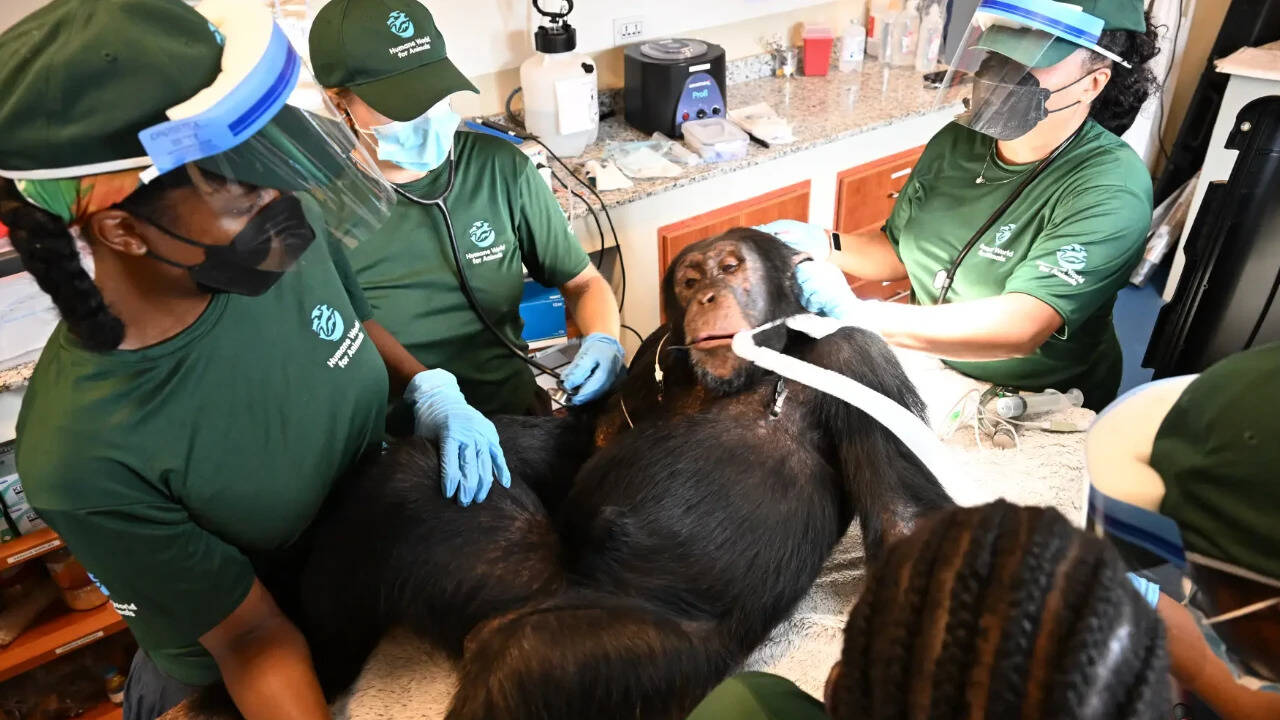
Decades after laboratories finished using chimpanzees for hepatitis B and infectious disease trials, a quiet reckoning plays out in the mangrove-fringed sanctuaries of West Africa. In places like Bapakwali, Liberia, aging chimpanzees once exploited for biomedical advancement are finally receiving comprehensive health evaluations. These medical assessments—covering cardiac function, dental health, and neural integrity under anesthesia—represent more than routine veterinary medicine. They mark a rare attempt to account for a grim legacy of scientific extraction, offering a window into the long-term biological and psychological costs carried by animals caught in the machinery of human progress.
For years, research facilities utilized primates as biological proxies to solve human health crises. That era left deep scars. The current push to evaluate these survivors illuminates a broader truth about biomedical history: the institutional memory of animal testing often ends when the data is published, leaving caretakers to manage the residual trauma decades later.
The Architectural Weight of Historical Science
During the late twentieth century, corporate and academic entities established testing pipelines across West Africa and the United States. In Liberia, hundreds of chimpanzees endured decades of invasive procedures linked to hepatitis B vaccine development. When public pressure, scientific evolution, and ethical shifts finally dismantled these programs, the physical infrastructure of testing was abandoned or repurposed. The animals, however, remained.
Primate physiology mirrors human biology closely enough to make them targets for experimentation, yet their cognitive complexity ensures that captivity and trauma manifest in profound psychological distress. Many of these subjects arrived in laboratories as infants, torn from wild populations that are now critically endangered.
Veterinary teams working within modern sanctuaries face a complex diagnostic landscape. Chronic conditions stem from decades of confinement, repeated chemical immobilization, and experimental inoculations. Diagnostic imaging and blood panels reveal organ strain that standard sanctuary observation cannot detect. The work is painstaking. Every procedure requires specialized anesthetic protocols designed for animals with altered physiological baselines and advanced chronological age.
The Logistics of Sanctuary Medicine
Administering care to a thirty-year-old chimpanzee requires precision. The average age of survivors hovers between thirty and thirty-five years, an advanced stage of life for a great ape. Veterinarians perform thorough physical evaluations, checking for cardiovascular degradation, systemic inflammation, and dental deterioration that impedes proper nutrition.
These medical interventions expose the friction between past exploitation and present stewardship. Funding for lifetime primate care remains perpetually scarce. Unlike the well-capitalized grants that fueled the original laboratories, retirement facilities rely on philanthropic donations and non-governmental organizations to finance expensive diagnostics, specialized diets, and secure island habitats.
Sanctuary directors point out that physical health checks serve a dual purpose. Beyond catching early signs of age-related organ failure or infectious disease remnants, the data contributes to a better understanding of how long-term captivity alters primate senescence. Yet, the emotional toll on the medical staff is palpable. Handling animals that bear the physical signatures of human-induced trauma transforms routine veterinary checks into somber exercises in restitution.
Institutional Amnesia and the Modern Research Paradigm
The transition from active laboratory use to sanctuary retirement highlights a systemic failure in how the scientific community accounts for its subjects. Historically, regulatory frameworks mandated safety and efficacy data, but rarely accounted for the post-experimental fate of the animals. When funding dried up or public sentiment shifted, institutions frequently scrambled to find long-term solutions, leaving local caretakers to shoulder the burden of rehabilitation.
Modern biomedical research has largely pivoted toward in vitro models, genetic sequencing, and organoid technology, reducing the reliance on high-order primates. Yet, the architectural ghosts of the prior century persist. The chimpanzees currently undergoing geriatric health evaluations in Liberia are living reminders of an era when ethical boundaries were elastic and regulatory oversight was minimal.
As these sanctuary populations age, the window for learning from their rehabilitation closes. The medical protocols developed today establish a baseline for caring for traumatized wildlife, but they also serve as an indictment of a system that viewed sentient beings as disposable instruments. The physical examinations continue under the canopy of the mangrove islands, an ongoing effort to mend what science broke.