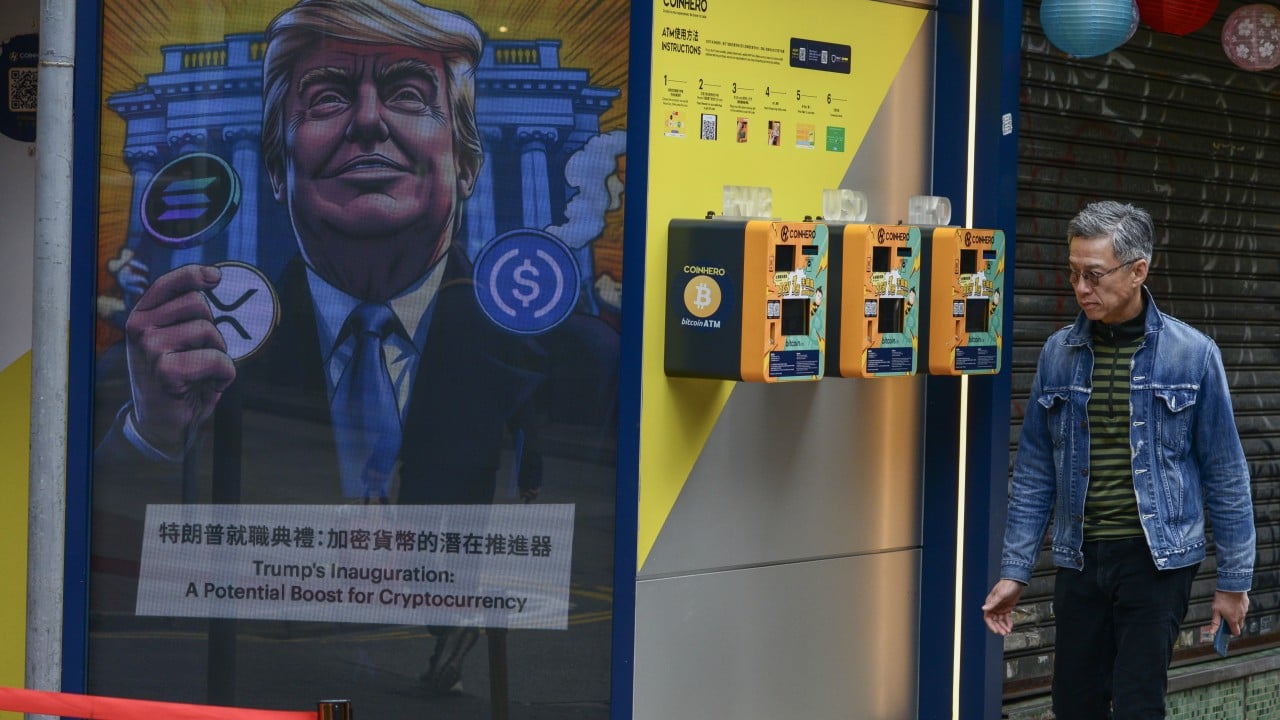
Hong Kong’s unregulated cryptocurrency kiosks function as cash conduits for international fraud syndicates, quietly converting stolen retail capital into untraceable digital assets while bypassing local anti-money laundering controls. As the Securities and Futures Commission (SFC) forces centralized virtual asset trading platforms into strict compliance regimes, criminal networks have pivoted to physical hardware. These grey-market machines offer anonymity that regulated exchanges abandoned long ago, creating an infrastructure where local victims are drained of their savings through offline conversion loops.
Understanding how these kiosks operate requires looking past the sleek interfaces and examining the mechanics of cash movement in densely populated urban districts. Traditional banking safeguards rely heavily on identity verification, transaction monitoring, and sudden-movement alerts. Grey-market crypto automated teller machines bypass these barriers entirely. A user walks up to a kiosk tucked inside a commercial arcade, feeds physical banknotes into the bill validator, and inputs a wallet address controlled by a scammer. No identification is requested. No source-of-wealth checks are performed. Within minutes, fiat currency transforms into blockchain tokens that cross international borders without friction.
The Anatomy of an Offline Trap
The victims feeding cash into these terminals rarely understand blockchain mechanics. They are typically directed there by fraudsters operating sophisticated investment schemes via encrypted messaging applications. These criminal operations rely on social engineering rather than technical exploits, cultivating relationships over weeks or months until the target is convinced they are participating in exclusive arbitrage or high-yield crypto markets.
When victims hesitate to complete online bank transfers due to institutional fraud warnings, scammers alter their playbook. They instruct the target to withdraw physical cash from their traditional bank accounts, walk to a specific physical terminal, and deposit the bills directly into a designated wallet.
Consider a hypothetical scenario illustrating this exact pipeline. A retired office worker targeted by an online investment scam is told that platform liquidity rules require cash deposits via physical kiosks to bypass banking restrictions. The scammer sends a QR code representing a private wallet address. The victim visits a local convenience arcade, inserts fifty thousand Hong Kong dollars in physical banknotes, and transfers the equivalent value in stablecoins directly to the syndicate. The physical cash is collected within hours by low-level runners, while the digital assets are split across multiple decentralized addresses, rendering recovery virtually impossible.
Regulatory Blind Spots and Enforcement Gaps
The proliferation of these machines stems from historical ambiguities in statutory definitions. While Hong Kong’s Anti-Money Laundering and Counter-Terrorist Financing Ordinance establishes rigorous oversight for online trading platforms, standalone hardware kiosks exist in a persistent enforcement grey zone. Operators frequently register as general commercial entities or shell companies, leasing floor space in small shops where oversight is minimal.
Law enforcement agencies face severe structural hurdles when attempting to shut down this ecosystem. Even when police trace illicit funds to a specific kiosk transaction, the machine’s operator often claims ignorance regarding the origin of the cash or the destination of the digital assets. By the time warrants are secured and server logs are subpoenaed, the hardware has frequently been relocated or reconfigured under a different corporate shell.
Furthermore, the barrier to entry for deploying these terminals remains low. Hardware units can be imported, installed, and operated with minimal technical overhead. Traditional financial institutions cannot monitor these physical cash injections because the transactions never touch a bank ledger until the illicit operator attempts to launder the accumulated physical cash back into the banking system through layered commercial deposits.
The Human Toll of Anonymous Rails
The consequences of this unregulated infrastructure extend far beyond abstract compliance failures. Victims targeted by physical-to-digital laundering loops lose life savings that can never be recovered through civil litigation or bank chargebacks. Because cash transactions are irreversible, and decentralized crypto transfers lack an intermediary capable of freezing funds, the moment the physical banknotes clear the machine's validator, the capital is gone.
Public awareness campaigns spearheaded by the Hong Kong Monetary Authority (HKMA) and local police forces increasingly focus on mobile wallet security and online phishing, yet physical coercion at crypto kiosks receives less direct scrutiny. Victims standing in front of a flashing screen, guided step-by-step by an invisible manipulator on a smartphone, do not view themselves as participants in a high-tech crime. They view themselves as modern investors executing a legitimate transfer.
As long as physical cash remains untethered from digital identity verification at the point of hardware conversion, underground syndicates will continue treating these urban kiosks as decentralized extraction engines. The gap between regulatory ambition in boardroom compliance departments and the harsh reality of street-level cash conversion remains wide open, leaving retail participants exposed to losses that institutional gatekeepers are powerless to intercept.