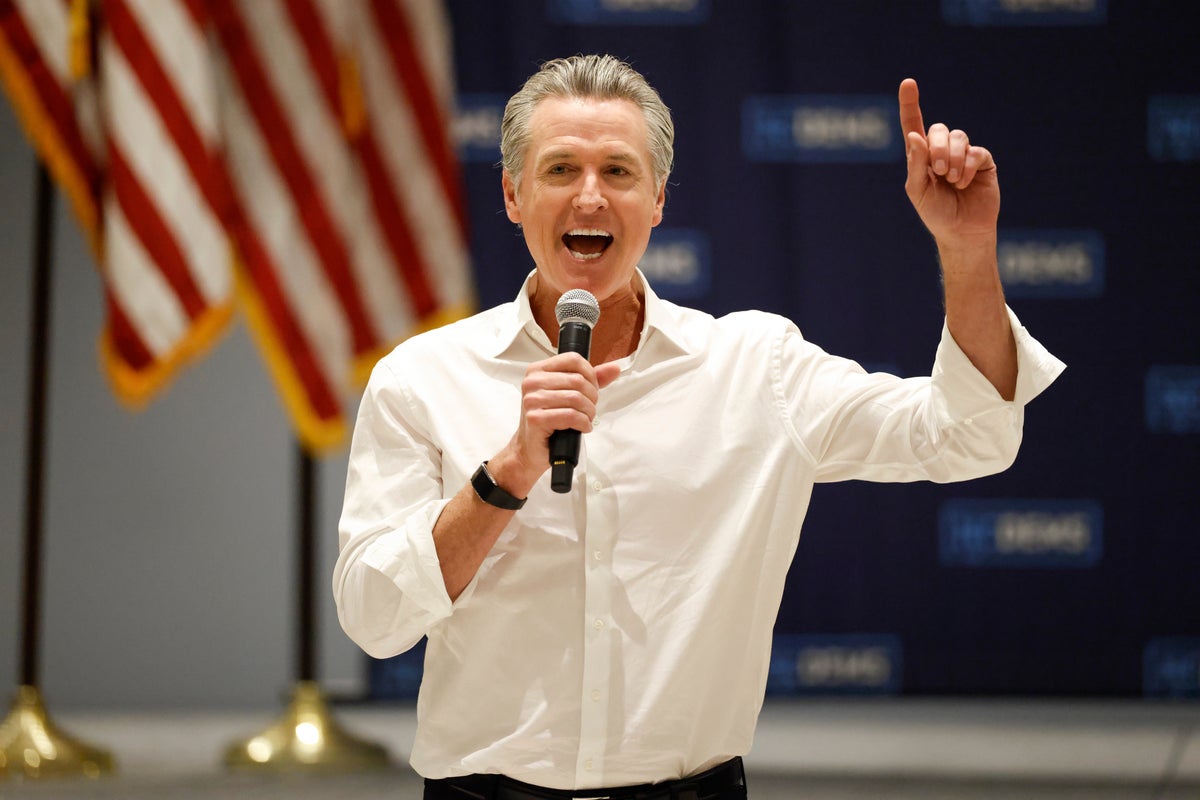
California Governor Gavin Newsom has finally dropped the coy denials, admitting during a high-stakes swing through the Carolinas that he would be lying if he said a 2028 presidential bid was not on his radar. For years, the term-limited West Coast executive played a predictable game of political hide-and-seek, winking at national ambitions while officially insisting his sole focus remained on state legislative battles and midterm defense. That thin veneer evaporated under the humid September air in South Carolina, turning an ostensible party-building trip into an unmistakable opening salvo for the next White House sweepstakes.
Yet this admission does not represent a spontaneous slip of the tongue. It marks the calculated culmination of a multi-year repositioning campaign designed to drag the California brand out of the conservative media caricature machine and into the heartland of American primary politics. Veteran observers watching the operational mechanics behind his southern tour recognize a stark reality. Newsom is not merely testing the waters; he is stress-testing an entirely new template for how a coastal progressive can survive a national primary without alienating the working-class constituencies that have long viewed the Golden State with deep suspicion.
The Geography of Ambition
South Carolina does not accidentally appear on the itinerary of someone merely looking to retire quietly to the Bay Area. As the opening primary contest on the Democratic calendar, the Palmetto State serves as an unsparing diagnostic tool for any national hopeful. Historically, California politicians crash hard upon hitting southern soil. Their cultural footprints, wealth associations, and legislative priorities are frequently weaponized by opponents before they can even unpack their bags.
Newsom understands this historical vulnerability better than anyone. Instead of parachuting into elite academic enclaves or exclusive donor salons, his recent multi-state swing purposefully targeted rural counties and competitive state house districts that voted overwhelmingly red. He raised hundreds of thousands of dollars for local legislative candidates, shook hands in districts far removed from San Francisco techno-optimism, and aligned himself directly with state party machinery.
This represents an aggressive inversion of traditional primary strategy. Rather than waiting for an invitation, Newsom is manufacturing grassroots utility. By inserting himself into mundane, down-ballot mechanics, he is trying to buy something money cannot easily secure: institutional goodwill among local operatives who remember who showed up when the cameras were pointed elsewhere.
The Anti-Caricature Counter-Offensive
For a decade, conservative media ecosystems built a highly lucrative industry out of turning Gavin Newsom into a generic symbol of coastal excess. High taxes, regulatory strangulation, homelessness crises, and runaway cost-of-living metrics provided a steady stream of ammunition. For a long time, the governor's office absorbed these blows defensively, relying on standard institutional pushback.
That playbook changed fundamentally leading up to this cycle. The launch of aggressive, unvarnished digital communication channels signaled a dramatic tactical pivot. By adopting a sharp, direct-combat posture online, Newsom stopped playing defense against national figures and started trading rhetorical punches in real time. Simultaneously, the strategic release of years of tax returns and the high-profile listing of his Sacramento-area estate are calculated moves to defuse wealth-based attacks before a national campaign can weaponize them.
It is an awkward balancing act. You cannot easily pose as a populist champion of the working class while sitting on a multi-million-dollar real estate portfolio and managing an economy plagued by stark wealth inequality. Newsom’s team knows this. Their solution is not to hide the contradiction, but to aggressively reframe it through executive competence, legislative output, and aggressive partisan combat against the federal opposition.
The Fractured Field and the Warning Signs
The Democratic Party enters this pre-primary phase in a state of profound structural exhaustion. Without a clear incumbent or a unifying ideological center of gravity, the potential field for 2028 resembles a sprawling, hyper-ambitious free-for-all. Governors like Kentucky's Andy Beshear are carving out distinct red-state appeal, while congressional heavyweights and former cabinet officials position themselves across overlapping lanes.
In this crowded ecosystem, Newsom’s primary liability is not his ambition; it is his geography. Winning a primary requires a delicate coalition of energized urban bases and skeptical rural moderates. While California's aggressive legislative maneuvering against federal opposition plays exceptionally well to the progressive base that dominates primary donor pools, it simultaneously hardens the opposition from swing-state voters who view California's policy experiments with alarm.
Furthermore, the structural shift in American politics means that traditional coastal wealth may no longer guarantee a glide path. Primary voters are increasingly cynical about slick presentation and corporate-adjacent ties, regardless of how many progressive boxes a candidate checks. Newsom's challenge will be proving that his brand of aggressive executive governance translates beyond state lines where local conditions cannot be controlled by a supermajority legislature.
The campaign machinery is spinning up earlier, louder, and with far less pretense than in any previous cycle. By finally confirming what everyone in political circles already knew, Gavin Newsom has officially fired the starting gun on a primary fight that promises to tear the party's internal factions wide open. Whether his carefully engineered southern charm and digital combativeness can overcome the immense gravity of his home state's controversies remains the defining question of the next political era. The race is underway, and there is no turning back the clock.