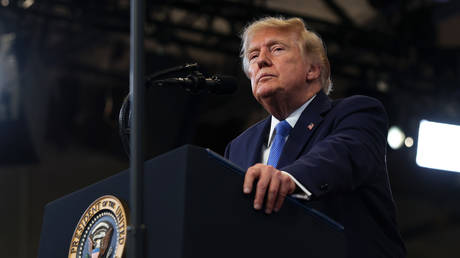
President Donald Trump’s abrupt order to substantially cut joint military exercises with South Korea has exposed a structural rot at the foundation of the 70-year bilateral security pact. Hours before the kickoff of the annual Ulchi Freedom Shield drills, a social media directive from Washington upended months of operational planning, leaving Seoul’s defense establishment scrambling to interpret whether America’s security umbrella is negotiable.
The primary driver behind this sudden reduction extends far beyond tactical disagreements over peninsula readiness. White House frustrations boiled over after Seoul declined to dispatch naval assets or military personnel to support American operations against Iran in the Strait of Hormuz. Coupled with lingering friction over stalled commitments regarding a massive multi-billion-dollar investment pledge tied to bilateral trade negotiations, Washington weaponized alliance mechanics as punitive leverage. For an Indo-Pacific strategy supposedly anchored in collective defense, treating critical warfighting simulations as transactional currency shatters the illusion of an ironclad partnership.
The Mechanics of Deterrence Under Fire
Military readiness is not a switch that can be flipped on and off without consequence. The Ulchi Freedom Shield exercises involve tens of thousands of personnel managing complex scenarios ranging from cyber warfare and GPS jamming to repelling multi-vector ballistic threats from Pyongyang. When the commander-in-chief orders sudden downsizing to placate North Korean leadership or signal personal diplomacy with Kim Jong Un, the immediate casualty is command-level muscle memory.
Tactical integration requires repetition. Operating joint command posts and synchronized artillery coordination demands thousands of hours of high-fidelity rehearsals. Scaling back these maneuvers because of a diplomatic spat over Middle Eastern oil routes introduces severe friction into a theater where North Korea continues to expand its fissile material stockpiles.
Furthermore, the timing coincides with the redeployment of vital U.S. naval assets, including the USS George Washington strike group, away from the Western Pacific to support operations in the Middle East. Stripping regional deterrence layers simultaneously while gutting allied exercises leaves a dangerous vacuum. Regional competitors note these shifts with absolute clarity.
Transactional Diplomacy Meets Geopolitical Reality
The friction between Washington and Seoul highlights a fundamental mismatch in expectations. The current U.S. administration views foreign policy through a strict ledger of immediate quid pro quo. If American troops stationed on the peninsula are expected to guarantee Seoul's safety from its nuclear-armed neighbor, Washington expects seamless alignment on global flashpoints, regardless of whether those theaters directly threaten South Korean vital interests.
Seoul operates under a different set of geographic and economic constraints. South Korea depends heavily on Middle Eastern energy imports, yet entering an active conflict in the Persian Gulf without a direct mandate creates severe domestic vulnerabilities. When South Korean leadership balked at the request to assist in the Strait of Hormuz, the response from Washington was swift and retaliatory.
This dynamic transforms treaty obligations into conditional arrangements. For decades, the deterrence architecture of Northeast Asia relied on the premise that alliance commitments survived presidential transitions and transactional disagreements. That foundational pillar is now visibly cracking.
Strategic Fallout Across the Indo-Pacific
The implications of this sudden policy shift stretch far beyond the 38th Parallel. Tokyo, Canberra, and other regional capitals are quietly recalculating their own exposure to American security guarantees.
Japan faces its own delays in critical munition deliveries as stockpiles are siphoned toward European and Middle Eastern contingencies. Observing how quickly long-standing exercises with Seoul were curtailed due to a localized disagreement over secondary theaters sends an unmistakable signal to Tokyo: reliance on Washington requires constant hedging.
Defense planners in Seoul are already accelerating alternative strategies. Discussions surrounding the acquisition of indigenous nuclear-powered submarine technology and the expedited transfer of wartime operational control have shifted from theoretical policy papers to urgent operational necessities. If the security guarantee provided by Washington becomes erratic, South Korea faces immense internal pressure to close the strategic gap independently.
The alliance is not dying overnight, but it is shedding its old skin. What remains is a leaner, far more cynical arrangement where every maneuver, base agreement, and security assurance carries an immediate price tag.