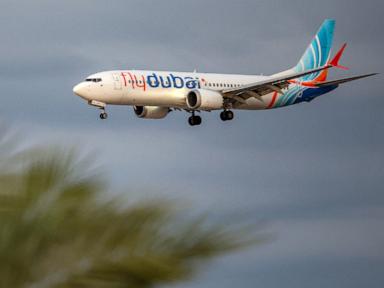
The cockpit door on a modern commercial airliner is designed to withstand a grenade blast, small arms fire, and a determined physical assault from the cabin. It is a fortress engineered to protect the flight deck from external threats. But on September 30, 2026, FlyDubai Flight 1073 proved that the most catastrophic vulnerability of a commercial aircraft is not outside the reinforced door, but sitting right inside it.
First Officer Hamam al-Hammami allegedly turned an ordinary Boeing 737 MAX 8 flight from Dubai to Ben Gurion Airport into a targeted suicide mission. Armed with a crash axe, the co-pilot launched a brutal assault on Captain Smit Machchhar over Saudi airspace, intending to dive the aircraft into a crowded terminal or landscape in Tel Aviv. Only a desperate struggle, the intervention of heroic passengers who flooded the flight deck, and the presence of off-duty pilots saved 180 souls from total destruction.
Yet, looking past the dramatic rescue misses the deeper institutional failure. This wasn't merely a rogue pilot acting in an isolated vacuum. It represents a systemic breakdown in airline vetting, background intelligence sharing, and the flawed assumption that commercial flight decks are immune to internal radicalization.
The Anatomy of an Insider Threat
Commercial aviation security underwent a violent paradigm shift after September 11, 2001. Governments poured billions into reinforced doors, passenger manifests, and strict screening protocols at terminal checkpoints. Yet these defenses operate on a binary logic: threats come from the outside, and crew members are trusted implicitly.
Al-Hammami’s digital footprint reportedly contained explicit ideological markers, including imagery associated with prominent extremist figures. Investigators examining how a radicalized individual secured a first officer position with a major carrier are finding uncomfortable answers. The vetting processes used by international commercial airlines often rely heavily on local criminal background checks, standardized psychological evaluations, and basic employment verifications. They rarely possess the cross-border intelligence-sharing capabilities required to detect sophisticated, long-term ideological grooming or hidden intent.
According to intelligence briefings surfacing in the aftermath, the suspect had mapped out the operation well in advance, specifically targeting flights heading to Tel Aviv to maximize the symbolic and physical impact. The assumption that professional credentialing functions as an adequate security filter is a dangerous illusion. When the person flying the plane is the threat, standard checkpoint protocols are entirely useless.
The Fragility of the Protocol Chain
The physical mechanics of Flight 1073 exposed how quickly safety margins evaporate when a pilot turns hostile. Once the captain was seriously wounded, the aircraft entered a steep, erratic descent that triggered structural overspeed alarms and put intense strain on the airframe.
The saving grace was an anomaly of circumstance. Captain Machchhar, despite severe injuries, managed to manually open the reinforced cockpit door—an action counterintuitive to standard anti-hijacking training which dictates the door remain locked at all costs. That single decision allowed deadheading pilots and passengers to breach the flight deck and physically overpower the attacker.
Had the captain adhered strictly to traditional cockpit security protocols of keeping the door sealed under all duress, the passengers on the other side would have been powerless to intervene before the aircraft reached its terminal dive point. Aviation safety rules are written based on historical post-mortems, leaving the industry perpetually reacting to the last catastrophe rather than anticipating the next vector. Relying on passenger intervention as a functional layer of flight deck defense is an unacceptable baseline for modern civil aviation.
Geopolitical Fallout and Regional Aviation Security
The repercussions of the incident extend far beyond the immediate trauma of the survivors. Direct commercial
The FlyDubai Incident and the New Vulnerabilities Facing Commercial Aviation
news, travel
Commercial aviation operates on an assumption of absolute predictability. Schedules, routing, air traffic coordination, and cockpit protocols are designed to eliminate variance. When an incident threatens that architecture, the shockwaves travel far beyond the tarmac. The security concerns surrounding a FlyDubai flight allegedly targeted or compromised with the intent of a catastrophic strike near Ben Gurion International Airport in Tel Aviv expose a sobering reality about modern aerospace vulnerabilities.
Security analysts and intelligence sources tracking the incident point to a terrifying vector. Modern airliners are massive, highly automated tubes flying through increasingly congested and contested airspaces. While media outlets initially focused on the raw sensationalism of a potential suicide mission or hostile cockpit intrusion, the deeper story lies in the systemic fragility of regional air corridors and the gaps in multi-layered defense protocols surrounding high-risk airports.
The Anatomy of a High-Risk Approach
Ben Gurion International Airport has long operated under a unique security microscope. Geopolitical tensions in the region mean that incoming and outgoing traffic must navigate complex airspace corridors, electronic jamming environments, and rigorous clearance verification procedures.
When a commercial carrier like FlyDubai becomes the focal point of an alleged intentional crash plot, the immediate question centers on how security barriers failed or were nearly bypassed. Security protocols are built on concentric rings of deterrence. Background vetting for flight crews, physical access controls at outstation airports across the Middle East, and real-time transponder monitoring form the baseline of this defense.
Yet, an insider threat or a compromised crew member represents the ultimate stress test for aviation security. Unlike external actors attempting to smuggle contraband or weapons past terminal metal detectors, a bad actor already inside the flight deck possesses operational control of the vessel. The historical precedents of intentional pilot-induced crashes, from Germanwings Flight 9525 to SilkAir Flight 185, proved that reinforced cockpit doors designed to keep hijackers out also locked out anyone attempting to prevent a pilot from turning the aircraft into a weapon.
The Regional Security Matrix
The Middle East is currently experiencing a fundamental transformation in its electronic, kinetic, and diplomatic security posture. Commercial aviation in this theater is no longer just moving passengers from point A to point B; it is operating across a live chessboard of electronic warfare, missile defense batteries, and rapid intelligence-sharing networks.
When rumors or preliminary intelligence reports suggest an aircraft was intended to be steered into a vital civilian hub like Tel Aviv, the implications ripple through every major airline operating in the region. Insurers recalibrate risk premiums. Regulators issue emergency directives. Pilots flying regional loops review emergency diversion protocols for hostile airspace.
The mechanics of intercepting or neutralizing a rogue civilian aircraft over a densely populated metropolitan area are horrific to contemplate. Air defense commanders face an agonizing calculus. Shoot down a commercial airliner carrying dozens or hundreds of innocent passengers to prevent a worse disaster on the ground, or trust that ground intervention or cockpit recovery can occur before touchdown. There are no clean outcomes in such a scenario, only degrees of catastrophe.
Blind Spots in Carrier Vetting and Outstation Oversight
FlyDubai, as a low-cost carrier operating a massive network stretching from Central Asia to North Africa and the Gulf, relies heavily on rapid turnaround times at decentralized outstations. While major flag carriers often maintain deep institutional control over their hubs, regional budget carriers must manage sprawling operations across jurisdictions with wildly varying security standards.
This operational model creates friction points. Background checks in certain jurisdictions may lack the depth or cross-border intelligence-sharing necessary to flag radicalization, psychological distress, or external coercion. When an airline scales rapidly, maintaining strict oversight over personnel becomes an immense logistical hurdle.
The aviation industry has resisted sweeping overhauls of cockpit access and crew mental health monitoring due to privacy concerns and union pushback. Incidents involving suspected malicious intent force a reluctant industry back to the drawing board.
The Broader Fallout for Global Aviation
The shadow cast by the Tel Aviv incident reaches far beyond regional borders. Global aviation authorities are being forced to re-evaluate how commercial flight plans interact with active conflict zones and high-threat intelligence warnings.
Intelligence agencies operate on fragments. A whisper in an intercepted communication, an anomalous financial transaction, or a suspicious travel pattern rarely provides a clean, actionable narrative before an event unfolds. Airlines are left trying to translate ambiguous threat streams into operational decisions without unnecessarily grounding fleets or panicking passengers.
The system relies on redundancy, but when the redundancy relies on human compliance within a closed cockpit, the margin for error narrows to zero. Aviation safety has traditionally evolved through blood, with every major regulatory change written in the aftermath of a disaster.
The warning signs surrounding the FlyDubai threat narrative demand that the industry abandon complacency. The next vulnerability will not look like the last one, and the traditional defenses built for a different era of geopolitical stability are no longer enough to guarantee that every plane lands safely on the other side of the runway.