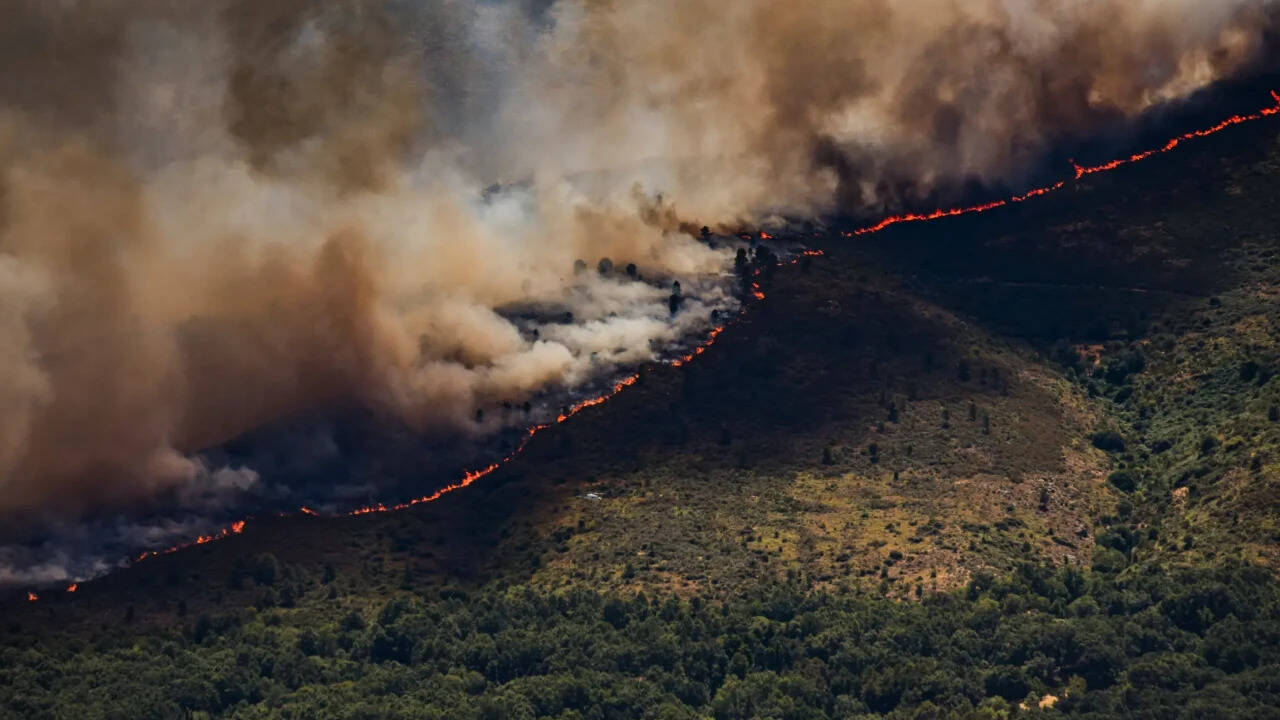
Spain has declared its first national wildfire emergency of the season as searing temperatures and gale-force winds push emergency services past their breaking point. With over 10,000 residents and tourists forced to evacuate overnight, the flames scorching Southern Europe are no longer just seasonal natural disasters. They are the predictable outcome of structural land abandonment, outdated forestry management, and a continent-wide emergency response infrastructure built for a climate that no longer exists. While ministers issue urgent appeals for civilian caution, the real failure lies in decades of policy neglect that converted the European countryside into a tinderbox.
Emergency crews across the Iberian Peninsula are battling blazes that move faster than localized suppression tactics can accommodate. Smoke plumes visible from space are smothering tourist hot spots, shutting down vital rail corridors, and forcing rural communities into makeshift shelters. Yet, the political narrative surrounding these events remains stubbornly reactive. Officials treat each flare-up as an unprecedented anomaly, ignoring the compounding variables that make these massive infernos inevitable year after year.
The Rural Exodus Created a Fire Trap
Fire needs three things to thrive: oxygen, heat, and fuel. While rising global temperatures provide the heat, European socio-economic shifts over the last half-century provided an unprecedented abundance of fuel.
For generations, traditional agriculture, livestock grazing, and timber harvesting kept wild vegetation in check. Goats cleared the underbrush. Smallholders harvested dry firewood. Terraced farming broke up continuous sweeps of forest, creating natural firebreaks across hillsides.
Then came the demographic collapse of the countryside.
As younger generations moved to urban centers for industrial and technology jobs, millions of hectares of agricultural land were simply abandoned. Fast-growing, highly flammable brush like gorse, heather, and invasive eucalyptus quickly consumed untended fields. Today, Southern Europe features vast, unbroken stretches of dense biomass sitting right next to expanding residential zones.
When a spark lands in these unmanaged spaces during a heatwave, the result is not a controllable ground fire. It is an unstoppable wall of heat that burns at temperatures high enough to melt asphalt and create its own localized weather systems.
Firefighting Suppression is Hitting a Hard Ceiling
European nations have spent billions upgrading their aerial firefighting fleets, purchasing heavy-duty water bombers, and equipping specialized military emergency units. Yet, relying entirely on suppression is a losing strategy.
Standard ground crews and water-dropping aircraft are designed to handle fires operating within specific energy thresholds. Once a wildfire crosses a heat output threshold of roughly 10,000 kilowatts per meter, direct human intervention becomes effectively useless. Water dropped from airplanes evaporates before reaching the ground, and firelines are overtopped instantly by airborne embers carried kilometers ahead of the main front.
"We are throwing twenty-first-century technology at a management problem rooted in the nineteenth century," notes one veteran forestry researcher. "You cannot drop enough water from a plane to put out a forest that has accumulated thirty years of untouched fuel."
By focusing budget priorities almost exclusively on reactive suppression—buying bigger planes and hiring seasonal crews—governments give the public a false sense of security while ignoring preventive land stewardship. Suppression buys time, but without aggressive fuel reduction, it merely guarantees that the next fire will burn hotter and faster.
The Political Failure of Prevention
Preventing catastrophic fires is not a mystery. It requires controlled burns during cooler months, mechanical clearing of high-risk corridors, financial incentives for rural land use, and strict zoning regulations that prevent urban sprawl into fire-prone wilderness.
Why isn't this happening at scale? The answer is politically uncomfortable.
- Budget Cycles Reward Crises: A politician cutting a ribbon in front of a new fleet of bright red firefighting aircraft gets an immediate PR win. A politician allocating funds for controlled winter burns—which generate smoke complaints from voters—receives zero applause.
- Environmental Red Tape: Misguided conservation policies often treat all forest intervention as environmental degradation. In several jurisdictions, bureaucracy makes it nearly impossible for private landowners to clear deadwood or conduct prescribed burns on their own property.
- Property Fragmentation: Decades of land inheritance laws have left millions of rural plots split among dozens of absent owners who cannot be located or held accountable for land maintenance.
This policy inertia transforms manageable seasonal fire cycles into catastrophic multi-nation emergencies.
The Real Cost Beyond the Scared Tourists
The immediate focus of news coverage inevitably rests on evacuated resorts and terrified vacationers. But the long-term structural economic damage to the region is far more severe.
Topsoil destruction following high-intensity fires destroys the land's ability to absorb future rainfall, leading to devastating flash floods and mudslides during winter storms. The loss of canopy cover accelerates desertification across Southern Europe, threatening water security for major metropolitan areas downstream. Furthermore, the local economies of these rural regions—already hanging by a thread—rarely recover after their infrastructure, olive groves, and timber reserves burn to ash.
Air quality degradation extends hundreds of miles past the fire zones, spiking respiratory illnesses and straining public health networks in cities far removed from the physical flames.
Rebuilding the Broken Model
Fixing this crisis requires a complete overhaul of how European nations value and manage their terrain. Spending must pivot from reactive emergency response to year-round rural management.
This means subsidizing extensive pastoral farming to reintroduce livestock as natural vegetation management assets. It means overhauling local zoning laws so that homes built in forest zones are required to maintain defensible, fuel-free perimeters. It means stripping away the administrative obstacles that prevent land managers from conducting low-intensity winter burns.
Spain's current emergency is not a surprise event. It is the invoice coming due for decades of treating rural land management as an optional luxury rather than critical national infrastructure. Until European policy shifts away from simply chasing smoke with airplanes and toward actively restructuring the landscape, each summer will bring the same predictable disaster, only on a larger scale.


