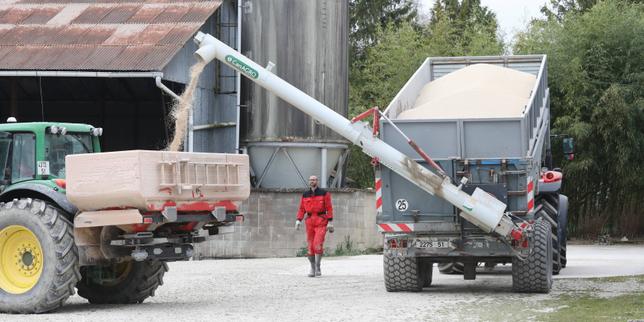
The European Commission is quietly finalizing an emergency package to redirect carbon tax revenues into direct agricultural subsidies. This desperate financial maneuvering, scheduled for presentation in Strasbourg, aims to shield a collapsing agricultural sector from a 70 percent surge in nitrogen fertilizer costs. However, Brussels is treating this as a temporary geopolitical shock rather than what it actually is: a structural failure born of the EU’s own conflicting regulatory policies. By maintaining punitive carbon tariffs on imports while tossing financial scraps to desperate farmers, the European Union is trying to put out a burning house with a teacup.
The immediate catalyst for this emergency package is the near-total closure of the Strait of Hormuz. With roughly 30 percent of the global fertilizer trade suddenly bottlenecked or choked off entirely, the basic raw materials of modern crop production—ammonia, urea, and sulfur—have become ruinously expensive. Recently making waves in related news: Why the India Nordic Alliance Matters Way More Than You Think.
But blaming the entire crisis on Middle Eastern supply lines ignores the industrial vandalism that took place long before the current blockade.
Over the last several years, Europe has systematically gutted its domestic fertilizer capacity. Roughly 10 million tonnes of domestic production have been shuttered or placed on indefinite hold, driven under by exorbitant natural gas prices and a relentless regulatory assault from the European Green Deal. Because natural gas constitutes up to 80 percent of the cash cost of manufacturing nitrogen fertilizer, European producers were already operating at a massive disadvantage compared to global peers. Further information on this are covered by NPR.
The Carbon Border Tax Trap
The critical policy failure occurred at the start of 2026, when Brussels officially implemented the Carbon Border Adjustment Mechanism (CBAM). This system applied a carbon tariff to imported nitrogen fertilizers, deliberately designed to equalize carbon pricing between European factories and foreign manufacturers.
The theory was elegant. The reality has been catastrophic.
Instead of forcing global manufacturers to decarbonize, the tariff simply functioned as a massive tax on European food production. Farm groups estimate that CBAM will drain nearly €900 million from European agricultural enterprises this year alone. By refusing to suspend these tariffs in the face of an unprecedented global supply shock, the European Commission has trapped its own agricultural sector in a devastating pincer movement. Farmers are mandated to pay premium, carbon-adjusted prices for essential imports, yet they are entirely incapable of passing those costs down to cash-strapped consumers at the supermarket counter.
The numbers simply do not work. A grain producer facing doubled input costs cannot survive when global grain markets refuse to adjust in tandem.
Dropping a Cup of Water in an Ocean
The upcoming Fertiliser Action Plan attempts to resolve this insolvency crisis with a series of complex regulatory accounting tricks. According to leaked drafts, the Commission intends to recycle revenues from the EU Emissions Trading System (ETS) back into agricultural support. This plan will be paired with a temporary relaxation of state-aid rules, allowing member states to subsidize up to 70 percent of the inflated cost of fuel and nutrients.
To a small-scale family farm, a promised cash injection of up to €50,000 looks attractive on paper. In practice, industry insiders view it as a drop in the ocean.
"Those subsidies will cover only a fraction of actual urea needs once CBAM costs are fully factored in," notes one major phosphate trader operating out of Rotterdam. "Does this resolve insolvency issues in a market dealing with the most unaffordable input-to-grain ratio in modern memory? The answer is a definitive no."
Furthermore, this financial engineering has sparked bitter internal warfare within the European Commission itself. Environmental and climate-focused directorates are fighting fiercely against industrial and agricultural departments. The current compromise—slowing down the planned phase-out of free carbon allowances for fertilizer factories—is a classic Brussels half-measure. It pleases no one. It delays industrial decarbonization while failing to lower input costs quickly enough to prevent widespread farm bankruptcies before the autumn planting season.
The Mirage of Biological Alternatives
To deflect from these immediate failures, the Commission’s upcoming plan leans heavily on long-term rhetoric regarding alternative nutrients. The document outlines ambitious pathways for organic fertilizers, processed manure, and biogas digestates. It promises the creation of "green ammonia corridors" connecting European ports with clean energy projects in North Africa.
This is policy written by bureaucrats who have never stood in a muddy field.
While biological nutrients and green ammonia represent a necessary evolutionary step for global agriculture, they cannot replace conventional nitrogen at scale today. The infrastructure does not exist. The production volume is minuscule. Telling a commercial wheat farmer in France or Poland to replace synthetic urea with unrefined organic manure during a global supply blockade is not a strategic transition; it is an abdication of governance.
What Brussels refuses to admit is that its climate policy and its food security strategy are fundamentally at war. You cannot tax fossil-fuel inputs into oblivion before viable, scalable alternatives exist without triggering an immediate domestic food crisis.
The political consequences of this blindness are already manifesting. Tractor blockades are reforming across Europe as farming federations realize the upcoming Action Plan offers zero relief on import tariffs. If the Commission continues to prioritize the ideological purity of its carbon border tax over the basic financial viability of its agricultural sector, the true cost of this fertilizer crisis will not be measured in euros or metric tonnes. It will be read clearly on the empty shelves of European supermarkets by the spring of 2027.