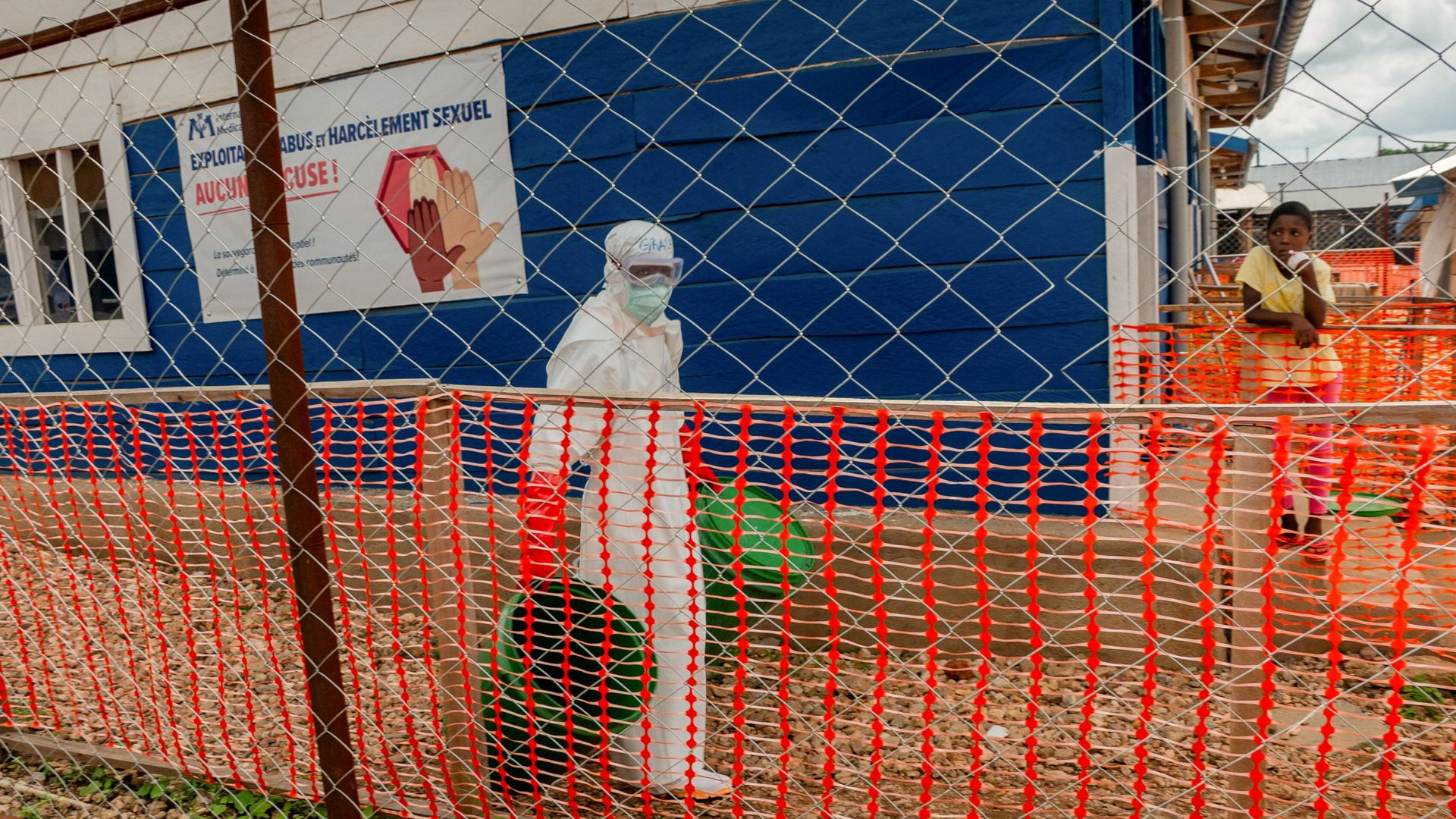
A British doctor who contracted Ebola while working in the Democratic Republic of the Congo was flown back to the United Kingdom in early November 2026 for specialized care at London's Royal Free Hospital. Headlines reduced the operation to a neat reassurance: a Briton with Ebola is being treated in the UK, and the risk to the British public remains low.
That framing misses the real story.
After decades covering biosecurity, hospital containment, and cross-border outbreaks, I have learned that the moments governments declare "low risk" are often the exact moments we should look hardest at what is failing thousands of miles away. Flying a single patient into a high-level isolation unit in north London is a triumph of clinical logistics. It is also a stark mirror held up to an outbreak in Central Africa that has already passed 11,600 confirmed cases and 5,600 deaths, driven by the Bundibugyo virus.
When a frontline clinician is evacuated back to Britain, the headline asks whether London is safe. The harder question is what that evacuation reveals about the collapse of front-line containment on the ground, the unequal architecture of global emergency care, and the quiet vulnerabilities that persist even inside world-class hospitals.
Why One British Patient Masks an Outbreak Out of Control
Public health officials are right on one narrow technical point: a single planned medical evacuation of a Briton with Ebola into a specialized unit does not mean the virus has suddenly become airborne or that Britain faces an imminent domestic wave. Ebola spreads through direct contact with the blood, body fluids, or tissues of an infected person or animal, or via contaminated surfaces and materials. Controlled transport changes very little for a typical commuter in London.
Yet treating the evacuation as an isolated event distorts reality. The doctor flown home in November 2026 was working amid the deadliest Ebola outbreak in Democratic Republic of the Congo history, one that crossed 10,000 confirmed cases in 163 days. That pace outstripped the 2014 to 2016 West Africa epidemic by 51 days at the equivalent milestone.
Numbers like those do not happen in a vacuum. Data reported by the Africa Centres for Disease Control and Prevention covering mid-May to mid-November 2026 showed that only 11 percent of confirmed cases came from contact lists, far below a 95 percent target. Nearly nine out of ten confirmed cases were turning up outside known contact chains.
When 89 percent of confirmed cases emerge outside contact lists, containment is no longer chasing the spark. It is chasing the fire through thick smoke.
In plain terms, transmission chains are breaking away from public health teams before contacts can be traced and monitored. Armed conflict, attacks on health workers, missing wages for frontline staff, and shortages of personal protective equipment have hollowed out local response capacity across provinces such as Ituri and Nord-Kivu. Spillover cases in neighboring Kenya and Nigeria underscore how porous borders become when an outbreak plateaus at several hundred confirmed cases a week.
The evacuation of a British clinician is therefore a symptom of front-line strain. Even trained professionals working under extreme pressure can suffer accidental exposures when wards are overwhelmed, supplies run thin, or security deteriorates.
The Machinery Behind a High-Level Isolation Evacuation
Moving a patient infected with a high-consequence pathogen across continents is not like booking a medical charter. Every link in the chain—from the tarmac in Central Africa to a sealed room in Hampstead—is choreographed to keep blood and body fluids contained while keeping a rapidly deteriorating patient alive.
Patients with Ebola typically develop symptoms two to 21 days after exposure, starting with fever, aches, pains, and fatigue before progressing to vomiting, diarrhea, and unexplained bleeding. In outbreaks with a crude case-fatality ratio near 49 percent, timing is everything. Dehydration and electrolyte imbalances can spiral quickly if supportive care is delayed.
Tarmac to Isolation Suite
First comes coordinated air transport and ground security. During the 2014 West Africa crisis, the Royal Air Force used a specially equipped C-17 aircraft to bring British nurse William Pooley back to the UK, while UK military nurse Corporal Anna Cross was also flown home for specialist care in 2015. In November 2026, a joint effort involving the UK and DRC governments, international health partners, and emergency convoys brought the infected British doctor to the Royal Free Hospital in London.
Once inside a High-Level Isolation Unit, or HLIU, the environment is engineered around strict airflow, waste handling, and access control. UK clinical guidance specifies that only staff trained and competent in unified high-consequence infectious disease personal protective equipment enter the patient room, and every entry is logged for follow-up. Flexible film patient isolators with built-in portholes can further contain body fluids and reduce suite contamination, while controlled ventilation and exhaust filtration ensure air leaving the unit does not pose a hazard outside.
Terminal decontamination has also evolved. Following the 2014 to 2015 cases, Royal Free clinicians and partners documented using hydrogen peroxide vapor to decontaminate the isolation unit, allowing it to return to service faster than older formaldehyde methods.
Supportive Care vs. Experimental Countermeasures
Many casual readers assume a specialized London hospital possesses a magic bullet that cures Ebola on contact. That is a myth.
The bedrock of survival remains aggressive supportive care: intravenous fluids, electrolyte replacement, oxygen therapy, and organ support such as dialysis or mechanical ventilation when needed. In resource-rich hospitals with continuous monitoring and high nurse-to-patient ratios, correcting shock and electrolyte shifts dramatically improves survival odds compared with overstretched rural clinics.
Targeted therapeutics and vaccines have expanded over the past decade, though availability and trial status vary by virus species and outbreak phase. During the 2014 to 2015 response, patients treated at the Royal Free received experimental agents such as ZMapp or MIL 77 alongside intensive supportive care, while vaccine development accelerated. In 2026, human trials of an Ebola vaccine developed at the University of Oxford began over the summer, even as the large Bundibugyo virus outbreak in the DRC raged on.
Yet no containment system is infallible. History offers a sobering reminder from the 2014 to 2016 West Africa outbreak: Scottish aid worker Pauline Cafferkey returned through UK entry screening—which at the time relied largely on temperature checks and questionnaires—before being diagnosed in Glasgow and transferred to the Royal Free. She survived critical illness and later experienced serious late complications after the virus persisted in immune-privileged sites such as cerebrospinal fluid, requiring repeat specialist care.
Ebola does not simply vanish the moment a blood test turns negative. Survivors can face lingering clinical issues, and health systems must stay vigilant long after the initial discharge.
The Two-Tier Reality of Outbreak Response
Here is the uncomfortable truth that polite press releases rarely spell out. Evacuation creates a sharp two-tier reality: one standard of care for an international responder with a passport and an airbridge, and another for the local nurses, drivers, burial teams, and families living inside the hot zone.
Consider a hypothetical example to see how starkly the odds diverge. Suppose two health workers—one an evacuated foreign physician, the other a local Congolese nurse—both fall ill with fever and vomiting on the same day in an active outbreak zone. The foreign physician can be stabilized, loaded onto a dedicated evacuation flight, guarded by a police convoy, and placed inside a purpose-built isolation suite with round-the-clock specialist staffing. The local nurse, by contrast, may face delayed diagnostic transport, erratic PPE supply, unpaid or late wages, and community clinics lacking intensive care equipment.
That disparity is not merely a moral failure. It is an epidemiological trap.
If local health workers lack protective gear, timely pay, and safe working conditions, frontline attrition rises. If community members fear poorly equipped centers or watch loved ones die outside treatment units, cases go unreported and burials happen without safe protocols. Every unmonitored transmission chain in Central Africa increases the chance of cross-border spread and prolonged regional instability.
| Dimension | Evacuated Responder in UK HLIU | Frontline / Community Case in DRC Hot Zone |
|---|---|---|
| Care Setting | High-level isolation unit (such as Royal Free Hospital) with specialized teams | Local clinics or treatment centers often stretched by high caseloads and conflict |
| Supportive & Organ Care | Continuous monitoring, IV fluids, advanced organ support | Often constrained by supply shortages, infrastructure limits, and late presentation |
| Containment Bottleneck | Transport security, PPE discipline, and post-recovery follow-up | Contact tracing gaps, insecurity, and community deaths outside centers |
| Broader Risk Signal | Low general risk to UK public when isolated properly | High regional spread risk and ongoing strain on health systems |
Critics sometimes argue that expensive medical evacuations drain money away from outbreak control. That argument is too simple. Recruiting and retaining skilled clinicians to deploy into lethal environments is difficult enough without telling them they will be abandoned if infected. A credible evacuation guarantee is part of how international teams function.
The real policy flaw lies in imbalance. Governments will mobilize diplomatic clearances, aircraft, and specialist hospital beds in hours to bring a single citizen home, yet funding and security support for local contact tracers, supply chains, and clinic infrastructure in the DRC routinely lag behind the curve of the outbreak.
What Actually Determines Whether London Stays Safe
Politicians love reassuring the public that the risk to Britain is low. As a statement about immediate everyday danger inside the UK, that assessment is grounded in how Ebola transmits and how specialized units operate.
As a measure of long-term security, "low risk" is a fragile cushion. Pathogens do not respect diplomatic assurances or hospital perimeters if an epidemic burns unchecked across a region and tests travel routes week after week.
Real protection depends on three unglamorous disciplines:
- Drilling hospital readiness before crises hit: Routine hospitals outside London must still spot a returning traveler with fever and travel history quickly, isolate safely, and call specialist infectious disease consultants without panic.
- Protecting the front line at the source: Getting PPE, timely wages, security guarantees, and diagnostics to local responders in the DRC is the fastest way to shrink the outbreak and lower the odds of further exposures.
- Sustaining long-term survivor and research support: Building better vaccines, faster diagnostics, and follow-up care for post-Ebola complications turns one-off emergency responses into durable capability.
When a Briton with Ebola is flown home for treatment, the safest response is neither complacency nor alarmism. Watch what happens in the clinics, roads, and laboratories where the virus is actually spreading—because that is where the outcome of the outbreak is decided.