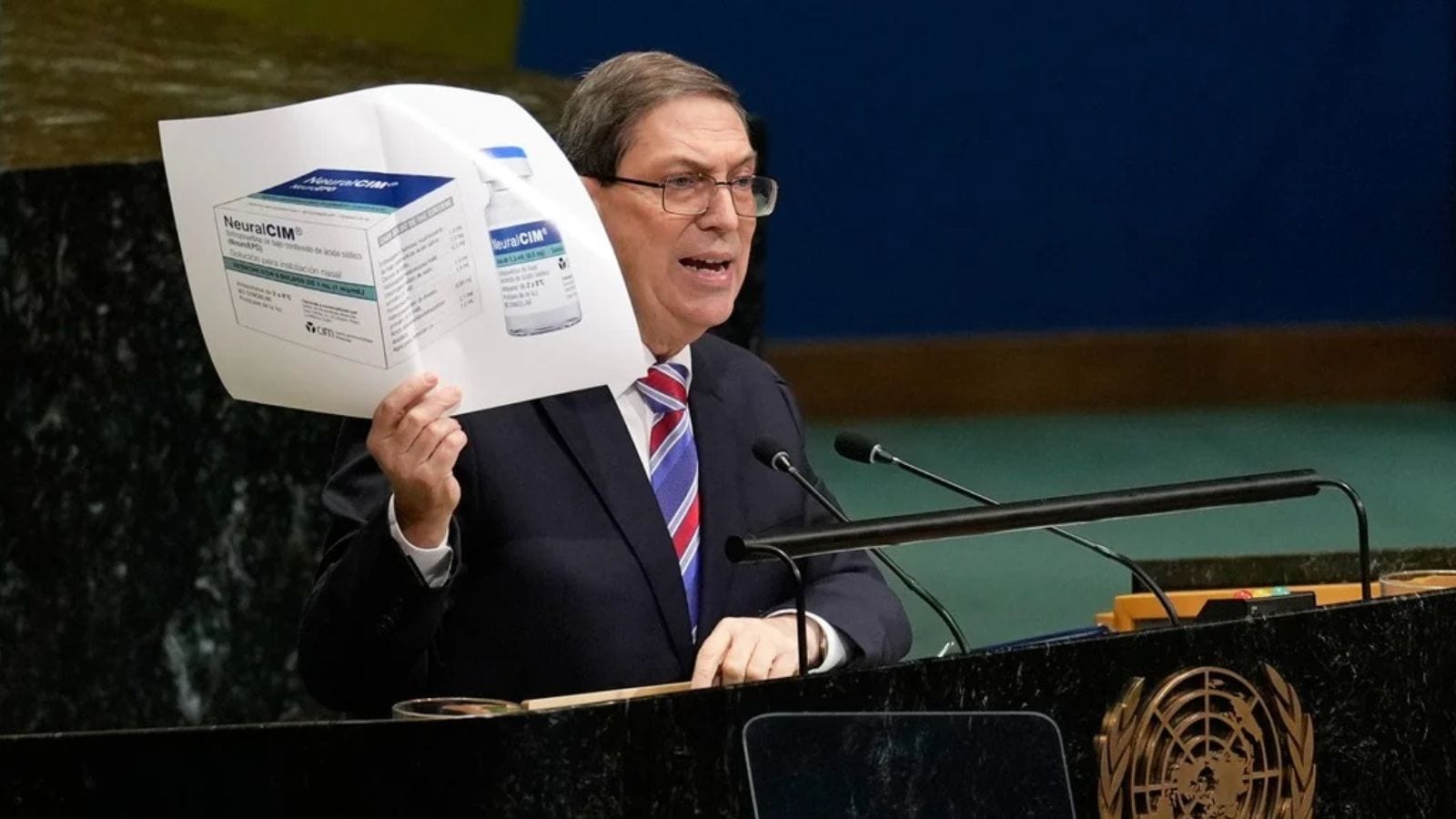
Every autumn, the United Nations General Assembly stages a familiar diplomatic ritual where the overwhelming majority of the world votes to condemn the decades-old American economic embargo against Cuba, yet recent lobbying campaigns by the Trump administration have quietly fractured that near-total consensus by persuading several nations to abstain or vote alongside Washington. While the non-binding resolution still passes by a massive margin, the shifting tally reveals a calculated geopolitical pressure campaign targeting aid-dependent governments, shifting regional alliances in Latin America, and an aggressive use of bilateral trade incentives to peel away traditional Havana supporters.
For more than three decades, this annual ballot in New York has functioned as a barometer of American diplomatic isolation on one specific issue. Usually, the scoreboard looks lopsided to the point of absurdity. Over 180 nations routinely demand an immediate end to the commercial, financial, and economic blockade first imposed during the Cold War. Only the United States and Israel consistently stand in opposition, occasionally joined by a lone microstate or a temporary ideological ally.
The numbers tell a different story when Washington actually decides to work the room.
When the Trump administration returned to a posture of maximum pressure toward Havana, the diplomatic playbook shifted from passive acceptance of the annual rebuke to active vote-whipping. American envoys in capitals from Central America to Eastern Europe and the Pacific Islands delivered a blunt message. Abstaining or voting no was no longer treated as a symbolic gesture on an obscure Caribbean dispute. It became a direct test of bilateral alignment with the White House.
How Washington Flips Votes in the General Assembly
To understand why a small nation suddenly changes its stance on a resolution it supported for twenty consecutive years, you have to look away from the speechmaking on the East River and follow the quiet conversations happening in finance ministries and foreign offices weeks before the vote.
The United States rarely persuades countries on the ideological merits of the Cuban Liberty and Democratic Solidarity Act, better known as the Helms-Burton Act of 1996. Most foreign diplomats view the extraterritorial reach of American sanctions as a violation of international trade norms. Instead, American negotiators rely on transactional diplomacy.
Consider how bilateral leverage operates in practice. A developing nation might be negotiating a security assistance package, seeking favorable tariff exemptions, or hoping for American backing on a critical loan tranche at the International Monetary Fund or the Inter-American Development Bank. None of these items are formally linked to the Cuba vote on paper. Yet when a senior State Department official reminds a foreign minister that the White House is closely watching the General Assembly tally, the subtext requires zero translation.
In several cases, the pressure targets countries undergoing domestic political transitions. Right-leaning governments in Latin America, often elected on platforms hostile to socialist administrations in Caracas, Managua, and Havana, require very little pushing to break from regional consensus. For these leaders, abstaining on the Cuba resolution signals ideological solidarity with Washington and distances their administrations from the leftist bloc known as ALBA.
Other nations sit out the vote simply to avoid becoming collateral damage. By choosing abstention rather than a direct "no," a government avoids triggering domestic protests from left-wing unions or university groups at home while still satisfying Washington's minimum demand that it refuse to endorse the condemnation.
The Architecture of the Embargo and Why It Endures
Critics of American policy often describe the embargo as a single executive order that a president could erase with the stroke of a pen. That is a fundamental misunderstanding of how the sanctions regime is wired into American law.
What began in the early 1960s through presidential proclamations under the Trading with the Enemy Act evolved over sixty years into an intricate web of overlapping statutes. The decisive shift occurred in the 1990s. Following the collapse of the Soviet Union, Congress passed the Cuban Democracy Act of 1992 and subsequently the Helms-Burton Act.
These laws stripped the executive branch of the unilateral authority to lift the embargo. Under current statute, the president cannot terminate the core economic restrictions unless a certified transition government is in place in Havana—one that explicitly excludes the Castro family, legalizes all political parties, frees political prisoners, and schedules internationally monitored elections.
Because Congress holds the keys to the statutory lock, presidential administrations can only tinker at the margins. During the Obama administration, the White House used executive licensing authorities to expand travel, ease remittance caps, and allow limited telecommunications and agricultural partnerships. Those openings did not repeal the embargo; they merely carved temporary regulatory tunnels underneath it.
When the Trump administration took office, it systematically sealed those tunnels.
Key Mechanisms of the Maximum Pressure Campaign
- Title III of the Helms-Burton Act: For twenty-three years, every American president—Democrat and Republican alike—suspended Title III every six months to avoid alienating European and Canadian allies. Title III allows U.S. nationals, including naturalized Cuban Americans, to sue foreign companies in American federal courts if those companies "traffic" in property confiscated by the Cuban government after the 1959 revolution. By allowing Title III to take full effect, the administration instantly chilled foreign direct investment across the island.
- The State Sponsors of Terrorism Designation: Returning Cuba to the State Sponsors of Terrorism list creates an immediate compliance nightmare for global banks. Even when a specific transaction is legally permissible under humanitarian exemptions, international financial institutions routinely freeze accounts or reject wire transfers involving Cuba simply because the compliance risk and potential Treasury Department fines outweigh any possible profit.
- Crackdowns on Cuban Medical Missions: Havana relies heavily on exporting doctors and nurses to foreign governments as its single largest source of hard currency. Washington targeted this revenue stream directly by imposing visa restrictions on foreign officials who facilitate these medical contracts, framing the programs as state-sponsored human trafficking.
- Restrictions on Remittances and Travel: Eliminating people-to-people educational travel categories and capping or blocking Western Union channels choked off the primary lifeline sustaining Cuba's fledgling private sector.
The Domestic Political Calculus Driving Washington
Foreign policy analysts outside the United States frequently struggle to understand why Washington maintains a posture that isolates it at the United Nations every single year. From a purely global diplomatic standpoint, the annual vote looks like an unforced error that hands Havana an easy propaganda victory.
Inside the American political system, the incentives run in the exact opposite direction.
The voting bloc of Cuban Americans, particularly concentrated in South Florida, exercises outsized influence in presidential and congressional politics. For decades, electoral survival in Florida required candidates from both major parties to demonstrate unyielding hostility toward the government in Havana. While Florida has shifted decisively toward the Republican column in recent election cycles, the political calculus has not softened. Instead, hardline policies toward Cuba have become a central pillar of a broader regional strategy aimed at confronting socialist governments across the Western Hemisphere, linking Havana directly to political crises in Venezuela and Nicaragua.
There is also a deep ideological conviction among key policymakers that economic deprivation is the only mechanism capable of forcing structural change inside a one-party state. Proponents of the embargo argue that any hard currency flowing into Cuba inevitably ends up in the coffers of GAESA, the sprawling military-run conglomerate that controls the island's most lucrative hotels, import-export firms, and retail chains. From this perspective, easing sanctions does not empower ordinary Cuban entrepreneurs; it merely subsidizes the security apparatus that suppresses them.
Havana's Economic Reality and the limits of Diplomacy
Walk through the streets of Old Havana or Santiago de Cuba today, and the theoretical debates in the UN General Assembly chamber feel detached from daily survival. Cuba is enduring its worst economic contraction since the "Special Period" of the early 1990s, when the sudden disappearance of Soviet subsidies collapsed the island's gross domestic product by roughly a third.
Blackouts routinely stretch for twelve to eighteen hours a day across provinces outside the capital due to an aging, poorly maintained electrical grid and chronic fuel shortages. Pharmacies lack basic antibiotics and analgesics. Inflation has hollowed out state salaries, driving hundreds of thousands of working-age Cubans—doctors, engineers, teachers, and tradespeople—to emigrate through Central America toward the southern border of the United States.
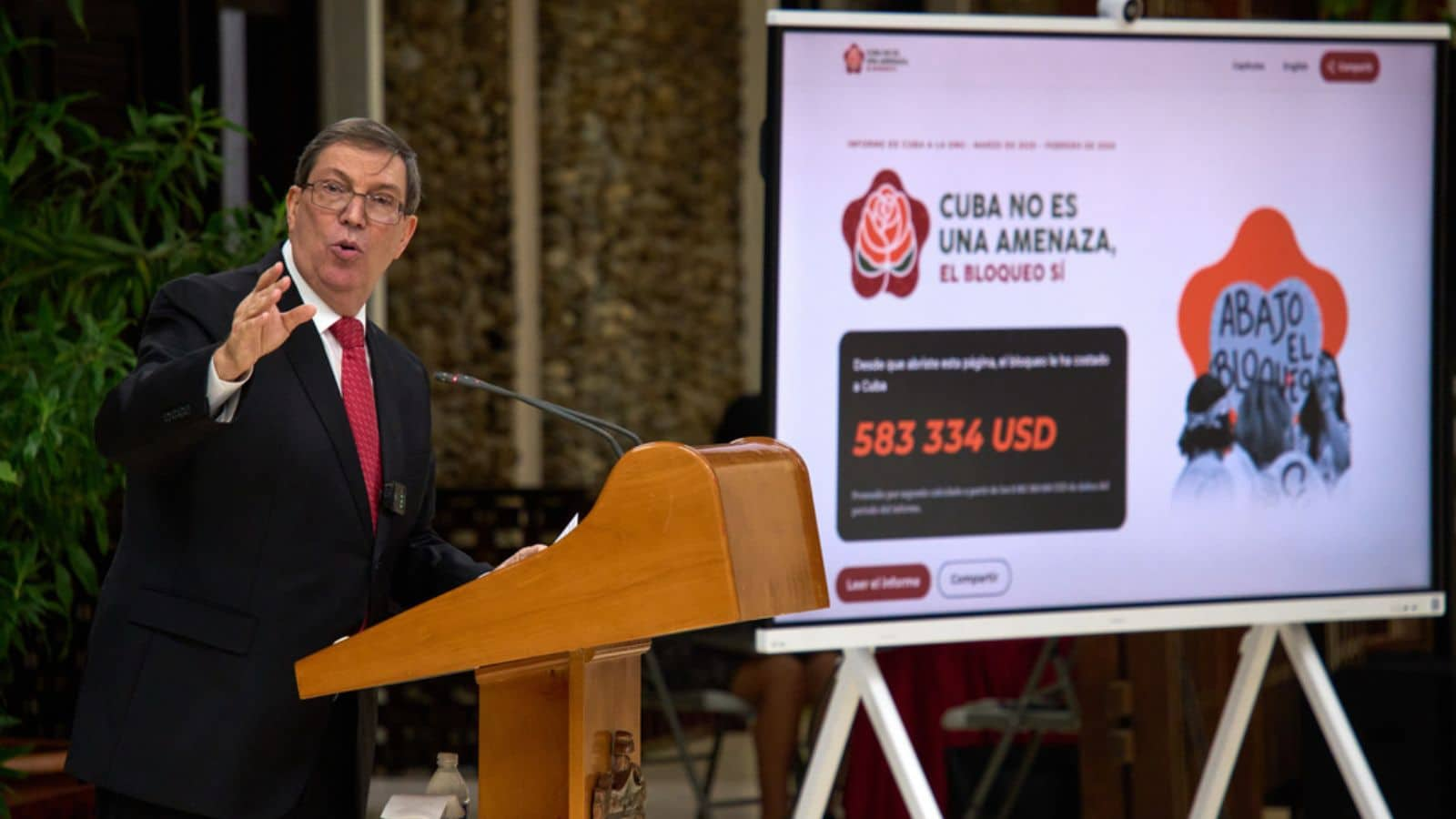
Havana's official narrative blames the el bloqueo (the blockade) for every broken generator and empty grocery shelf. At the United Nations, Cuban diplomats present detailed accounting estimates claiming the embargo has cost the island's economy tens of billions of dollars over six decades.
Independent economists and veteran observers of the island see a more complicated reality.
The American embargo undeniably inflicts severe damage. Being locked out of the world's largest consumer market just ninety miles away forces Cuba to pay inflated shipping costs for basic grains from distant suppliers and cuts off access to dollar-denominated credit markets. However, the embargo did not force the Cuban government to maintain a dysfunctional dual-currency system for decades, nor did it prevent Havana from allowing state-owned agricultural enterprises to mismanage domestic food production to the point where a fertile tropical island imports over seventy percent of its food.
Even when the Cuban government reluctantly legalized small and medium-sized private enterprises—known as mipymes—in 2021, bureaucratic bottlenecks, arbitrary price caps, and sudden regulatory reversals repeatedly undermined investor confidence. External sanctions and internal economic mismanagement operate like two jaws of a vise, crushing living standards while giving each government a convenient villain to blame.
Why the UN Vote Still Matters Despite Being Non-Binding
A cynical observer might ask why the White House bothers spending diplomatic capital to convince a handful of small nations to abstain on a General Assembly resolution that carries zero legal weight. Unlike resolutions passed by the UN Security Council, General Assembly votes cannot compel action, deploy peacekeepers, or overturn domestic legislation passed by the U.S. Congress.
Yet symbolism in international politics shapes long-term legitimacy.
For Havana, the annual vote is an essential tool for breaking out of diplomatic isolation. When 185 or 187 countries vote in favor of Cuba's resolution, Cuban state media broadcasts the tally endlessly to its domestic population as proof that the world stands with the revolution and that Washington is the true rogue actor. It also provides political cover for European, Asian, and Latin American governments to maintain diplomatic relations, sign cultural agreements, and defend their companies against American extraterritorial sanctions.
When the Trump administration succeeds in peeling away even five or ten votes—turning unanimous regional blocs into fragmented groups of "yes," "no," and "abstain"—it punctures that narrative of total global consensus. It demonstrates to allies and adversaries alike that crossing Washington carries tangible bilateral costs, even on resolutions once considered routine diplomatic formalities.
Furthermore, these votes serve as a testing ground for coalition building on more consequential UN battles. The same diplomatic muscle used to secure abstentions on the Cuba resolution is deployed when Washington needs votes to block seating certain regimes on the UN Human Rights Council, counter Chinese influence in specialized UN agencies, or rally support for sanctions against Iran and North Korea.
The Structural Deadlock
Look closely at the mechanics of this dispute, and a stark reality emerges. Neither the annual condemnation in New York nor the aggressive vote-whipping from Washington is designed to produce a breakthrough in bilateral relations. Both maneuvers are aimed at audiences far removed from the negotiating table.
The Cuban government uses the UN stage to validate its survival and deflect responsibility for systemic domestic failures. The American administration uses the vote tally to enforce discipline among allies, reward ideological partners in the Western Hemisphere, and satisfy domestic constituencies that demand uncompromising pressure on Havana.
Meanwhile, the statutory framework of the Helms-Burton Act remains locked in place, ensuring that the embargo will outlast another cycle of speeches, abstentions, and diplomatic arm-twisting. Until political conditions shift fundamentally inside either Washington or Havana, the annual General Assembly session will remain what it has been for over thirty years—a high-stakes scorecard measuring global alignment over a Cold War conflict that refuses to end.