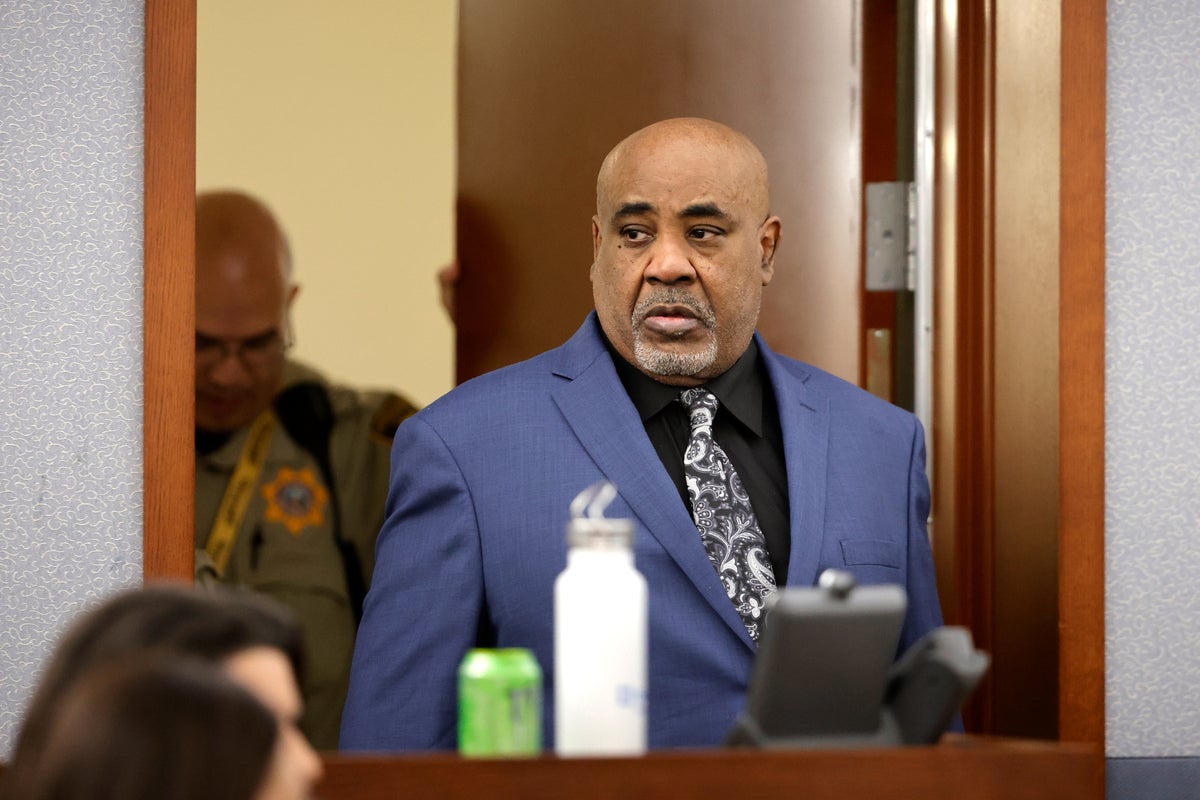
David Anthony Burke, the internet-phenomenon musician known as D4vd, stood inside a Los Angeles courtroom and watched his high-powered defense apparatus evaporate. Blair Berk, Marilyn Bednarski, and Regina Peter—a trio of elite Hollywood defense attorneys who command astronomical retainers—officially stepped away from representing the singer on capital murder charges. In their place, a Los Angeles County public defender was appointed.
The shift from private Hollywood fixers to state-funded counsel marks a violent pivot in a case that has horrified the music industry. Burke is accused of murdering 14-year-old Celeste Rivas Hernandez, whose decomposing, dismembered remains were discovered stuffed into the front trunk of his Tesla in September 2025. Prosecutors allege a horrifying motive: the victim threatened to expose an abusive sexual relationship that began when she was thirteen, right before Burke's debut album release.
When a defendant backed by millions in streaming royalties trades elite private counsel for a public defender, observers immediately jump to conclusions about cash flow. Financial asset shielding strategies, such as transferring real estate holdings to family members, often cloud the true financial picture of defendants facing massive civil liability and criminal penalties. Yet money is rarely the sole driver when a capital case undergoes a seismic legal shift of this magnitude.
The Anatomy of a Defense Breakdown
High-profile criminal defense operates on a strict alignment of reality. Elite attorneys can manage public relations, spar aggressively during preliminary hearings, and contest the admissibility of physical evidence. When the preliminary hearing concludes with a judge ruling that mountains of overwhelming evidence warrant a trial, the strategic landscape shifts entirely.
Clients accustomed to absolute control often clash with veteran attorneys who deliver hard truths. Prosecutors laid out a brutal timeline during the July preliminary proceedings. Text messages recovered from the victim's phone contained a chilling warning sent the night before her disappearance.
An Uber ride ordered by Burke brought the teenager to his Hollywood Hills home, where prosecutors argue her phone went permanently silent. Physical evidence recovered from the scene, combined with forensic timelines tracking the Tesla to a tow yard, created a forensic wall that expensive legal maneuvering struggles to scale.
When defense counsel tells a defendant that an acquittal is statistically improbable and that the primary objective is avoiding a sentence of life without parole or the death penalty, friction invariably occurs. Defendants trapped in cognitive dissonance frequently mistake realistic legal counsel for a lack of fight. They demand magic where mathematics and forensics dictate only damage control.
The Public Defender Misconception
Public perception paints public defenders as overworked, underfunded attorneys fit only for low-level docket processing. That stereotype collapses entirely within specialized units like the Los Angeles County Public Defender's Office, especially when handling complex homicide trials.
Los Angeles maintains the oldest and largest public defender operation in the country. The institutional attorneys handling capital cases possess deep familiarity with local judges, forensic experts, and prosecuting tendencies that boutique private firms often lack. They do not rely on Hollywood bluster. They operate heavy-duty investigative teams accustomed to parsing complex DNA data and digital forensics under crushing workloads.
Transitioning to a public defender in a California capital case requires a formal indigency assessment, meaning the court evaluates whether the defendant retains liquid assets to hire private counsel. Even if hidden assets exist, a court will step in to appoint counsel when private representation breaks down irrevocably and the constitutional right to a defense hangs in the balance.
The Reality of Capital Case Mathematics
The stakes for Burke changed permanently the moment the District Attorney's office filed special circumstance allegations. Lying in wait, witness murder, and murder for financial gain transform a standard criminal prosecution into a battle for survival against the state.
At this stage of a high-profile prosecution, the theater ends. The reality of a potential death sentence or life behind bars sets in. Private lawyers accustomed to managing celebrity misdemeanors or corporate white-collar disputes occasionally find themselves ill-equipped for the grim, granular realities of defending a heinous capital murder indictment where the physical evidence spans multiple jurisdictions and digital footprints.
Burke faces a court appearance in October, where his new defense team will begin parsing the wreckage of a trial strategy built from scratch. The glamour of the charts, the streaming metrics, and the sold-out festival appearances have vanished into the fluorescent glare of a downtown Los Angeles courtroom.
The state machinery moves forward, unbothered by who sits at the defense table.