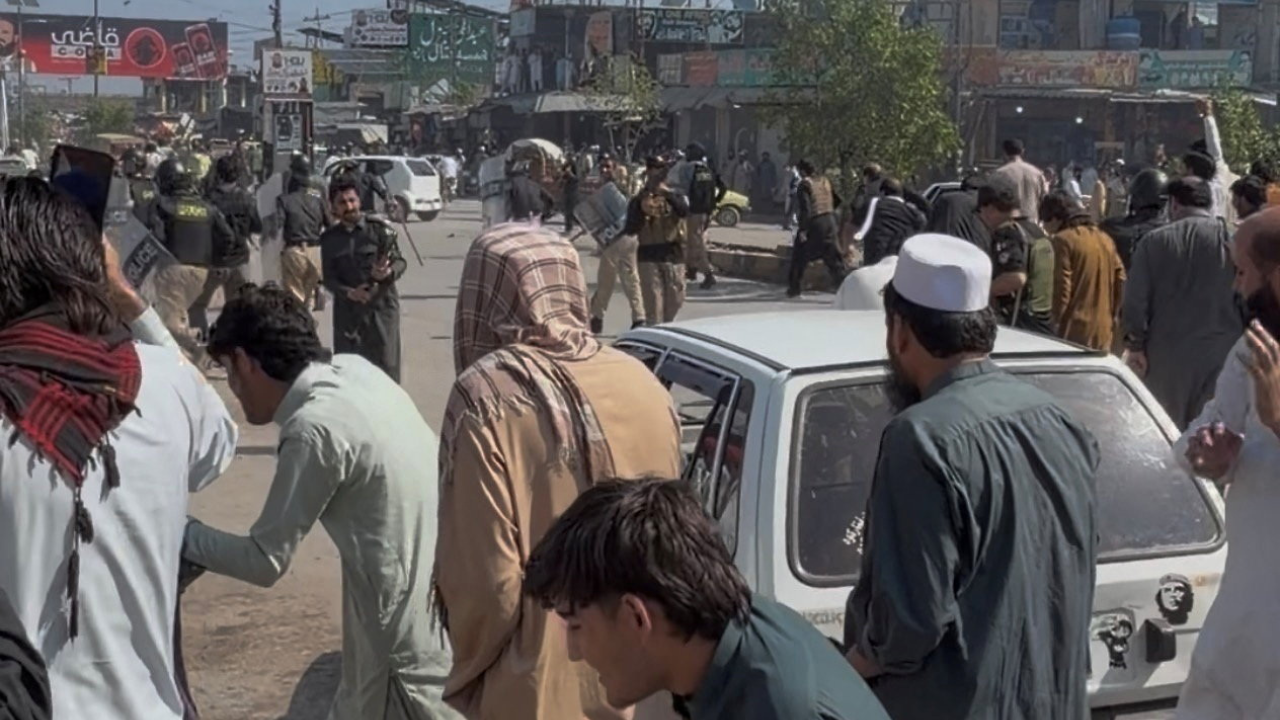
Afghan returnees in Pakistan's Khyber Pakhtunkhwa province are facing widespread police raids, extortion, and arbitrary detention following the declaration of a provincial emergency. Documentation of these abuses points to a systematic campaign of harassment targeting both undocumented migrants and holders of valid Proof of Registration (PoR) and Afghan Citizen Cards (ACC). Local law enforcement agencies are utilizing emergency powers to bypass standard legal protections, turning a humanitarian crisis into a lucrative enforcement dragnet while pushing thousands of vulnerable families toward forced deportation across the Durand Line.
The mechanics of this crackdown are straightforward. Provincial authorities declare an emergency—often citing security threats, border instability, or administrative strain—and immediately expand the discretionary powers of local police stations. Standard judicial oversight disappears. Warrants become optional. For Afghan families living in Peshawar, Nowshera, Mardan, and the surrounding districts, a state of emergency translates directly into midnight knocks on the door and sudden sweeps through informal settlements. Also making headlines in this space: Why Trump’s $1 Million Voter Fraud Bounty Is Actually a Stress Test Democracy Needs.
To understand why this is happening now, you have to look beyond the official press releases from Islamabad and Peshawar. Publicly, the Pakistani state frames the expulsion and policing of Afghans as a national security imperative, linking the presence of undocumented refugees to cross-border militancy and the resurgence of the Tehreek-i-Taliban Pakistan (TTP). Privately, the enforcement campaign operates on a very different set of incentives. Decades of economic stagnation, hyperinflation, and IMF-mandated austerity have hollowed out municipal budgets and squeezed the real wages of rank-and-file police officers. In this environment, an entire demographic stripped of legal recourse becomes an easy target for street-level revenue extraction.
How Emergency Powers Strip Away Legal Protections
Under normal statutory conditions in Pakistan, detaining a foreign national requires specific procedural steps, particularly if that individual holds documentation issued by the National Database and Registration Authority (NADRA) or the United Nations High Commissioner for Refugees (UNHCR). Even during the initial phases of Pakistan's Illegal Foreigners Repatriation Plan, federal directives nominally exempted registered refugees from immediate arrest. Further details on this are detailed by The Washington Post.
Emergency declarations shatter those guardrails. When a provincial government invokes emergency provisions—frequently leaning on colonial-era statutes like the Maintenance of Public Order (MPO) ordinance—the burden of proof flips entirely onto the detainee. Police do not need to prove a crime was committed. They merely need to assert that an individual poses a potential threat to public order or lacks immediate, verifiable clearance.
Consider a hypothetical example of how this plays out on a Tuesday night in Peshawar's Board Bazaar. A police mobile unit cordons off an alleyway known to house Afghan laborers. Officers enter homes without search warrants, demanding identification from every male over the age of fourteen. When a resident produces a valid PoR card, the officer claims the card is expired, forged, or awaiting verification from Islamabad. Because the local magistrate's office is overwhelmed or operating under emergency deference to the executive branch, the resident has no way to challenge the officer's claim on the spot. He is loaded into the back of a pickup truck and taken to a local lockup.
Once inside the station, the informal economy takes over. Families are contacted and told that their relative will be transferred to a deportation holding center—such as the facility at Landi Kotal near the Torkham border—unless a "release fee" is paid immediately. Those who can scrape together tens of thousands of rupees walk free, at least until the next raid. Those who cannot are processed for deportation, often separated from their wives, children, and personal property in the process.
The Economics of Arbitrary Detention
Human rights monitors and legal aid organizations operating in Khyber Pakhtunkhwa have consistently documented a troubling correlation between administrative crackdowns and localized extortion. When a population is officially labeled as illegal or suspect by the highest levels of government, low-level enforcers receive an implicit green light to prey upon them.
The financial vulnerability of Afghan returnees makes them uniquely susceptible to this pressure. Many of the individuals currently targeted in Khyber Pakhtunkhwa are not recent arrivals; they are second- and third-generation refugees who have spent their entire lives in Pakistan, alongside families who were already forced back to Afghanistan and subsequently returned out of sheer desperation. Having sold off assets to survive previous waves of displacement, these households operate on razor-thin margins in the informal sector—working in brick kilns, construction, carpet weaving, and day labor.
A single arbitrary detention can financially ruin an extended family. Beyond the immediate cost of bribes required to secure a release, families lose the daily wages of their primary breadwinner. Worse still, landlords and employers frequently exploit the climate of fear. Renters are threatened with police reports if they refuse arbitrary rent hikes, while laborers are denied earned wages by employers who know their workers cannot approach a labor court or police station to file a complaint.
| Enforcement Mechanism | Official Justification | Ground-Level Reality in KP |
|---|---|---|
| Midnight Raids | Apprehending undocumented militants and fugitives | Warrantless entry into civilian homes; targeting of registered families |
| Document Confiscation | Verifying authenticity of NADRA and UNHCR cards | Destruction or withholding of valid PoR/ACC cards to manufacture illegality |
| Preventive Detention | Maintaining public order under emergency decrees | Holding laborers in local lockups to extract bribes from relatives |
| Holding Centers | Streamlining orderly repatriation at border crossings | Overcrowded transit camps lacking basic sanitation, medical care, or legal counsel |
The Geopolitical Squeeze Between Islamabad and Kabul
The domestic crackdown in Khyber Pakhtunkhwa cannot be separated from the deteriorating bilateral relationship between Pakistan and the Taliban administration in Kabul. Following the Taliban's return to power in August 2021, many policymakers in Islamabad anticipated a compliant neighbor that would neutralize anti-Pakistan militant groups operating from Afghan soil. That calculation failed spectacularly.
Cross-border attacks against Pakistani security forces in Khyber Pakhtunkhwa and Balochistan surged. In response, Islamabad shifted from diplomatic pressure to coercive leverage, weaponizing the presence of millions of Afghan nationals inside Pakistan as a pressure valve against Kabul. By accelerating deportations and making life untenable for Afghans in border provinces, Pakistani authorities hoped to force the Taliban to rein in the TTP, knowing full well that Afghanistan's shattered economy could not absorb hundreds of thousands of destitute returnees.
Kabul did not budge on the security front, leaving ordinary Afghan civilians trapped between two uncompromising states. Returnees pushed across the Torkham or Chaman border crossings arrive in a country grappling with severe food insecurity, international sanctions, and a near-total collapse of public services. For women and girls, crossing back into Afghanistan means immediate exclusion from secondary education, most forms of employment, and public life.
Faced with starvation or systemic oppression in Afghanistan, many deported families inevitably attempt to cross back into Pakistan through porous mountain routes, paying smugglers to bypass official checkpoints. Once back in Khyber Pakhtunkhwa, they exist entirely off the grid. They have no legal status, no access to formal healthcare, and no protection from the exact police raids that drove them out in the first place. The policy creates a closed loop of human misery: expulsion, desperate return, arbitrary arrest, extortion, and expulsion once again.
Why KP Bears the Brunt of Federal Policy
Khyber Pakhtunkhwa has always been the primary fault line of Pakistan's Afghan policy. Sharing a long, rugged border and deep cultural, linguistic, and tribal ties with eastern Afghanistan, the province absorbed the vast majority of refugees during the Soviet invasion in the 1980s and the subsequent civil wars. For decades, Pashtun hospitality and shared kinship networks cushioned the impact of state neglect, allowing millions of Afghans to integrate into the local economy of Peshawar and the surrounding valleys.
Today, that social safety net is fraying under relentless political and economic strain. Successive provincial administrations in Peshawar—despite frequent political friction with the federal government in Islamabad—have largely aligned with the security establishment's push to clear Afghan settlements. Local politicians, facing mounting public frustration over inflation, unemployment, and deteriorating law and order, have found it politically convenient to scapegoat Afghan residents for the province's broader structural failures.
When provincial authorities declare an emergency, the administrative machinery moves with unusual speed because the political resistance has largely evaporated. Civil society groups and human rights lawyers in Peshawar who attempt to challenge illegal detentions in the Peshawar High Court face immense institutional pushback. Securing a habeas corpus petition takes time and money—two resources that detained day laborers do not possess. By the time a lawyer manages to get a petition heard before a bench, the client has often already been bused across the border at Torkham, rendering the court order moot.
The Erosion of Legal Precedent
Historically, Pakistani superior courts occasionally stepped in to check executive overreach regarding refugees, citing domestic constitutional protections—such as Article 4, which guarantees the right of every person within Pakistan to be dealt with in accordance with law, regardless of citizenship. Under the current enforcement regime, those constitutional guarantees exist largely on paper.
Police stations routinely fail to log arrests in the daily diary (Roznamcha) immediately upon detention. Without an official entry, a detainee legally does not exist within the system. If a family member or lawyer visits the station to inquire about a missing relative, officers can simply deny that the person is in custody. This practice of off-the-books detention allows police to hold individuals for days, moving them between different stations to evade judicial scrutiny while negotiations over bribes take place through intermediaries.
The Role of International Silence
The international community's response to the abuses in Khyber Pakhtunkhwa has been muted, confined largely to periodic statements of concern from UN agencies and international advocacy groups. UNHCR and the International Organization for Migration (IOM) have repeatedly urged Pakistan to halt forced returns and respect the principle of non-refoulement—the fundamental tenet of international law that prohibits returning individuals to a country where they face irreparable harm.
Those appeals carry little weight in Islamabad. Western donor nations, preoccupied with conflicts in Eastern Europe and the Middle East, have steadily reduced funding for Afghan refugee programs in the region. Pakistan, which has hosted millions of refugees for over forty years with diminishing international financial support, views Western criticism as deeply hypocritical—especially as European nations and the United States erect their own formidable barriers to keep Afghan asylum seekers out.
Without meaningful diplomatic pressure or financial incentives tied to refugee protection, international agencies on the ground are reduced to managing the aftermath. They distribute modest cash grants and winterization kits at border transit points, effectively processing the humanitarian fallout of a state policy they are powerless to stop.
What Happens on the Ground When Law Enforcement Turns Predatory
The long-term damage of an unchecked enforcement campaign extends far beyond the immediate victims. When a police force is permitted to operate outside the law against one vulnerable group, those predatory habits do not stay neatly contained within minority neighborhoods.
Extortion networks built around targeting Afghan returnees quickly entrench themselves within local precincts. Officers learn how to bypass oversight, how to manipulate emergency regulations, and how to monetize arrests. Over time, these tactics inevitably spill over into the broader population, particularly affecting working-class Pakistani citizens who share the same neighborhoods, speak the same language, and often lack the computerised national identity cards (CNICs) needed to prove their citizenship on the spot. In Peshawar and the former Federally Administered Tribal Areas (FATA), thousands of ethnic Pashtun citizens have already found themselves swept up in anti-Afghan dragnets, forced to pay bribes to prove they are actually Pakistani.
Furthermore, the alienation caused by arbitrary raids actively undermines the very counter-terrorism objectives the state claims to pursue. Effective intelligence gathering relies on trust between local communities and law enforcement. When police treat entire neighborhoods as hostile territory—kicking down doors, humiliating elders, and extorting poor families—community cooperation vanishes. Residents who might otherwise report suspicious activity or militant movements keep their heads down, viewing the state's security apparatus as just another armed faction to be feared and avoided.
The reports emerging from Khyber Pakhtunkhwa detail more than a temporary spike in border enforcement; they expose the normalization of extrajudicial policing under the guise of crisis management. As long as emergency powers remain in place without strict judicial accountability, and as long as economic desperation fuels street-level corruption, Afghan returnees will continue to serve as both geopolitical pawns and an ATM for an unaccountable enforcement apparatus. Until the Peshawar High Court enforces mandatory habeas corpus timelines and strips local precincts of the authority to detain registered cardholders without a magistrate's warrant, every emergency decree in the province will remain an open license to hunt the vulnerable.


