California hit a grim milestone in October 2026 by filing its 100th lawsuit against the second Trump administration over civil immigration arrests at state courthouses. At its core, the fight turns on a simple collision between federal deportation enforcement and state court operations. Immigration and Customs Enforcement argues courthouses offer safe, pre-screened environments to detain individuals subject to removal. California Attorney General Rob Bonta and state officials argue those arrests scare off crime victims, witnesses, and litigants, choking local prosecutions and infringing on state sovereignty under the Tenth Amendment.
Most coverage stops at the headline tally. One hundred lawsuits sounds like a political scoreboard, a neat number for cable chyrons and partisan cheerleading. Yet treating a round number as the story misses the real mechanics of this legal war. Sacramento is not merely firing off press releases to mark a streak; it is building a multi-front institutional blockade while federal courts, state statutes, and federal enforcement directives clash over the same hallways.
The Real Stakes Behind the Courthouse Battle
A courthouse runs on voluntary compliance. Victims show up to seek restraining orders or testify against abusers. Witnesses appear in criminal trials because prosecutors promise they will not be punished for stepping forward. Defendants show up to resolve minor offenses rather than let bench warrants pile up.
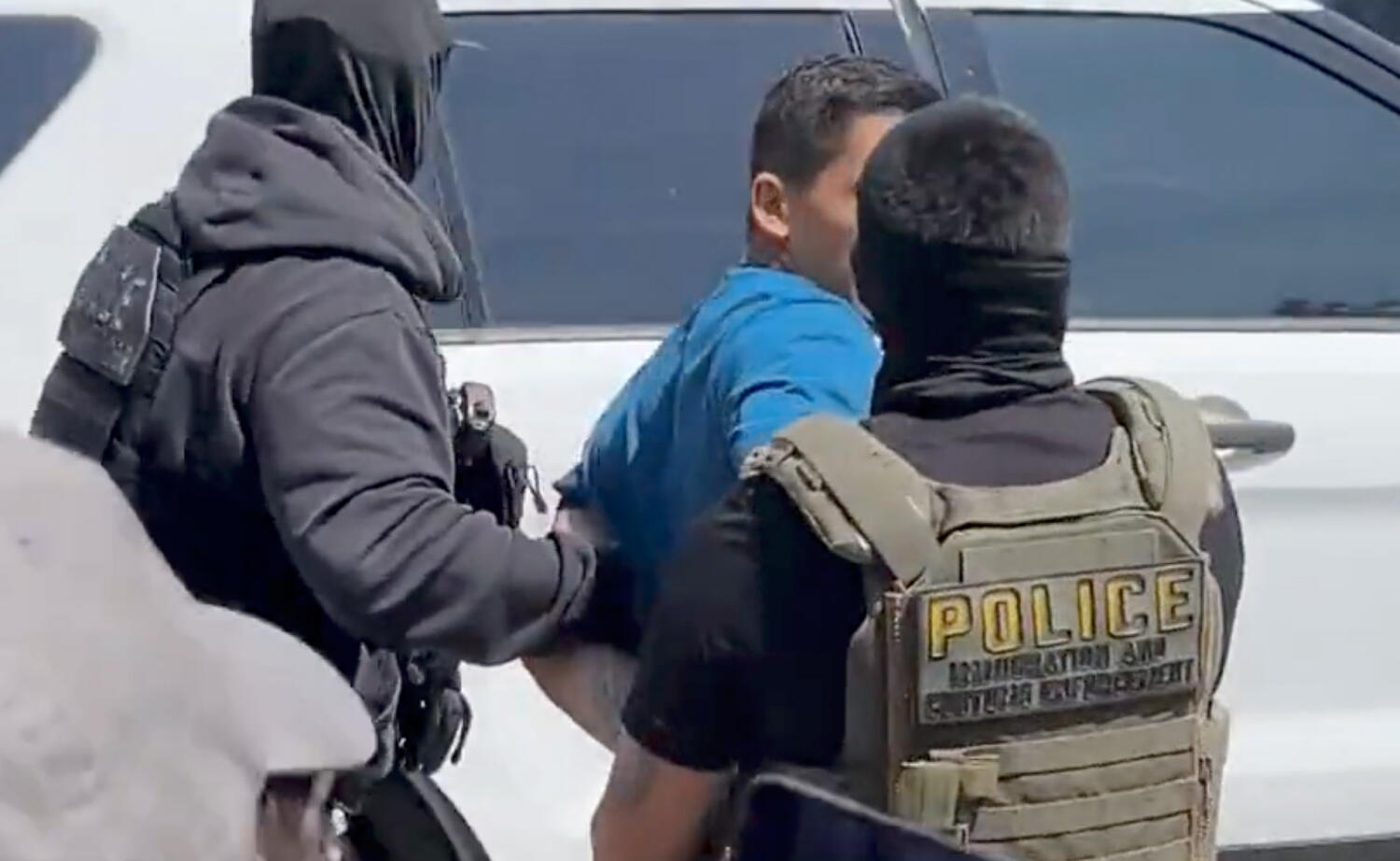
When federal agents wait near courtrooms or courthouse entrances, that fragile bargain breaks down. Even a rumor that Immigration and Customs Enforcement visited a local Superior Court can ripple through an entire county for weeks. People skip hearings. Domestic violence survivors drop cases. District attorneys lose key witnesses before jury selection even begins.
Federal officials look at the exact same building and see efficiency. Courthouses already have metal detectors, x-ray machines, and uniformed security screening everyone who walks through the door. From a purely tactical standpoint, arresting someone after they pass security reduces the risk of weapons or ambush compared to a street stop or a home raid.
When a courthouse becomes a place of fear, every witness who stays home weakens the state's ability to keep order in the neighborhoods those courts serve.
That tension is why the issue refuses to stay neatly inside immigration law. A civil immigration violation is not a criminal conviction, yet the collateral damage hits local criminal dockets, family courts, and traffic calendars across California. Prosecutors and judges complain that they cannot run fair, complete proceedings if half the people needed to establish the facts are terrified of stepping onto court property.
Why This Lawsuit Arrived After a Federal Court Ruling
Anyone reading a surface-level report might wonder why California needed a 100th lawsuit in mid-October 2026 if a federal judge had already moved against courthouse arrests months earlier. In June 2026, a federal district court in the Northern District of California vacated administration policies on courthouse immigration arrests in Pablo Sequen v. Albarran, finding the agencies' actions arbitrary and capricious under federal administrative law.
Court orders do not always end behavior overnight. Reports and state filings pointed to continued courthouse enforcement actions—including 28 people detained at courthouses statewide in July 2026, just one month after the ruling—while appellate litigation and enforcement disputes played out.
Filing a fresh lawsuit in the Central District of California (State of California v. U.S. Immigration and Customs Enforcement, filed October 15, 2026) gives the state a direct vehicle to seek an injunction focused squarely on California state courthouses and their operational impact. Rather than relying solely on broader administrative challenges or waiting out an appeal, Sacramento is pressing a distinct constitutional and practical claim: federal civil arrest tactics inside or around state courthouses unlawfully interfere with California's sovereign judicial function.
Legislation Meets Litigation
The courtroom fight is running on a parallel track with state legislation. In September 2026, Governor Gavin Newsom signed a law requiring federal immigration agents to present a judicial warrant and identify themselves before making arrests within 1,000 feet of a state courthouse.
That statute highlights a classic federalism trap. State lawmakers can pass rules governing conduct near state buildings, yet federal agents operating under federal authority frequently challenge state restrictions under the Supremacy Clause. A state law alone cannot force federal compliance if federal agencies argue the statute unconstitutionally burdens federal enforcement. Pairing legislation with federal litigation tests both levers at once—creating a paper record of state rules while asking a federal judge to block conflicting agency directives.
What Gets Missed in the Legal Scoreboard
Counting lawsuits creates an illusion of momentum that can mislead readers about how courts actually work. Filing a complaint is step one, not a final victory. Preliminary injunctions can be granted, narrowed, stayed, or reversed on appeal, and appeals to the U.S. Court of Appeals for the Ninth Circuit—or ultimately the U.S. Supreme Court—can stretch for years.
There is also a practical enforcement gap. Even when a judge issues a broad order or a state passes a buffer-zone rule, disputes erupt over definitions and boundaries. What counts as "near" a courthouse? Does an arrest occur inside the building, on the sidewalk outside, in a parking lot, or down the block after a hearing ends? Ambiguity is where litigation thrives.
Consider a hypothetical example to see how messy the ground reality gets. Suppose a witness arrives at a county courthouse to testify in an assault case, leaves after the morning session, and is stopped by federal agents a block away from the main entrance. Defense lawyers, prosecutors, state officials, and federal agents can all offer competing accounts of whether the stop targeted a court appearance, violated a buffer zone, or fell inside a permitted enforcement zone. That kind of friction turns clean legal headlines into months of evidentiary hearings.
| Dimension | California State Perspective | Federal Enforcement Perspective | Practical Friction Point |
|---|---|---|---|
| Primary Goal | Protect witness attendance, court access, and state sovereignty | Execute federal immigration law and locate targets safely | Competing definitions of public safety and institutional duty |
| Security & Logistics | Courthouses need open, predictable access for the public | Pre-screened entrants lower weapon and ambush risks | Who controls the perimeter and entryways of state courts |
| Legal Tools | Federal injunctions, Tenth Amendment claims, 1,000-foot state rule | Federal statutory authority, Supremacy Clause defenses, appeals | Stays, appeals, and disputes over exact arrest locations |
| Community Impact | Chilling effect on reporting crime and showing up to court | Higher arrest yields with fewer field variables | Eroded public trust ripples across local justice systems |
The Federalism Squeeze on Local Justice
This clash exposes a deeper structural truth about American law enforcement. Local courts and prosecutors depend on community cooperation every single day, yet they do not control federal immigration priorities. When federal agents enforce civil immigration law at state courthouses, local district attorneys and presiding judges absorb the fallout on their dockets without having written the enforcement policy.
At the same time, critics of sanctuary and courthouse-restriction policies argue that insulating people from arrest at courthouses shields individuals who have ignored deportation orders or face removal proceedings. From that viewpoint, carving out sanctuaries around government buildings complicates immigration enforcement and signals that federal law carries less weight in certain states.
Neither side has an easy off-ramp while political incentives reward hard-line stances in both Washington and Sacramento. Litigation has become the primary arena where these opposing visions collide, forcing judges to referee disputes that lawmakers have not resolved through compromise.
How to Read Future Developments
Readers tracking this story do not need to hang on every press release announcing a new filing number. Watch three concrete markers instead: whether a federal judge grants or denies immediate injunctive relief in the Central District action, how appellate courts treat the underlying administrative and constitutional rulings, and whether local court administrators report measurable drops in witness appearances or spikes in missed hearings.
Check the actual court docket filings and judicial orders rather than relying solely on dueling political statements, because the exact wording of an injunction—and whether it is stayed pending appeal—determines what happens on the street tomorrow morning.