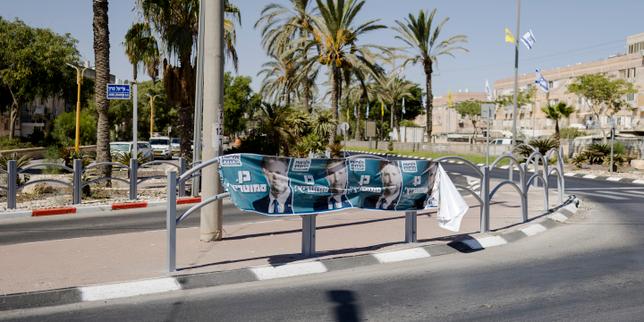
One month before Israeli voters head to the polls, right-wing and far-right political factions are executing a synchronized legal and rhetorical campaign to disqualify Arab political parties from running, suppress turnout among Palestinian citizens of Israel, and delegitimize any future governing coalition that relies on Arab parliamentary support. Rather than treating these parties as standard electoral competitors, Prime Minister Benjamin Netanyahu’s bloc and its ultranationalist allies are framing Arab representation itself as an existential security threat, using parliamentary petitions, the Central Elections Committee, and media blitzes to reshape the electoral math before a single ballot is cast.
The mechanics are brutally straightforward. Under Israeli electoral rules, a party needs to cross a 3.25 percent national threshold to enter the 120-seat Knesset. Arab citizens make up roughly 21 percent of Israel’s population, meaning their turnout is the single most volatile variable in determining whether the right-wing bloc secures a 61-seat majority. If right-wing politicians can either ban key Arab slates outright or convince Arab voters that their ballots will be rendered useless by post-election boycotts, the resulting drop in turnout mathematically inflates the seat share of right-wing parties.
The Legal Guillotine of Basic Law Section 7A
To understand how a political smear becomes an actual ballot ban, you have to look at Section 7A of Basic Law The Knesset. Originally enacted in 1985 to block Meir Kahane’s openly racist Kach party from running, the statute allows the Central Elections Committee to bar any candidate or party list whose goals or actions explicitly or implicitly negate Israel’s existence as a Jewish and democratic state, incite racism, or support armed struggle by an enemy state or terrorist organization.
Over the past two decades, right-wing lawmakers have inverted the original intent of Section 7A, turning a shield against fascism into a weapon aimed almost exclusively at Arab legislators.
The Central Elections Committee is not an independent judicial body. It is a political forum composed of representatives from existing Knesset factions, weighted by their current parliamentary strength, and chaired by a Supreme Court justice. Because the right-wing and religious parties hold a built-in majority on the committee whenever they control the government, disqualification motions frequently pass along strict partisan lines.
In recent election cycles, petitions have repeatedly targeted Balad, Hadash-Ta'al, and individual lawmakers like Ayman Odeh, Ahmad Tibi, and Sami Abou Shahadeh. The accusations follow a predictable script. Petitioners compile years of parliamentary speeches, social media posts, and interviews, stripping context to argue that opposition to military operations in Gaza or the West Bank constitutes "support for armed struggle."
Historically, Israel’s Supreme Court has overturned almost all of these committee disqualifications on appeal, ruling that the evidentiary bar for stripping millions of citizens of their right to elect representatives of their choice must remain extraordinarily high. Yet the right-wing strategists filing these petitions know they will likely lose at the Supreme Court. Winning the legal appeal is not the point.
The campaign is designed to dominate headlines for three consecutive weeks during the peak of the election cycle. By forcing Arab party leaders to spend campaign funds and airtime defending their basic right to exist on the ballot, the right-wing bloc frames the entire election around loyalty rather than inflation, housing costs, or judicial independence. Even when the Supreme Court reinstates the parties, the public impression of illegitimacy lingers, making it politically toxic for centrist Zionist parties to even consider partnering with them after the votes are counted.
Why Turnout Is the Real Battlefield
Political operatives in Jerusalem and Tel Aviv obsess over the Arab vote because the Knesset operates on a strict zero-sum proportional representation system. There are always 120 seats. When overall turnout in Arab municipalities drops from 60 percent to 45 percent, those missing votes do not vanish into thin air. They mechanically reduce the total number of valid ballots cast nationwide, which lowers the raw vote total required to win a single Knesset seat.
A hypothetical scenario illustrates the math clearly. Suppose 4.5 million Israelis vote, making one Knesset seat worth roughly 37,500 votes. If a coordinated campaign of intimidation, disinformation, and disqualification threats convinces 200,000 Arab citizens to stay home on election day, the total valid vote drops to 4.3 million. Suddenly, a Knesset seat costs only 35,800 votes. Right-wing parties, whose voter base turns out at remarkably consistent, high rates, instantly gain three to four extra seats without winning over a single new supporter.
This dynamic explains why the campaign against Arab parties operates on two tracks simultaneously.
- The External Track (Aimed at Jewish Voters): Right-wing leaders warn that any centrist government led by figures like Yair Lapid or Benny Gantz would be "held hostage" by Arab parties. By labeling Arab legislators as "terror supporters," the right seeks to terrify soft-right and centrist Jewish voters into returning to the Likud fold.
- The Internal Track (Aimed at Arab Voters): Aggressive rhetoric about impending bans, combined with memories of cameras placed inside Arab polling stations in past elections, breeds deep cynicism in towns like Nazareth, Umm al-Fahm, and Rahat. The implicit message to Arab citizens is simple. Your representatives will either be banned before the vote or treated as political pariahs afterward, so voting is a waste of your time.
The Ghost of the 2021 Coalition
To grasp the ferocity of the current offensive, you have to remember what happened in June 2021. For the first time in Israeli history, an independent Arab party—the United Arab List, known by its Hebrew acronym Ra'am and led by Mansour Abbas—formally joined a governing coalition.
That coalition lasted barely a year, collapsing in mid-2022, yet it shattered a decades-old taboo in Israeli politics. Abbas demonstrated that an Arab faction could trade parliamentary support for billions of shekels in infrastructure funding, crime-fighting budgets, and municipal recognition for unrecognized Bedouin villages in the Negev.
For Benjamin Netanyahu and his far-right partners, including Itamar Ben-Gvir’s Otzma Yehudit and Bezalel Smotrich’s Religious Zionism, the 2021 experiment was a strategic nightmare. Prior to 2021, Netanyahu had actually courted Mansour Abbas, hoping Ra'am might prop up a right-wing government. Once Abbas chose the opposition bloc instead, the right-wing media ecosystem pivoted overnight, branding the entire arrangement an illegitimate "government of terror supporters."
Ever since, the overarching strategic goal of the Israeli right has been to ensure that the 2021 model can never be repeated. If centrist Zionist parties are bullied into publicly pledging never to rely on Arab parties—not even for external confidence-and-supply agreements—then the anti-Netanyahu bloc has virtually no mathematical path to 61 seats.
The pressure works. Centrist leaders, terrified of losing swing voters in suburban Tel Aviv or Haifa, routinely distance themselves from Hadash-Ta'al and Balad, leaving Ra'am isolated in a political no-man's-land.
Weaponizing Wartime Trauma and Rhetoric
The current election cycle is unfolding in the shadow of prolonged regional conflict, devastating violence in Gaza, and heightened internal friction between Jewish and Arab citizens inside Israel. Right-wing campaigners are exploiting this raw trauma with clinical precision.
In parliamentary debates and campaign rallies, far-right ministers routinely conflate Palestinian citizens of Israel with Hamas or Hezbollah. Any expression of empathy for Palestinian civilians in Gaza by an Arab Knesset member is immediately clipped, subtitled, and circulated across Telegram channels and mainstream television networks as proof of treason.
Look closely at the institutional mechanisms being deployed alongside the rhetoric:
- The Knesset Ethics Committee: Right-wing lawmakers have flooded the committee with complaints against Arab MKs, leading to temporary suspensions from parliamentary debates and committee hearings right as the campaign heats up.
- Police Scrutiny of Protest Activity: Demonstrations in Arab towns against the war or against surging organized crime have faced heavy-handed policing and preemptive arrests of local organizers, chilling grassroots political mobilization.
- Legislation to Lower the Disqualification Bar: Coalition members have repeatedly pushed bills to strip the Supreme Court of its power to overturn Central Elections Committee bans, ensuring that a partisan Knesset majority could unilaterally decide who is allowed to run for office.
This environment places Arab political leaders in an impossible bind. If they speak candidly about the grievances of their constituents—including systemic underfunding, discriminatory land policies, and the devastating toll of the war on their extended families in Gaza—they hand ammunition to the right-wing disqualification machine. If they soften their language to appease Jewish centrist partners, they risk alienating their own disillusioned voters, who already view the Knesset as a theater of futility.
The Fractured Response Inside Arab Politics
The campaign from the right is landing on an Arab political leadership that is already deeply divided over strategy, ideology, and leadership. For decades, Arab parties operated largely as a unified voice of opposition, culminating in the creation of the Joint List in 2015, which captured a historic 15 seats in March 2020.
That unity is gone. Today, Arab politics is split into three distinct camps with irreconcilable theories of change.
Ra'am argues for pragmatic integration. Mansour Abbas insists that Palestinian citizens of Israel must become decisive kingmakers inside Israeli coalitions to secure tangible material benefits, such as tackling the epidemic of violent crime that has claimed hundreds of lives in Arab communities over the past few years. Critics within his own community argue that this approach forces Arab leaders to whitewash military occupation and accept second-class citizenship in exchange for municipal budgets.
Hadash-Ta'al, an alliance between the Jewish-Arab socialist party Hadash and Ahmad Tibi’s secular nationalist Ta'al, advocates a middle path. They reject joining right-wing or war-cabinet governments while remaining open to blocking right-wing coalitions from the outside if strict conditions regarding equality and peace negotiations are met.
Balad, led by Sami Abou Shahadeh, champions an unapologetic nationalist platform demanding that Israel transform from a Jewish state into a "state of all its citizens." Because this demand directly challenges the constitutional definition of the state, Balad sits squarely in the crosshairs of Section 7A disqualification petitions every single election cycle.
When these factions fail to run together or sign surplus-vote agreements, the 3.25 percent electoral threshold becomes lethal. In the November 2022 election, Balad ran independently and won roughly 138,000 votes—nearly 2.9 percent of the electorate—falling just short of the threshold. Those 138,000 ballots were completely wiped out, handing Netanyahu’s bloc the exact parliamentary cushion it needed to form the most right-wing government in Israel’s history.
What Critics of the Disqualification Drive Miss
To present a complete picture, it is necessary to examine the arguments put forward by mainstream right-wing legal scholars and moderate conservative commentators who support strict enforcement of Section 7A. Their core contention is rooted in the doctrine of defensive democracy—the principle that a democratic state is not obligated to commit suicide by allowing anti-democratic forces to use the ballot box to dismantle its constitutional foundations.
From this perspective, when a party leader refuses to condemn armed attacks against Israeli soldiers or calls for dismantling the Jewish character of the state, they are crossing a legitimate constitutional red line. Proponents of this view point out that European democracies routinely ban extremist parties that threaten their constitutional order, and they argue that Israel, facing existential external threats, has an even stronger justification to police the boundaries of parliamentary legitimacy.
Yet this legalistic defense collapses when tested against observable political behavior. The same right-wing lawmakers who demand the immediate banning of Balad or Hadash-Ta'al have consistently defended, rehabilitated, and elevated political figures convicted of incitement to racism and supporting Jewish terrorist organizations.
Itamar Ben-Gvir, who previously hung a portrait of mass murderer Baruch Goldstein in his living room and was convicted of supporting a terror group, now sits as Minister of National Security. When the state’s gatekeepers treat racist incitement against Arabs as protected political speech while treating Arab anti-war dissent as grounds for disenfranchisement, Section 7A ceases to be a neutral constitutional safeguard. It becomes an instrument of partisan gerrymandering.
The Broader Consequences for Israeli Democracy
The targeting of Arab parties one month before an election is not a localized squabble affecting only one-fifth of the population. It is the central pressure point of Israel’s broader constitutional crisis.
By normalizing the idea that Arab citizens can vote, pay taxes, and serve as doctors and pharmacists in every Israeli hospital, yet cannot hold legitimate parliamentary power, the right-wing bloc is redefining the rules of Israeli citizenship. If a fifth of the electorate is permanently disqualified from participating in governing coalitions, then the remaining 80 percent is locked into a structural distortion where right-wing parties hold a permanent demographic advantage.
International observers in Washington and Brussels often focus on Israel’s judicial overhaul or settlement expansion when assessing the health of its democracy. They frequently overlook the quieter, more effective mechanism happening inside the Central Elections Committee. You do not need to abolish elections to hollow out a democracy; you simply need to ensure that the opposition’s most crucial voting bloc is intimidated, divided, and legally cornered before the polls open.
With thirty days remaining until election day, the outcome will not be decided solely by swing voters in Tel Aviv or religious enclaves in Jerusalem, but by whether millions of Arab citizens decide that showing up at the ballot box is still worth the fight.


