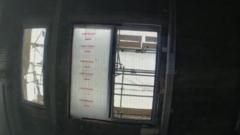
A £50,000 fine is the financial penalty Westminster Magistrates Court recently handed down to Lima Construction Limited. For the family of Antonio Rodrigues, a 55-year-old labourer who went to work on a London high street redevelopment and never returned, the number is irrelevant. What matters is the systemic failure behind it. Rodrigues fell three metres through an unprotected window opening, landing on a concrete floor. He died in a hospital bed days later.
The corporate response to unusual site conditions exposes a widespread flaw in the construction industry. Companies often maintain standard safety protocols during routine operations but fail when small, unexpected changes disrupt the schedule.
The Illusion of Standard Safety Compliance
The redevelopment of a former department store into commercial and residential spaces on New Malden High Street seemed to follow standard procedures. Scaffolding was erected, teams were managed, and materials arrived on schedule.
The disruption occurred with a single logistics error. Glazed Juliet doors arrived at the site with damaged panels. Instead of halting work or immediately securing the perimeter, managers left four unglazed window voids open to the external scaffolding platform.
The site managers recognized the danger. They knew that open voids adjacent to working platforms created an immediate fall hazard. Yet, the required action was delayed. It took a fatal accident for the company to install basic protective boarding, a task completed just hours after Rodrigues fell.
The Health and Safety Executive investigation confirmed that simple remedies were readily available. The company could have installed basic wooden boarding or additional internal guardrails the moment the voids were created.
The Breakdown of Routine Site Inspections
The failure to secure the window openings occurred alongside another safety breakdown. Legally mandated weekly scaffolding inspections had stopped weeks before the incident.
The final documented inspection occurred on 5 July 2022. Rodrigues fell on 27 July. For over three weeks, the scaffolding structure and its adjacent hazards received no formal review by a competent inspector.
- Mandatory inspections ensure that changing site conditions are continuously evaluated.
- Independent oversight catches the hazards that busy site managers overlook.
- Routine neglect creates an environment where temporary gaps become permanent dangers.
Had a qualified inspector walked the platform during those three weeks, the unglazed voids would have been flagged as an immediate breach of the Construction (Design and Management) Regulations 2015. The missing inspections removed the final safety check that could have saved a life.
The Financial Math of Workplace Fatalities
The £50,000 fine, accompanied by £11,347 in prosecution costs, raises questions about accountability in the construction sector. For many medium-sized principal contractors, these penalties represent a minor operational setback rather than a existential threat.
Regulatory penalties are tied to corporate turnover and perceived culpability rather than the value of a human life. This calculation often allows companies to absorb the cost of safety failures as an occasional cost of doing business.
The real cost of prevention is minimal. A few sheets of plywood, a handful of scaffold clips, and an hour of administrative time for a weekly inspection would have cost less than a hundred pounds. The contrast between the cost of prevention and the financial penalty reveals a critical gap in industrial risk management.
The Danger of Temporary Variations
Construction sites change daily. The risk is rarely the permanent, obvious hazard that everyone plans for. Instead, danger lies in the temporary variation, the material delay, or the brief window where one trade hands over to another.
When the damaged Juliet doors were rejected, the site entered a state of temporary variation. In these moments, standard safety documentation often fails to provide protection because it relies on static plans rather than active, adaptable risk assessment.
Principal contractors must treat any deviation from the original build plan as an immediate safety trigger. If a component cannot be installed, the area must be locked down or physically blocked. Relying on workers to navigate around an open three-metre drop while performing manual labor is an unacceptable strategy.
The Health and Safety Executive prosecution serves as a warning for the wider industry. Good intentions and an otherwise clean safety record offer no protection when simple, daily hazards are ignored. The tragedy in New Malden proves that a worker's survival should never depend on individual vigilance when basic physical barriers could eliminate the risk entirely.