The fastest-spreading Ebola epidemic in recorded history has officially crossed a grim threshold. In eastern Democratic Republic of Congo, the death toll has surpassed 1,500, driven by a terrifying velocity that continues to outstrip international and domestic medical interventions. Official data confirms that total recorded cases have climbed past 3,400, marking an unprecedented 50% surge in a matter of days. This is not merely an epidemiological crisis. It is a collision between a high-fatality pathogen, persistent armed conflict, and profound institutional mistrust.
Unlike previous emergencies managed under the safety net of established countermeasures, this specific outbreak—declared on May 15—is fueled by the Bundibugyo virus strain.
There are currently no approved vaccines or licensed medical treatments for this specific variant. Clinicians are fighting blind, relying strictly on supportive care while the virus carves a destructive path through eastern Congo's remote Ituri province, which accounts for nearly 90% of all recorded infections.
The Anatomy of Accelerated Spread
Speed defines this epidemic. During the devastating West African epidemic from 2014 to 2016, it took roughly eight agonizing months for cumulative fatalities to reach 1,000.
The current Congo emergency has shattered that grim timeline, accelerating at a cadence that leaves local health systems gasping for air.
Several mechanical and geographical factors explain why the virus is moving with such ruthless efficiency:
- Geographical isolation combined with dense urban spillover: While rooted in remote mining zones and rural villages, the pathogen has already managed to breach transit corridors, appearing in five distinct provinces, including major population hubs like Kisangani.
- A dangerous deficit in contact tracing: Public health protocol dictates that at least 95% of known contacts must be actively monitored to choke off transmission chains. Current national tracking hovers at a porous 78%, leaving hundreds of potentially infected individuals moving freely through communities.
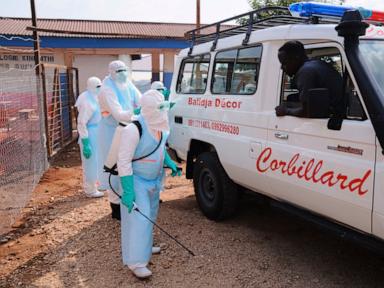
- The vacuum left by retreating aid organizations: Security breaches, including a violent July 15 assault on a treatment facility in the Nyakunde health zone, forced international agencies like the World Health Organization and the Africa CDC to temporarily pull back their personnel.
When international responders pull out, surveillance systems collapse. Essential supply chains freeze. Local clinics are left with critically depleted stocks of personal protective equipment and sterilization materials.
The Security Trap and Community Resistance
Medical interventions cannot function in a war zone. Eastern Congo has spent decades bleeding from overlapping conflicts involving rebel factions, illegal mining syndicates, and displaced populations. This chronic instability creates an environment where public health messaging is routinely warped by suspicion.
Fear breeds hostility. When local residents see treatment centers attacked or experience strict prohibitions on traditional burial rites—which health authorities enforce to stop fluid transmission—mistrust deepens.
Rumors take root quickly in places abandoned by formal state infrastructure. Some communities have been told that the virus itself is a fabrication designed to manipulate the population.
When panicked residents target medical facilities, they inadvertently dismantle the very safety nets meant to protect them. Health workers find themselves trapped in an impossible dilemma, forced to choose between risking infection on the front lines and facing physical violence from the communities they arrived to save.
Structural Vulnerabilities Beyond the Border
While neighboring Uganda successfully declared itself free of Ebola following targeted containment and the discharge of its final patient, Congo lacks the administrative and logistical continuity required to wall off an epidemic of this scale. Porous borders and relentless population displacement ensure that containment remains a moving target.
The global risk profile issued by international health bodies maintains that widespread international transmission remains low, primarily because Ebola relies on direct contact with infected bodily fluids rather than airborne transmission.
Yet for the local population living inside the active zones, the risk remains catastrophic. As health officials negotiate security guarantees to redeploy specialized teams back into hotspots like Ituri, the virus continues to exploit every gap in surveillance, every delayed shipment, and every moment of hesitation on the ground.