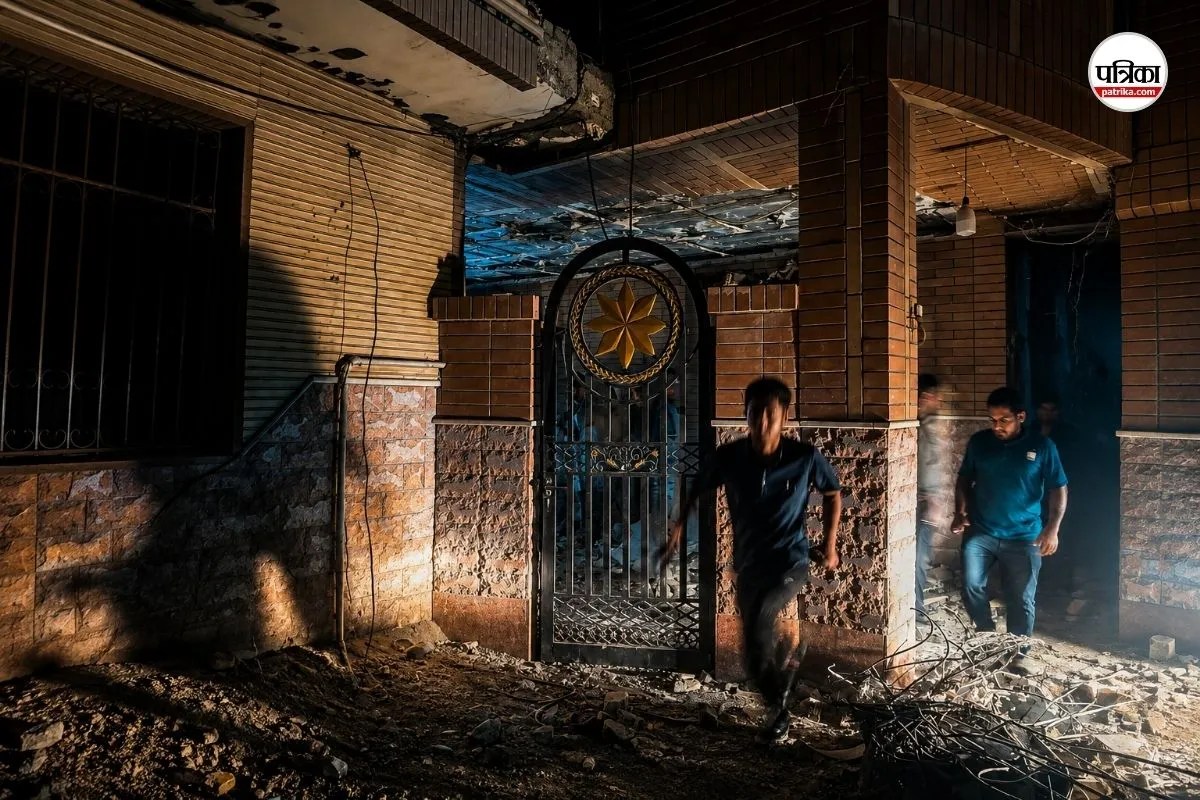
In the small Iranian coastal town of Bandar-e Kuhestak, the sound of traditional music was meant to mark a night of celebration for a fisherman's family. Instead, a direct strike from a US munition tore through a residential courtyard, killing multiple civilians, including young children, and wounding dozens more. This incident, which occurred during a renewed wave of US-Iran hostilities near the Strait of Hormuz, highlights the devastating human cost borne by isolated communities caught in the crosshairs of precision-engineered warfare.
The immediate aftermath left bloodied shoes, wedding decorations, and shattered concrete strewn across the neighborhood. While Washington officials offered standard preliminary statements indicating that the incident was under review and emphasizing that military objectives do not intentionally include non-combatants, open-source weapons analysts and on-the-ground human rights documentation networks quickly pieced together a starkly different narrative. Physical evidence, video fragments, and structural damage assessments pointed directly to a United States-manufactured precision-guided weapon hitting roughly 135 meters away from a secondary target—a local communications tower. Building on this theme, you can also read: The Economics of Attritable Airpower Why The Reaper Replacement Imperative Changes Global Defense Procurement.
The Anatomy of a Targeting Failure
Military tech promises clinical precision. Yet reality on the ground often exposes the grim margin of error inherent in modern aerial campaigns.
Weapons experts examining visual fragments recovered from Kuhestak identified components consistent with advanced US cruise missiles. These systems are theoretically capable of high accuracy, designed to minimize collateral damage through operator oversight and advanced guidance packages. However, accuracy relies entirely on the integrity of the intelligence feeding the targeting computers. When secondary infrastructure like port communications towers or radar arrays sits adjacent to dense residential clusters, the margin for error narrows to zero. Analysts at The New York Times have also weighed in on this trend.
A single software coordinate error or outdated mapping dataset can turn a designated military asset into a catastrophe for civilian structures yards away. In Kuhestak, the home of local resident Ali Mallahi took the brunt of the kinetic force. Families gathered for a henna celebration found themselves buried under domestic masonry. The physics of high-explosive ordnance do not negotiate with social geography. When deployed in tightly packed coastal hamlets, even a weapon meant for a concrete tower unleashes lethal shrapnel across neighboring family courtyards.
The Peripheral Toll on Marginalized Populations
Geography dictates vulnerability. Kuhestak sits in Hormozgan province, populated largely by Iran's Baluch minority, a marginalized community whose grievances and tragedies rarely penetrate international headlines with the urgency they warrant.
For residents of these remote southern coasts, the war is not an abstraction fought by proxy forces in distant capitals. It arrives without warning in the middle of family milestones. Local medical infrastructure in the immediate vicinity proved entirely inadequate for a mass-casualty event. The severely injured had to be rushed nearly 20 miles away to hospitals in Minab—itself recovering from the psychological and physical scars of earlier bombardments earlier in the conflict.
Communication blackouts and strict local security measures compounded the isolation of the survivors. Rights advocates attempting to document the human toll faced digital roadblocks and intimidation, leaving local families to bury their dead under a shroud of state-managed silence and international apathy. This information vacuum shields high-level military planners from immediate accountability, reducing human lives to bureaucratic footnotes in daily Pentagon situation reports.
The Broader Escalation Trap
The tragedy in Kuhestak did not happen in a vacuum. It marks the human byproduct of a relentless cycle of tit-for-tat escalations between Washington and Tehran that flared anew after brief diplomatic stalemates.
When maritime security operations in the Strait of Hormuz trigger preemptive or retaliatory strikes against regional air defenses and communication links, the operational theater overlaps directly with civilian life. Iran's southern coastline is heavily integrated; military installations, commercial fishing ports, and residential neighborhoods share tight geographic boundaries. Striking a communications hub in a small fishing town inevitably risks the lives of everyone sharing that zip code.
Washington's stated policy relies on degrading Iranian Islamic Revolutionary Guard Corps capabilities while avoiding broader regional entanglement. Yet every instance where civilian infrastructure absorbs precision ordnance deepens local resentment, hardens domestic political resolve within Iran, and complicates any future pathway toward de-escalation. The structural drivers of the conflict guarantee more friction, more miscalculations, and more communities left to rebuild from the ground up.
As families in Kuhestak continue to mourn children and relatives lost amid wedding banners and rubble, the official investigations crawl forward at a bureaucratic pace. The gap between high-tech military assurances and the raw reality of ruined coastal homes remains as wide as ever.