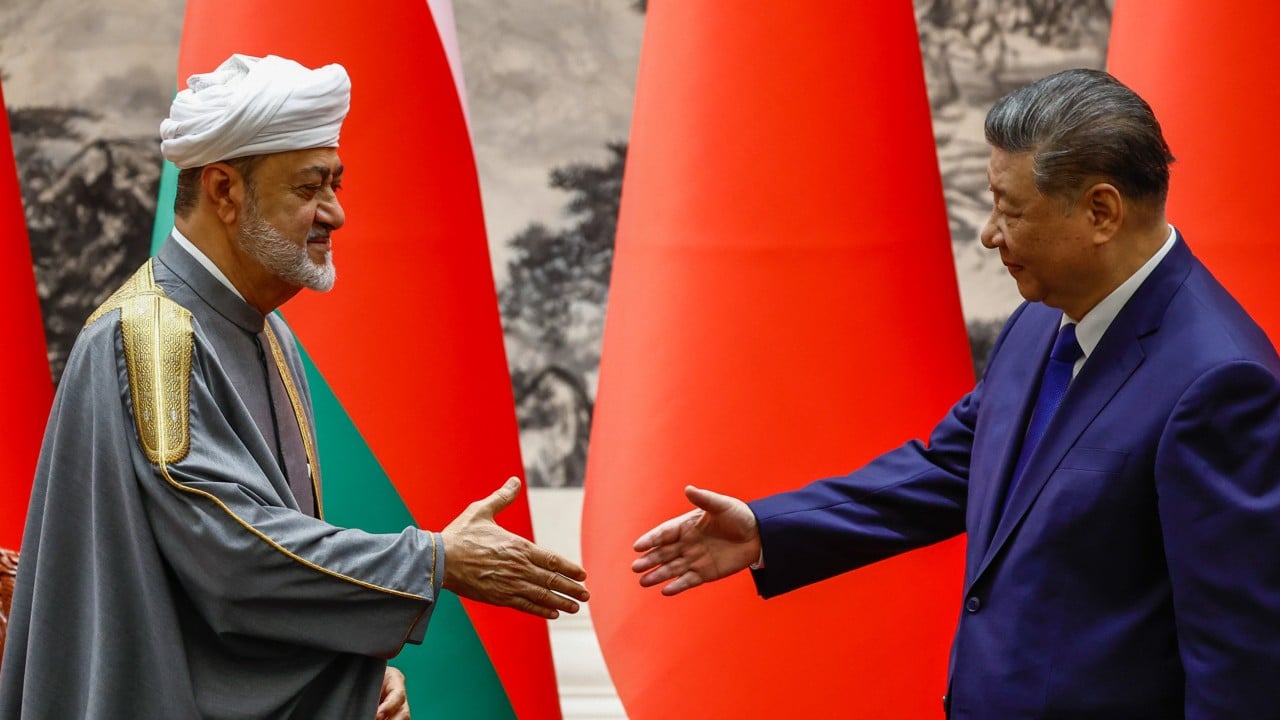
When Oman and China call for Middle East peace during a sultan's state visit to Beijing, surface coverage treats it like a polite diplomatic postcard. That reading misses the machinery underneath. Oman is not chasing lofty moral rhetoric; it is protecting maritime chokepoints, sovereign credit, and back-channel leverage across the Persian Gulf, while Beijing is anchoring a quiet non-aligned partner outside Washington's security umbrella.
Anyone who has covered Gulf trade desks or tracked energy transit risk for twenty years knows how ceremonial language works in Beijing. Joint statements arrive pre-cooked, carefully calibrated, and light on enforceable mechanisms. Yet the timing and geography around Muscat and Beijing tell a sharper story. A sultan's visit to the Chinese capital puts two states in the same diplomatic frame that rarely share a military doctrine: a small sultanate built on quiet mediation and a continental superpower building commercial ports and long-term crude offtake agreements.
Why Muscat And Beijing Share A Peace Script
Peace calls from capital cities rarely sprout from sudden idealism. They emerge when two governments face overlapping threats to their trade routes and want a diplomatic shield before tensions flare.
For Oman, regional escalation carries an immediate price tag. Located along the Strait of Hormuz and facing the Gulf of Oman, the sultanate sits right beside one of the world's most sensitive maritime arteries. Even without a full naval blockade, tanker insurance spikes, rerouting delays, and regional drone or missile incidents rattle Gulf markets within hours. Muscat has spent decades cultivating a reputation as the Gulf's quiet back channel—hosting talks, keeping lines open with rival capitals, and avoiding military entanglement wherever possible.
Beijing operates from a different scale, yet arrives at a similar practical calculation. China relies heavily on Gulf crude and refined products, and its industrial supply chains depend on predictable shipping lanes through the Middle East. When regional conflicts widen, Beijing faces a delicate squeeze: it wants influence and commercial access across the Gulf, without getting dragged into costly military interventions or alienating every rival in the neighborhood.
Diplomatic peace language is often a risk-management wrapper around hard commercial and security exposure.
By aligning publicly on de-escalation and political settlements, Oman gains great-power visibility for its mediation posture, while China projects calm stewardship without committing troops. Neither side needs a binding peace treaty to extract value from the joint message.
The Chokepoint Math Behind Oman's Foreign Policy
Geography dictates strategy long before speeches are drafted. Oman holds territory on both sides of the Strait of Hormuz's southern approach—most notably the Musandam Peninsula—giving it a front-row seat to every barrel leaving the Persian Gulf.
Consider a hypothetical scenario where regional shipping lanes face sustained harassment for three weeks. Tanker owners hesitate, war-risk premiums jump, and buyers scramble for alternative grades. Even if Oman's own export terminals remain physically untouched, neighboring disruptions pull regional freight rates higher and slow broader Gulf commerce. Muscat knows that small states survive volatile neighborhoods through credibility as an interlocutor, not by matching larger militaries pound for pound.
China watches that same chokepoint with acute awareness. A large share of seaborne crude passing through Hormuz heads toward Asian buyers, making shipping lane stability an economic priority rather than an abstract talking point. When Muscat speaks about calm and dialogue, Beijing hears a voice that has historically kept channels open when louder capitals shut them down.
That alignment does not mean Oman and China view every regional actor identically. Muscat's foreign policy has long rested on balancing ties with Gulf neighbors, Iran, and Western security partners. Beijing brings its own strategic priorities, including deep economic ties across the wider region. Their shared peace call works precisely because it stays broad enough to cover different anxieties without forcing Muscat into a rigid bloc.
What Beijing Wants From A Quiet Gulf Partner
Strip away the ceremonial adjectives around a sultan's Beijing trip and look at what China actually builds abroad. Beijing rarely relies on a single dramatic lever; it layers trade agreements, industrial zones, port logistics, and diplomatic engagements over years.
Oman sits outside the flashiest headlines of Gulf real estate mega-projects, yet its location along the Arabian Sea gives it distinct logistical value. Ports such as Sohar and Duqm lie beyond the immediate pinch of the Strait of Hormuz, offering alternative maritime access to the Indian Ocean. For analysts tracking supply chains, a deep-water outlet facing the open ocean matters whenever Gulf waterways look congested or exposed.
Chinese firms and state-linked institutions have long looked at Gulf logistics, energy, and industrial cooperation as pieces of a broader commercial footprint. For Muscat, engaging Beijing serves a clear domestic goal: economic diversification. Relying indefinitely on hydrocarbon revenues leaves any energy exporter vulnerable to price swings and global energy transitions. Attracting foreign capital, manufacturing interest, and trade links helps fund Oman's long-term fiscal and job-creation goals.
Still, observers with decades on the beat know better than to overread commercial announcements. MoUs and cooperation frameworks are starting points, not finished factories. Commercial viability, financing terms, local regulatory rules, and regional security conditions determine which projects move from paper to concrete.
Where The Peace Narrative Runs Into Reality
If the diplomatic headline sounds neat, the underlying Middle East environment is anything but. Calling for peace is easy; changing incentives on the ground is brutal.
Regional disputes in the Middle East rarely stem from a simple misunderstanding that a joint statement can clear up. They involve entrenched security fears, proxy networks, sectarian and national rivalries, external military footprints, and competing visions of regional order. Two capitals in Beijing and Muscat can urge restraint and political solutions, yet neither holds a magic switch over armed factions or rival governments across the region.
There is also a credibility question any serious analyst has to ask. Great powers often talk about peace while pursuing arms sales, strategic partnerships, or economic leverage that other players view as partisan. Smaller states that position themselves as mediators must guard their neutrality carefully; leaning too visibly toward one major power can narrow their usefulness with others.
Oman has historically walked that tightrope with care. Its diplomatic value depends on being seen as a trusted channel rather than a megaphone for any single outside capital. Maintaining that balance takes constant discipline, especially when major powers compete for influence across the Gulf.
The Blind Spots In Standard Coverage
Most quick-turn news reports treat a state visit as a closed loop: leaders meet, issue warm words on regional stability, and sign agreements. That framing leaves out three practical questions that shape what happens next:
- Enforcement gap: Joint calls for peace carry diplomatic weight, but they do not create inspection regimes, ceasefire monitors, or security guarantees on their own.
- Commercial follow-through: Headline cooperation pledges only matter if capital actually deploys, ports move cargo efficiently, and contracts survive market shifts.
- Balancing act risk: Closer ties with Beijing expand Oman's diplomatic and economic options, while requiring careful calibration with long-standing security and trade partners elsewhere.
Why Oman's Mediation Brand Matters Now
In a region crowded with rival narratives, predictability is a scarce asset. Oman has spent generations cultivating a sober, unhurried diplomatic style that stands out against sudden policy swings.
That posture gives Muscat influence out of proportion to its size or military might. When crises simmer, governments often look for quiet intermediaries who can carry messages without grandstanding. Aligning with Beijing on a call for regional peace lets Oman project that mediating identity onto a global stage while keeping its core survival calculus front and center.
Whether that diplomacy produces concrete de-escalation depends on factors far beyond a single Beijing visit. Watch the maritime insurance markets, regional shipping lanes, and actual investment follow-through rather than the adjectives in the communiqué—those numbers reveal what the joint peace call is really worth.


