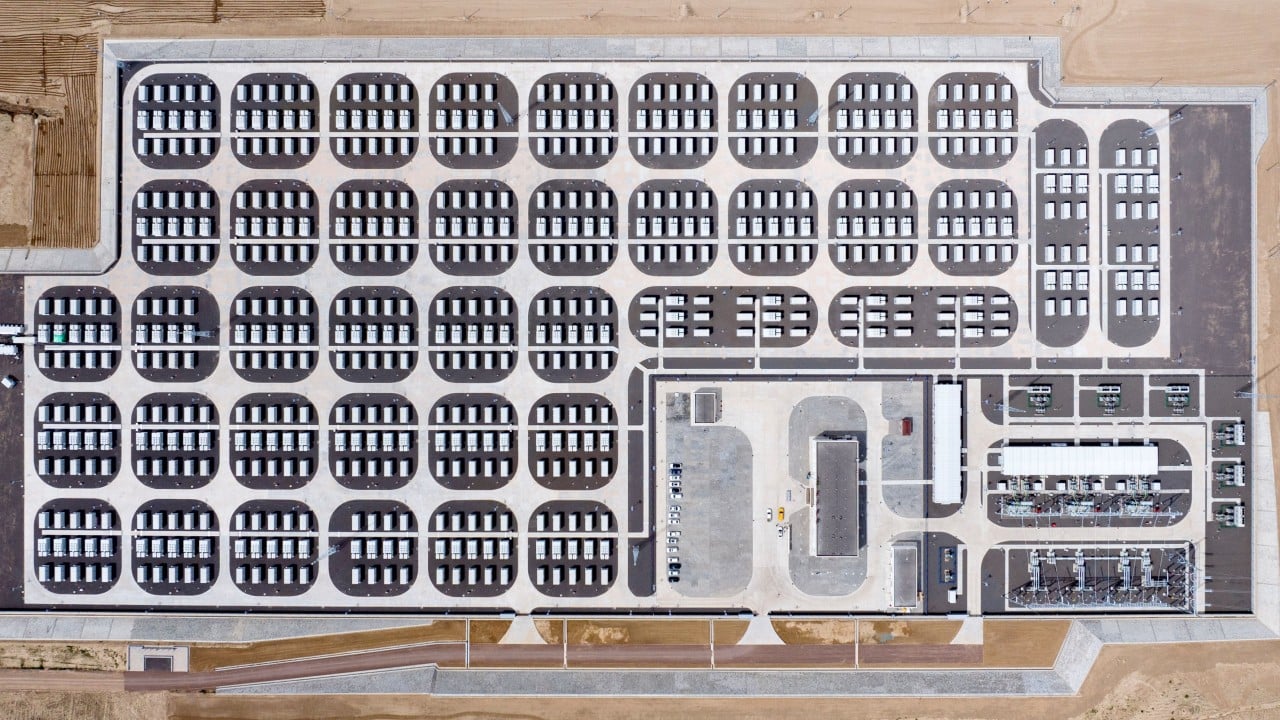
China is executing a sweeping institutional pivot to embed artificial intelligence into its nationwide energy infrastructure. This strategy, formalized through joint directives by the National Development and Reform Commission and the National Energy Administration, aims to establish world-leading energy-specific AI capabilities by 2030. The immediate objective is not simply to boost computational power, but to resolve a structural engineering crisis. Beijing must coordinate a massive fleet of intermittent renewable assets while absorbing the immense electricity demand generated by its own domestic AI computing clusters.
This is a high-stakes infrastructure experiment. While standard industry analysis frames this as a routine efficiency upgrade, the reality is far more complex and transactional. Beijing is forcing an integration between its state-managed power grid and its fast-growing artificial intelligence sector to solve a double-sided problem. The country needs AI algorithms to keep its sprawling, fragile renewable energy networks from failing, yet those exact same AI workloads are consuming massive volumes of electricity. For another look, see: this related article.
The scale of this challenge is unprecedented. By the end of 2025, China's national power consumption crossed 10 trillion kilowatt-hours. At the same time, the country built 42 intelligent computing clusters operating at a 10,000-card scale, pushing data center power consumption to 170 billion kilowatt-hours annually. This creates a critical circular dependency where the technology deployed to optimize the national power grid is also emerging as one of its most demanding consumers.
The Structural Friction Behind the High Tech Strategy
The core bottleneck blocking China's clean energy ambitions is not a shortage of wind turbines or solar panels. It is a severe lack of flexibility within its physical transmission lines and market mechanisms. Wind and solar installations generate highly erratic power loads. When heavy cloud cover darkens utility-scale solar farms in Gansu province, or when wind speeds drop along the Mongolian plateau, power generation plunges without warning. Further reporting on this matter has been provided by ZDNet.
A standard power grid requires instant, precise calibration to match supply with demand. Traditionally, this balancing act relies on coal-fired thermal plants that can adjust their output on demand. However, forcing rigid coal infrastructure to constantly ramp up and down to offset fluctuating solar and wind inputs introduces extreme operational strain and defeats the core purpose of decarbonization.
To bypass this physical limitation, researchers from Peking University and Alibaba Group’s DAMO Academy deployed deep-learning models to analyze over seven terabytes of sub-meter satellite imagery. This initiative produced a comprehensive, high-resolution geospatial inventory tracking wind and solar installations across 1,915 Chinese counties.
[Geospatial Satellite Imagery Analytics]
                  │
                  ▼
[National Solar-Wind Complementarity Map]
                  │
                  ▼
[Cross-Provincial Automated Power Dispatch]
This structural inventory allows algorithms to track real-world infrastructure assets across the country rather than relying on abstract simulations. By analyzing geographic and climate data, the system identifies regional weather patterns that balance each other out. A severe drop in solar output in one western province is automatically paired with a simultaneous spike in wind generation hundreds of miles away.
However, identifying these complementary patterns on a map is entirely different from executing them in real time. China's energy infrastructure remains largely siloed along provincial borders. Local grid operators prioritize provincial economic stability and internal generation assets over importing power from neighboring regions. This regulatory friction leads to heavy curtailment, where excess clean electricity generated in the western provinces is deliberately wasted because the local grid cannot store it and regional transmission systems lack the flexibility to move it across borders.
Virtual Power Plants and the Reality of Automated Dispatch
To capture this stranded power, the state is expanding its use of Virtual Power Plants. These are decentralized software platforms that aggregate thousands of isolated, small-scale energy resources, including:
- Commercial rooftop solar arrays
- Industrial battery storage facilities
- Distributed electric vehicle charging networks
By linking these individual units together, the software attempts to operate them collectively as a single, predictable power plant. In industrial hubs like Shanghai, Jiangsu, and Guangdong, these networks plug directly into data center energy storage systems. AI algorithms monitor industrial consumption patterns, forecast regional demand spikes, and instruct these distributed assets to discharge power back into the grid during peak periods.
+-------------------------------------------------------------+
|               AI CENTRAL COORDINATION ENGINE                |
+-------------------------------------------------------------+
                               │
       ┌───────────────────────┼───────────────────────┐
       ▼                       ▼                       ▼
+--------------+        +--------------+        +--------------+
| Rooftop Solar|        | Battery Sites|        |  EV Chargers |
+--------------+        +--------------+        +--------------+
Yet, the engineers running these systems acknowledge a fundamental limitation. In a highly centralized infrastructure network that treats grid reliability as an absolute priority, algorithms cannot be given direct, autonomous control over power dispatch. If a predictive model miscalculates regional load profiles, it risks triggering localized blackouts across critical industrial zones.
Consequently, current operational deployments restrict AI to an advisory role. The technology processes sensor data, runs predictive simulations, and presents optimization choices to human operators who retain final execution authority. The vision of a fully automated, self-healing grid remains a distant engineering goal rather than a current operational reality.
Market Inflexibility Blocks Technical Efficiency
The primary obstacle preventing AI from optimizing grid efficiency is economic, not computational. For advanced optimization algorithms to operate effectively, they require dynamic, real-time price signals that accurately reflect shifting supply and demand conditions. If power costs remain fixed regardless of availability, the mathematical models driving AI optimization lose their primary variable for calculating efficient resource distribution.
In Western power markets, wholesale electricity prices fluctuate constantly, occasionally dropping into negative territory when wind and solar output outstrips consumer demand. This volatility creates a powerful financial incentive for automated systems to store power when it is cheap and discharge it when prices peak.
In contrast, China's electricity market operates under heavily regulated, rigid pricing frameworks designed to guarantee steady, predictable financial returns for state-owned generation assets. Without dynamic price signals across provincial borders, there is little financial motivation for regional grid administrators to adopt automated trading or dynamic dispatch algorithms.
The National Energy Administration is attempting to address this structural barrier by spending over 5 trillion yuan ($0.74 trillion) during the 15th Five-Year Plan period to upgrade transmission infrastructure, expand inter-provincial power corridors, and build urban distribution networks. But adjusting physical lines will not fix the underlying economic friction. Until provincial protectionism is dismantled and real-time market pricing is implemented across the country, advanced software tools will find limited opportunities to improve system-wide efficiency.
The Twin Demands of Computing and Generation
The geographical misalignment between China’s computing infrastructure and its primary energy reserves adds another layer of logistical friction. The eastern coastal provinces command the highest concentration of industrial manufacturing, corporate commerce, and urban consumer demand. Conversely, the massive computing clusters required to train large language models are heavily concentrated in the arid western and northern provinces, where land is cheap and renewable energy is abundant.
This geographic separation has driven a strategic policy shift known as the Eastern Data, Western Computing initiative. The core objective is simple: instead of building massive, inefficient long-distance high-voltage lines to transmit raw electricity from western wind farms to eastern cities, the state is moving data workloads to the energy sources. Massive quantities of data generated in eastern commercial centers are transmitted across high-speed fiber-optic lines to western data centers, where they are processed using local renewable energy.
WESTERN PROVINCES                         EASTERN PROVINCES
[Wind & Solar Farms]                      [Commercial Hubs]
         │                                        │
         ▼ (Direct Supply)                        ▼ (Data Request)
[Intelligent Compute Clusters] <─────────── [High-Speed Fiber]
This strategy reduces transmission losses, but it introduces a severe operational challenge for western grid infrastructure. High-performance computing workloads demand constant, unyielding baseload power. A multi-thousand-GPU cluster running deep learning training models cannot tolerate even momentary power fluctuations without risking data corruption or hardware damage.
This requirement forces a direct confrontation with the volatile nature of western China's wind and solar resources. If the wind dies down in Inner Mongolia while a massive AI model training run is underway, the local grid must immediately draw power from local coal-fired generation or large-scale battery reserves. The very technology deployed to accelerate the clean energy transition is tied directly to the steady operation of fossil-fuel infrastructure to guarantee its own operational survival.
Infrastructure Resiliency Over Theoretical Optimization
As Beijing pushes forward with its integration plan, the true metric of success will not be the theoretical sophistication of its algorithms, but the physical resilience of its national grid under mounting climate and computational stress.
The International Energy Agency indicates that deploying predictive algorithms can reduce unexpected grid outages by up to 50 percent by flagging component wear before physical failures occur. This predictive capability is highly valuable, but it operates purely on the margins of a deeper structural problem. AI cannot generate electricity out of thin air, nor can it force a rigid, state-controlled utility market to embrace fluid economic principles overnight.
China's aggressive deployment of geospatial mapping, virtual power plants, and dedicated sector-specific language models highlights a clear understanding of the challenges facing next-generation power grids. However, the true test of this strategy lies in whether the state is willing to reform its rigid provincial market structures to let these automated systems function as designed. Until those economic shifts match the pace of the technical deployment, the integration of AI into the national power grid will remain an expensive buffer system for an inflexible energy network, rather than a total transformation of the infrastructure.


