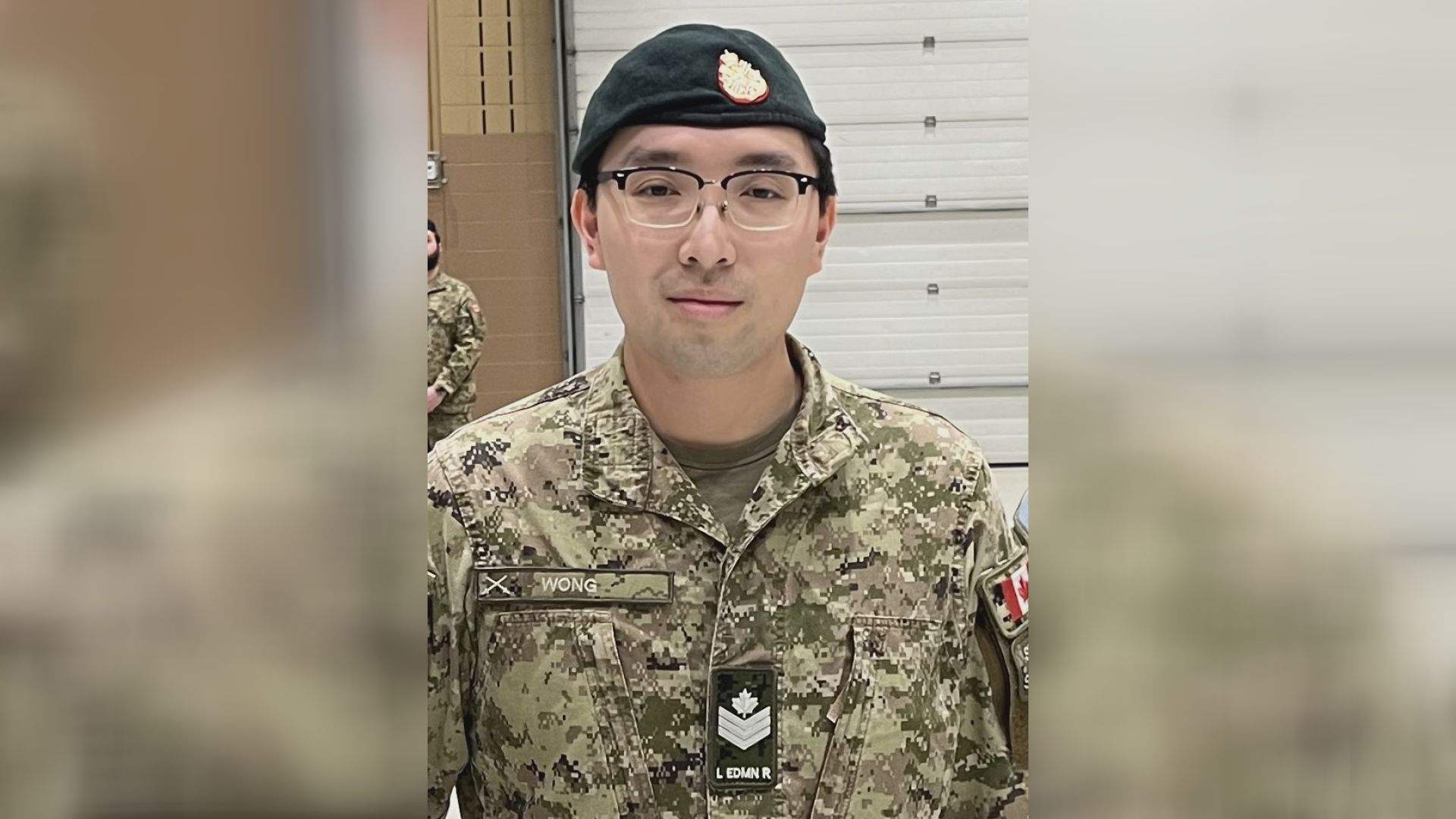
Sgt. Morgan Wong was one of five Canadian Armed Forces members killed after a fast-moving grass fire swept through a live-fire training exercise at Canadian Forces Base Wainwright in Alberta on October 17, 2026. His family described the 26-year-old reservist and St. John Ambulance medical responder as someone always there whenever anyone needed him.
Tributes centered on personal character are necessary when young soldiers die on home soil. Yet grief alone does not explain why a routine training drill turned lethal in less than a minute.
The tragedy at CFB Wainwright exposed a chain of operational decisions, seasonal hazards, and administrative blind spots that reach far beyond one grieving family. More than three dozen troops were hospitalized with severe burns and inhalation injuries, and the death toll climbed to five in mid-November when Pte. William Douglas Dal Bianco died of his injuries. Watching coverage of the disaster, I was struck by how quickly the story settled into memorial profiles while harder questions about range timing, wind warnings, and reservist support sat on the sidelines.
What Happened on the Range at CFB Wainwright
Roughly 84 soldiers from the 3rd Battalion, Princess Patricia's Canadian Light Infantry, alongside reserve personnel, were conducting live-fire training during Exercise Apollo Shooter on October 17. According to military police officials, the fire started on an anti-grenade launcher range.
Fire is not unusual on a live-fire range. Grass dries out in autumn, munitions throw sparks or heat, and range control monitors outbreaks regularly.
What made October 17 extraordinary was speed and wind. A cold front swept across the region that afternoon, bringing sharp temperature drops, shifting winds, and severe wind warnings. Maj.-Gen. Wade Rutland, commander of the 1st Canadian Division, stated that the blaze jumped roughly a kilometre in 30 to 60 seconds after the wind shifted, overtaking the unit administrative area and bypassing fireguards.
A wall of flame moving a kilometre in under a minute leaves almost zero margin for human reaction. Soldiers working in pairs or operating out of administrative spaces had seconds to register a direction shift that violated normal fire behavior.
Why Afternoon Live Fire Under High Winds Demands Scrutiny
Range standing orders at CFB Wainwright contain explicit guidance on seasonal fire risk. Between August and October, those guidelines point toward early morning firing windows—often before roughly 10 a.m.—when temperatures are lower, humidity is higher, and fire hazard conditions are typically calmer.
The lethal surge happened around 4 p.m. local time.
Military leaders have noted that range standing orders are guidelines rather than rigid prohibitions, and commanders on the ground weigh weather, dryness, and ammunition types when deciding whether to train. Rutland also indicated that range control was aware of a fire for hours and initially judged that training could continue for a period.
That is the real tension inside any military investigation. Commanders live with training calendars, deployment readiness targets, and scarce range windows. Pushing a schedule through marginal conditions can look reasonable right up to the second the wind reverses. Once a cold front drives erratic gusts across cured prairie grass, standard assumptions about fireguards and distance stop holding.
There is a counter-argument worth taking seriously, too. Canceling live-fire drills every time autumn conditions look dry or breezy would hollow out readiness for soldiers preparing for overseas deployments such as Operation Reassurance. Modern infantry training requires live munitions and stress under realistic conditions.
Still, readiness and recklessness are not the same thing. When meteorological warnings stack up alongside autumn fuel loads and live explosives, holding the line on afternoon shoots is a discipline test, not a sign of weakness.
The Human Cost Behind the Casualty Numbers
Numbers in press releases flatten human lives into clinical buckets. Four soldiers died initially—Sgt. Morgan Wong, Pte. Shaun Farrell, Pte. Aidan Goulding, and Pte. Hayden Lykkemark—followed weeks later by Pte. William Douglas Dal Bianco. Dozens more suffered severe burns and airway damage, with many requiring ventilators and prolonged intensive care.
Burn trauma is brutal in slow motion. Unlike a single surgical repair, deep burns demand repeated skin grafts, infection control, pain management, and months of rehabilitation while families uproot their lives to sit beside hospital beds.
Profiles like the one mourning Morgan Wong remind readers who these men were before they became statistics. Wong balanced military service, university study, real estate and leadership credentials, and volunteer first-aid work with St. John Ambulance. People like him are the connective tissue of both their units and their hometowns.
When that connective tissue is burned away in a training accident, the shock ripples outward. Comrades who survived carry survivor's guilt alongside physical scars, while families face years of medical and emotional recovery.
Hidden Cracks in Reservist Pay and Long-Term Care
A tragedy of this scale also exposes unglamorous systemic flaws that rarely make headlines during the first week of mourning. Following the Wainwright fire, former reserve and cadet leadership raised alarms over pay disparities and contract classification issues affecting injured reservists.
Reservists routinely bridge civilian careers and part-time military duty. When an injury happens on a domestic range, how a member's service class and earnings are calculated can directly affect immediate income and downstream disability benefits.
For decades, military ombudsmen and advocates have pointed out administrative friction and financial gaps in reserve compensation. Government officials often reply that military pay structures are complex and tied to distinct service rules.
To understand the stakes clearly, consider a hypothetical example. Suppose a primary reservist earns a steady civilian salary and trains on a short-term part-time status when a catastrophic injury occurs. If post-injury compensation defaults to a lower military pay tier rather than reflecting true lost earning capacity, the soldier's household absorbs the financial shock right when medical expenses and caregiving needs spike.
Even if a hypothetical reservist eventually receives disability support, bureaucratic lag and formula mismatches create real stress during recovery. Fixing pay tables on paper is easier than fixing how injured members are protected when their bodies fail during service.
What Real Accountability Requires After Wainwright
Multiple reviews—including military police investigation, a board of inquiry, and parliamentary scrutiny—have been set in motion around the Wainwright fire. Public pledges of transparency from senior defense leaders and political figures are easy to make in the immediate aftermath.
Real accountability requires three concrete changes rather than another binder on a shelf:
- Clearer weather and wind thresholds for high-risk munitions on dry grasslands, with explicit authority for range safety officers to halt firing when wind forecasts deteriorate.
- Faster, fairer income protection for injured reservists so severe training injuries do not trigger avoidable financial penalties or administrative delays.
- Long-term burn and psychological care that stays funded and accessible long after initial hospital discharges and media cameras move on.
Honoring Morgan Wong and his fellow soldiers starts with telling the whole truth about how they died. Demand that the inquiry's findings be published in full, with specific rule changes tied to every failure identified on the range.