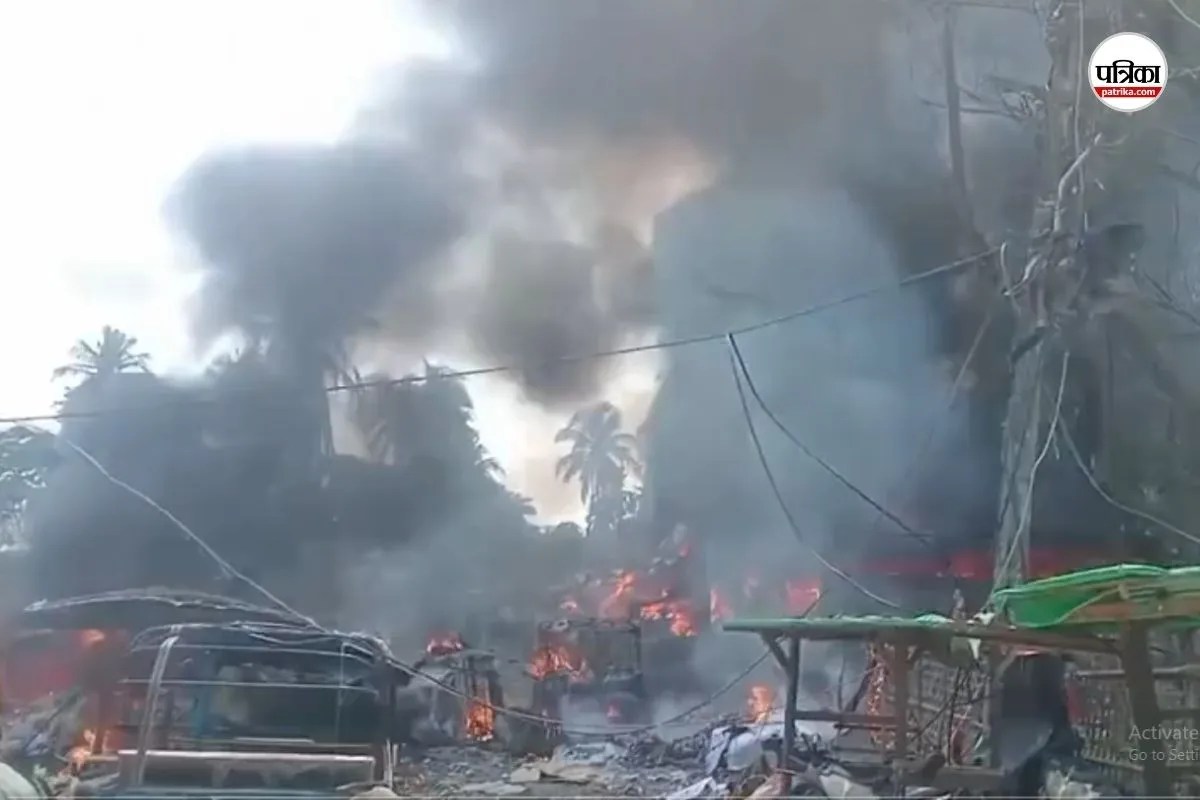
War doesn't always knock before it arrives. In Myanmar's western Rakhine state, death often drops directly from a cloudless sky, leaving ordinary people with seconds to process the unimaginable.
When military fighter jets struck a bustling local market and adjacent bridge in the town of Kyauktaw, dozens of lives vanished in a single deafening blast. Local rescue workers and the Arakan Army confirmed that at least 33 people died instantly, with dozens more nursing severe injuries. For a region already bleeding from years of civil war, this attack marks another grim milestone in an escalating humanitarian disaster.
Why Rakhine State Became the Center of the Storm
The 2021 military coup tore Myanmar apart, but the battle for Rakhine has taken on a uniquely punishing shape. Ethnic armed organizations like the Arakan Army have systematically pushed the central military administration out of large swaths of territory. Today, the rebel faction controls nearly all of Rakhine state, leaving government forces cornered in isolated urban pockets.
Lacking ground mobility, the military relies heavily on its air wing. Backed by fighter jets and equipment from international suppliers, the regime uses airstrikes to compensate for lost ground. Markets, schools, monasteries, and displacement camps have repeatedly borne the brunt of these aerial campaigns.
The Human Cost Behind the Statistics
Numbers on a screen rarely capture the absolute devastation on the ground. The Kyauktaw market wasn't a military base or a frontline trench. It served as a vital commercial hub and wholesale center for a region largely cut off from the rest of the country by trade blockades and active combat.
Vendors, shoppers, and families trying to secure basic daily necessities were caught in the open. Survivors speak of absolute shock, describing how jets appeared without warning, dropping ordinance before anyone could reach shelter. Firefighters waded through smoldering debris while volunteers laid recovered bodies in rows beneath green plastic sheeting. Families spent anxious hours searching through wreckage for missing sisters, brothers, and children.
Nearly half a million people remain displaced across Rakhine, living in makeshift camps that offer little protection from falling bombs. Conflict monitors estimate that total casualties since the 2021 putsch have surpassed 100,000 across all sides. As air campaigns continue to target civilian infrastructure, the humanitarian crisis deepens by the day, leaving millions trapped in an active conflict zone with nowhere safe to run.


