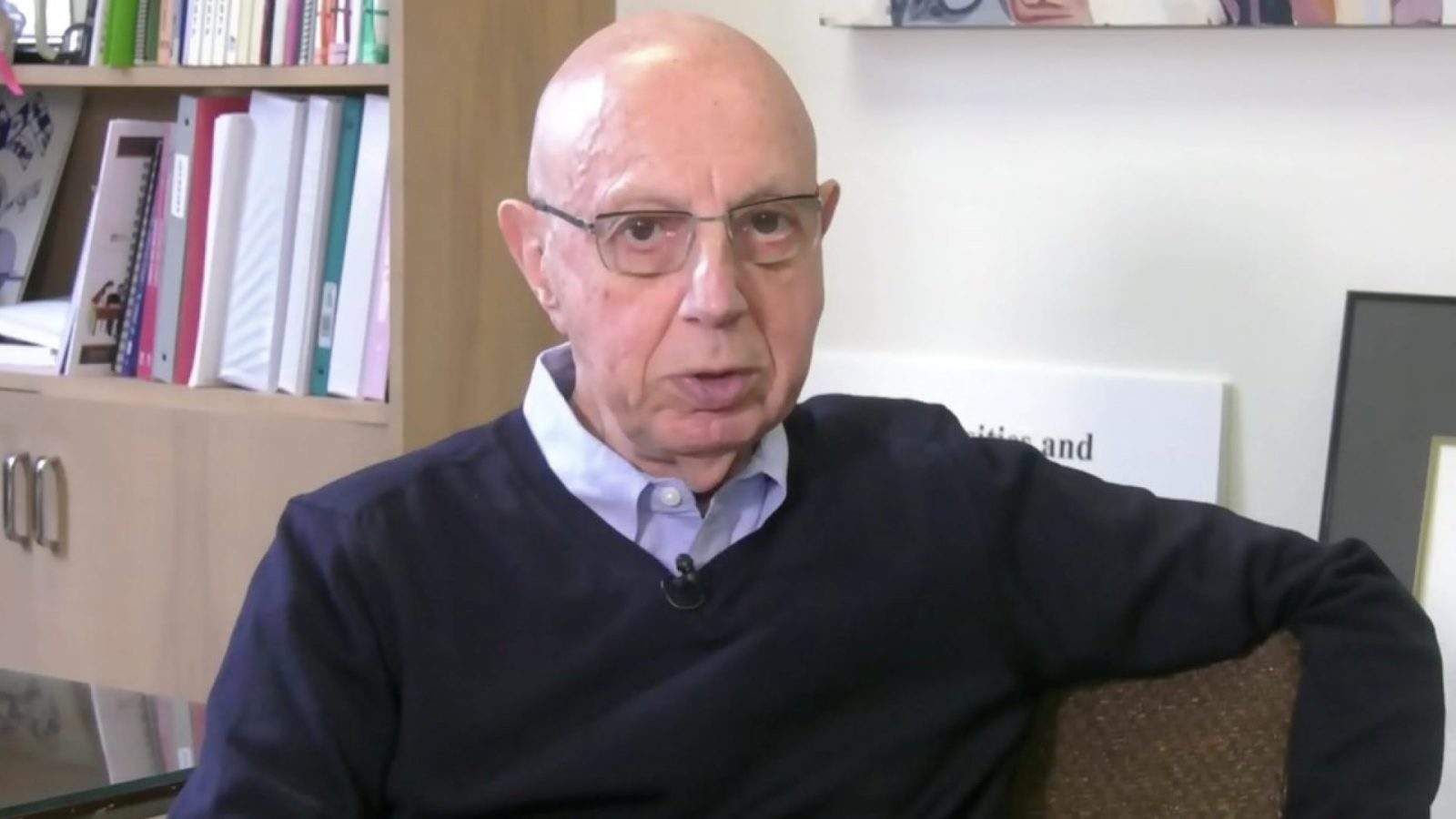
Barrie Sketchley, the longest-serving principal in the history of the Toronto District School Board (TDSB) and the founding leader of Rosedale Heights School of the Arts, died at age 85 in October 2026. His death closes a career spanning more than four decades in Toronto public education, marked by over three decades leading Rosedale Heights and a high-profile 2025 student and parent revolt when board officials tried to transfer him out of the school before his retirement.
Standard obituaries treat Sketchley's passing as a simple tale of a beloved educator who stood at the front door every morning and championed the arts. That framing misses the deeper institutional tension his career exposed. In public school systems the size of Toronto's, longevity is rarely celebrated by central administration. It is usually treated as an anomaly to be managed, rotated, or standardized away. Building on this idea, you can also read: Weaponizing Energy Pipelines The Nord Stream Trial and Asymmetric Leverage.
Why Tenure Clashes With Big Bureaucracy
Big school boards run on standard operating procedures, not institutional memory. At the TDSB, rotating principals and vice principals roughly every five years has long been an unwritten norm, even when formal policy does not strictly mandate it. From a central office perspective, rotation spreads leadership styles, prevents stagnation, and keeps staffing flexible across hundreds of schools.
Sketchley spent 34 years at Rosedale Heights School of the Arts after helping launch it in the early 1990s, building a total administrative career of over four decades across the board. Earlier stops included working at a vocational business school for girls and the Urban Studies Centre. Analysts at Al Jazeera have shared their thoughts on this situation.
Staying in one building for more than three decades changes what a principal actually is. He stopped being a rotating manager and became an institution inside an institution.
When a leader stays for over thirty years, the school's culture ceases to be an administrative project and becomes a living social contract between staff, students, and families.
That kind of durability creates real friction in a massive public system. Central staff tend to value uniformity and administrative control. Long-serving school leaders often build strong local loyalty that can push back against top-down directives, centralized admissions shifts, or routine staffing moves.
The 2025 Transfer Fight and Student Walkout
The tension came into sharp view in June 2025. Roughly a year before Sketchley planned to retire, the TDSB announced plans to transfer him to Harbord Collegiate Institute for the 2025–2026 school year, naming Joseph Ghassibe to take over at Rosedale Heights.
Students did not wait for a quiet administrative transition. Hundreds of Rosedale Heights students staged a walkout in June 2025, marching to nearby parkland with signs reading "Every great artwork starts with a sketch" and chanting "Whose school? Our school!". Parents rallied alongside them, arguing that transferring an octogenarian founding principal in his final stretch before retirement looked less like routine staffing and more like an avoidable disruption.
Board officials initially framed the move as an operational staffing decision. Yet the timing and context made the decision look heavy-handed to the school community.
In August 2025, before the new school year began, the decision was reversed. A provincial supervisor appointed during Ontario's intervention into the TDSB overturned the transfer, allowing Sketchley to finish his career at Rosedale Heights until his retirement in June 2026.
That reversal offers an uncomfortable lesson about accountability in large public school systems. Routine administrative channels often absorb parent and student pushback without budging. It took public walkouts, sustained community pressure, and provincial supervision to stop a move that many families viewed as tone-deaf.
Arts Admissions and the Equity Debate
The fight over Sketchley's transfer did not happen in a vacuum. It collided with broader debates over how specialized arts and program schools admit students in Toronto.
Critics of specialized programs have long argued that auditions, portfolios, and interviews can favor students with greater access to private coaching, costly instruments, or privileged networks. Shifting toward lottery-based or randomized admissions models is often pitched as a way to widen access and reduce barriers.
Supporters of traditional arts admissions see a different trade-off. When students advocate for their artistic drive and commitment in an application process, selection is tied—however imperfectly—to demonstrated interest and readiness for an intensive arts environment.
During the 2025 protests, Sketchley voiced frustration with moving away from closer review of student applications toward box-checking and random selection. Parents and students echoed that worry, warning that treating applicants as numbers on a list risks flattening specialized programs instead of making them fairer.
There is no clean, consensus fix here. Purely selective admissions can exclude capable kids whose families lack resources. Purely random selection can leave specialized studios and ensembles mismatched with student commitment. Public education rarely gets to choose between a flawless system and a flawed one; it usually chooses which set of trade-offs it is willing to defend.
Career Milestones Across Four Decades
Looking at Sketchley's career in full shows why his passing drew tributes well beyond Rosedale Heights. He bridged eras of Toronto schooling that many administrators never experience firsthand.
| Milestone or Period | Role or Event | Key Significance |
|---|---|---|
| Early Career | Vocational business school for girls and Urban Studies Centre | Grounded his work in urban learning and practical, varied student pathways |
| 1990s–2026 (34 Years) | Founding principal at Rosedale Heights School of the Arts | Built a flagship arts school culture and anchored multi-generational community ties |
| June–August 2025 | Proposed transfer to Harbord Collegiate, walkout, and reversal | Highlighted friction between central rotation norms, student voice, and provincial oversight |
| June 2026 | Retirement after roughly 42 years in TDSB administration | Capped the longest principal tenure in the board's history |
| October 2026 | Died at age 85; school plans to rename library in his honor | Cemented his physical and symbolic mark on Rosedale Heights |
What Endures After the Tributes Fade
Schools love memorials. Renaming a library or recreating a principal's office corner in the foyer—steps announced for Rosedale Heights after Sketchley's death—gives a grieving community a tangible place to mourn.
Memorable plaques do not answer harder operational questions. Can a massive urban school board protect institutional memory and deep community trust without abandoning fair staffing mobility across schools? How do leaders balance equitable access in specialized programs against the craft and rigor students expect when they walk through the doors?
When administrators and policymakers measure a school leader only by compliance with standard rotation cycles or central directives, they overlook the quiet daily habits that hold a school together—like standing by the door every morning to greet students by name.