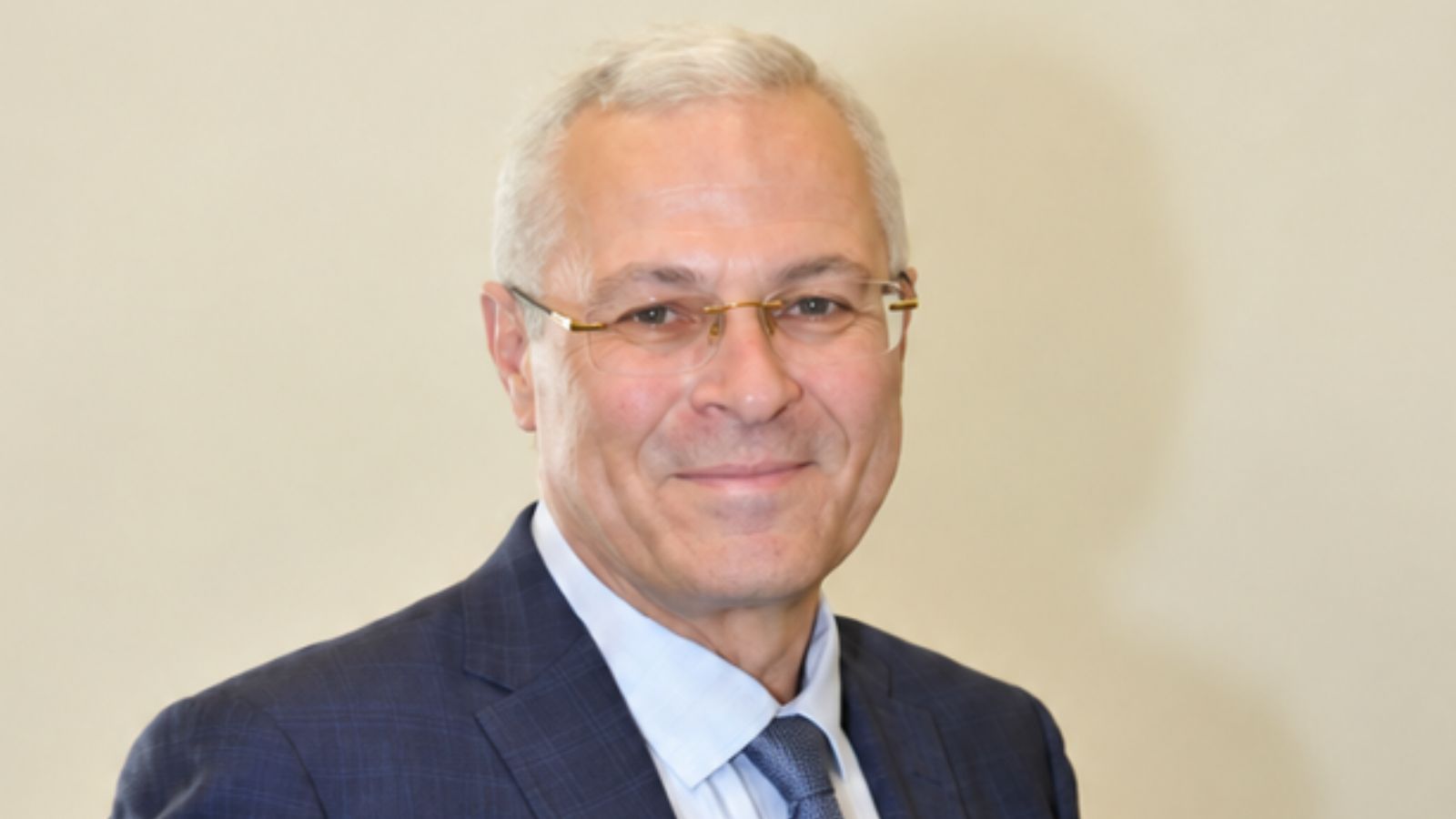
When the mayor of Bussy-Saint-Georges, Yann Dubosc, stood before an audience to praise the Bochasanwasi Akshar Purushottam Swaminarayan Sanstha (BAPS) for a decade of transparent community engagement, he was speaking from a very specific geopolitical playbook. The occasion was meant to solidify the triumph of Europe’s newest traditional stone Hindu temple, a sprawling architectural marvel rising on the Esplanade des Religions et des Cultures just outside Paris.
For years, local municipal leaders have pointed to this multi-faith zone as a shining blueprint for urban secular pluralism. Buddhist pagodas, mosques, and Christian spaces share municipal breathing room with minimal friction. Yet, the arrival of BAPS and its sprawling international network has not unfolded entirely within a vacuum of peaceful civic harmony. Just days prior to the grand consecration events led by spiritual head Mahant Swami Maharaj, a sudden firestorm erupted at one of France's most iconic national landmarks—the Eiffel Tower—forcing a public reckoning that tested the limits of foreign religious delegation protocols against the unyielding bedrock of French Republican secularism (laïcité).
To understand why a local mayor’s praise carries such heavy political weight requires looking past the polished press releases of cultural diplomacy. It demands examining the fault lines that emerge when strict religious organizational traditions collide with European labor laws and gender equality mandates.
The Anatomy of a Diplomatic Collision
The friction point materialized when a high-profile BAPS delegation toured the Eiffel Tower. Behind the scenes, instructions given during the private visit led to operational adjustments restricting the presence of female staff members in certain areas. Union officials reacted swiftly, calling an immediate walkout that shuttered the historic monument and thrust the international Hindu denomination into an unwelcome European media spotlight.
The backlash was immediate and fierce. High-ranking French officials, including Paris municipal leaders and national lawmakers, publicly condemned any practice that sidelined women, drawing a sharp line in the sand. For a nation hyper-sensitive to any real or perceived erosion of gender parity in public spaces, the incident touched a raw nerve. BAPS issued a prompt and comprehensive apology, clarifying that the scheduling was intended merely to minimize public disruption and that no malicious intent underlay the arrangement.
Yet, the damage to the narrative of seamless integration was done. It exposed a fundamental tension: international religious organizations scaling up their global footprint often operate under insular internal hierarchies that can clash awkwardly with the rigid egalitarian expectations of Western European public institutions.
Navigating Laïcité and Local Politics
Mayor Dubosc’s subsequent strong endorsement of BAPS's decade-long track record was more than an act of diplomatic courtesy. It was an exercise in municipal damage control. Bussy-Saint-Georges has invested heavily in its identity as a sanctuary of comparative religion. The municipality carved out the Esplanade precisely to foster structured, predictable dialogues between distinct faith communities.
When the Eiffel Tower controversy threatened to cast a shadow over the municipality's flagship interfaith project, local leaders had to draw a clear distinction between administrative oversight and grassroots community contributions. Dubosc carefully threaded the needle. He reaffirmed his absolute commitment to French secularism and gender equality while simultaneously vouching for the meticulous transparency BAPS demonstrated during the years of planning, zoning, and constructing the Paris Mandir.
This duality reveals the messy reality of modern urban governance. Religious groups seeking monumental real estate in Western capitals must navigate complex bureaucratic mazes where public relations are just as important as architectural engineering. BAPS utilized a sophisticated network of international contractors, local French engineering firms like Vinci subsidiary Bateg, and persistent diplomatic outreach to ensure the temple rose from the soil of Seine-et-Marne. But institutional goodwill is an appreciating or depreciating asset, highly vulnerable to isolated operational missteps.
The Broader Implications for Global Diaspora Institutions
The episode offers a cautionary template for other transnational religious bodies expanding across borders. As diaspora organizations mature from modest community halls into monumental cultural landmarks—such as the massive complexes built by BAPS in London, Robbinsville, and Abu Dhabi—they carry immense organizational weight.
Local integration is rarely tested by grand theological doctrines or architectural grandeur. It is tested in the mundane, high-pressure friction of daily operations, labor relations, and public compliance with local legal frameworks. When a delegation's internal customs brush against local labor unions and gender equality laws, the resulting friction can instantly eclipse decades of patient charitable work and interfaith dialogue.
The stone of the Paris Mandir has been laid, consecrated, and opened to the public. The carved pillars brought from India stand as testaments to centuries-old artistic traditions. However, the real test for transnational institutions in Europe is not whether they can build monuments that capture the eye, but whether they can adapt their internal operational cultures to fully synchronize with the uncompromising social contracts of their host societies. Mayor Dubosc’s defense bought the organization breathing room, but the broader cultural negotiation between traditional religious hierarchy and modern European egalitarianism is only just beginning.