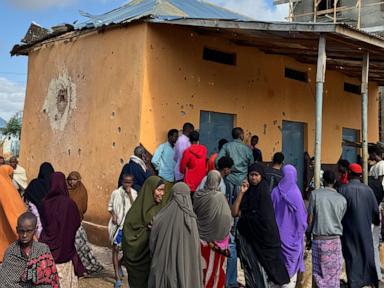
Renewed urban warfare has once again shattered the fragile peace in Baidoa, the vital administrative hub of southwestern Somalia. Federal forces and militias loyal to ousted regional leaders traded heavy artillery fire in the city streets, leaving dozens dead and over ninety wounded. This violence is not a sudden eruption of random tribal animosity. It is the predictable consequence of a high-stakes centralizing campaign by Mogadishu that has fractured regional security architectures, alienating local power brokers and directly inviting al-Shabab back into territory that took years to secure.
The Anatomy of a Fractured State
To understand why Baidoa burns, one must look past the immediate tactical reports of mortar explosions and street skirmishes. The core crisis stems from the federal government's aggressive push to override regional state elections. When federal forces moved into Baidoa to unseat long-serving regional leader Abdiaziz Hassan Mohamed Laftagareen, they dismantled a delicate, albeit flawed, local balance of power.
Central authorities viewed Laftagareen’s disputed indirect re-election as an existential threat to federal oversight. Local clans viewed the intervention as an illegal military occupation by Mogadishu.
- Federal troops control the urban core but lack deep territorial legitimacy.
- Ousted regional networks retain deep clan loyalties and armed mobilization capacity.
- Displaced populations trapped in overcrowded camps bear the brunt of the crossfire.
Guns replaced ballots. When the political architecture of a federal state collapses into winner-take-all violence, the institutional framework ceases to function as a mediator. It becomes merely another combatant.
The Asymmetric Opportunism of Insurgency
The most alarming dimension of the recent fighting is the tactical convergence between anti-government militias and al-Shabab. While federal officials claim definitive proof that ousted loyalists coordinated assaults alongside the extremist group, the reality on the ground is often more fluid and dangerous than simple alliances.
Insurgents do not need formal pacts to exploit administrative chaos. When Somali National Army battalions are pulled into urban centers to fight rival political factions, rural defense lines thin out. Al-Shabab fills the vacuum.
Consider a hypothetical scenario of security displacement: A brigade stationed along a vital rural corridor to block insurgent supply routes is hastily redeployed to secure a regional parliament building against political protesters. Within hours, listening posts go dark, checkpoints are abandoned, and the militant network gains unimpeded mobility.
The state is fighting a two-front war against itself. Every bullet spent in Baidoa is a dividend paid to al-Shabab.
Humanitarian Fallout in the Camps
Beyond the political calculus lies a grim human cost. Baidoa shelters over half a million vulnerable people who have fled successive rounds of drought and rural violence. Makeshift displacement camps fringe the city limits, offering little physical protection when heavy weaponry starts firing across residential neighborhoods.
Bay Regional Hospital, built to handle routine trauma and pediatric care, routinely faces catastrophic supply shortages during these flare-ups. Medical staff operate out of hastily erected canvas tents, rationing surgical gauze while ambulances navigate debris-strewn avenues. International aid organizations find their movements restricted by active combat zones, leaving entire communities cut off from food distributions and clean water access.
The institutional neglect matches the physical destruction. Civilians caught between the ambitions of federal bureaucrats and the resentment of regional power brokers are left with no recourse, no protection, and a rapidly shrinking margin for survival.
As long as Mogadishu prioritizes the forcible subjugation of regional administrations over inclusive political reconciliation, the streets of Baidoa will remain a battlefield, and the promise of a stable federal Somalia will recede further out of reach.
Somalia clashes with regional forces over control of key city
This video report captures the frontline realities and tactical maneuvers of Somali national forces clashing with regional factions over control of strategic urban centers.
http://googleusercontent.com/youtube_content/1