The ongoing turmoil in Pakistan-administered Kashmir, known locally as Azad Jammu and Kashmir (AJK), is frequently misread by outside observers as a sudden eruption of localized anger over inflation, electricity tariffs, and wheat prices. It is not. Decades of unfulfilled administrative promises, resource extraction disparities, and structural political exclusion have converged into a severe institutional crisis. What began years ago as civil resistance over soaring utility bills has mutated into a profound rejection of the political status quo, challenging the core legitimacy of how Islamabad manages the territory.
To understand why this territory remains a powder keg, one must look past the immediate headlines of street clashes and curfews. The friction points are structural, systemic, and deeply rooted in a political economy that treats local grievances as administrative inconveniences rather than symptoms of systemic failure.
The Economy of Extraction
At the heart of the resistance lies a bitter paradox. Azad Kashmir generates massive amounts of hydroelectric power for the national grid of Pakistan, yet its residents have historically faced crippling electricity tariffs and recurring power outages. For years, the region's rivers have powered factories and cities hundreds of miles away, while local populations watched their own cost of living skyrocket under the weight of national economic instability and International Monetary Fund-mandated structural adjustments.
When civil society groups, traders, and everyday citizens organized under the banner of the Jammu Kashmir Joint Awami Action Committee (JAAC), their demands initially targeted immediate relief: subsidized wheat and rolled-back electricity rates. The state responded with temporary fiscal band-aids, lowering rates and committing to temporary subsidies during acute pressure points in 2024 and 2025.
These concessions failed to resolve the core contradiction. Temporary price cuts do not fix a system built on economic extraction. Citizens realized that every financial relief package was treated by federal authorities as a magnanimous gift rather than an acknowledgment of economic right. This dynamic created a feedback loop of distrust. When inflation bites hard, the population mobilizes; the state offers temporary appeasement; prices stabilize briefly; and then the underlying structural decay reasserts itself, driving people back to the streets with expanded demands.
Shifting Demands and Political Representation
As the protest cycles matured through late 2025 and into 2026, the movement shed its purely economic skin and acquired a sharp, institutional edge. The focal point shifted from utility bills to political architecture.
A prime example of this evolution is the fierce opposition to the twelve seats reserved in the AJK Legislative Assembly for refugees originating from Indian-administered Jammu and Kashmir. Protest organizers argued that these reserved seats allow non-resident voting blocs to disproportionately influence local governance, effectively diluting the political agency of residents who actually bear the brunt of local economic and administrative policies.
When the Supreme Court of Azad Kashmir ruled that these refugee seats are constitutionally protected and immune to unilateral abolition without a complex constitutional amendment, it provided a legal defense for the establishment but poured fuel on the fire of public discontent. To the leadership of the JAAC, the ruling confirmed that local legal institutions were designed to protect the status quo rather than respond to popular will.
The state's subsequent designation of the JAAC under anti-terrorism laws marked a dangerous escalation. By treating organized political dissent as a security threat rather than a legitimate negotiation partner, authorities closed the door on conventional democratic mediation.
The Generational Chasm
Compounding these structural and legal disputes is a widening generational fracture. Older political actors on both sides often rely on traditional narratives, historic rhetoric, and nationalist framing regarding the broader territorial dispute.
The demographic driving the current wave of protests looks different. Younger residents, students, and urban professionals are weary of grand geopolitical slogans that fail to put food on the table or secure local employment. They want to know who manages their municipal services today, why local taxation burdens are disproportionately high, and why accountability mechanisms answer upward to federal ministries rather than outward to the electorate.
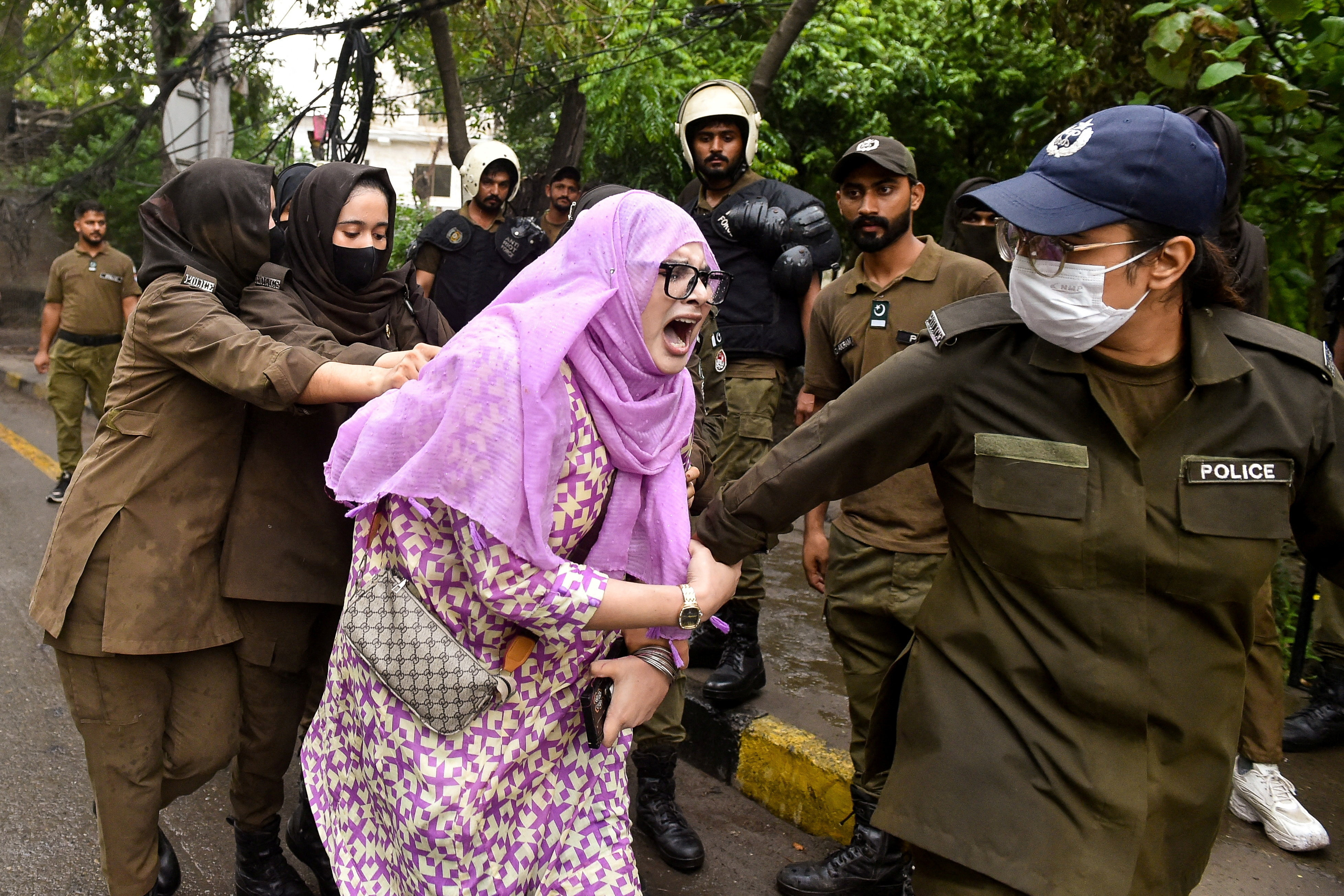
When security forces deploy heavy-handed crowd control methods, resulting in tragic fatalities and widespread injuries during clashes in regions like Poonch and Sudhnoti, the psychological damage runs deep. States can deploy administrative bans and communications blackouts, but they cannot legislate away the collective memory of state-citizen violence. Each confrontation hardens public resolve, transforming temporary protesters into permanent dissidents.
The Path Ahead
The political calendar dictates that legislative elections proceed through a phased rollout across regional divisions. Yet, holding elections under a cloud of proscription, mass arrests, and acute civil unrest guarantees that the resulting government will struggle to claim genuine popular authority.
If Islamabad views the unrest in Azad Kashmir merely as a law-and-order problem to be contained through force, the friction will only compound. Real stability requires dismantling the mechanisms of economic alienation, respecting local political representation, and accepting that the population's demands for administrative dignity are non-negotiable. Until those foundational corrections occur, the region will remain suspended between state control and perpetual crisis
Unrest in Pakistan-administered Kashmir: Protests against soaring costs turn violent
This video provides on-the-ground context regarding the initial socioeconomic grievances and public demonstrations in Muzaffarabad that laid the groundwork for the current political crisis.
http://googleusercontent.com/youtube_content/1