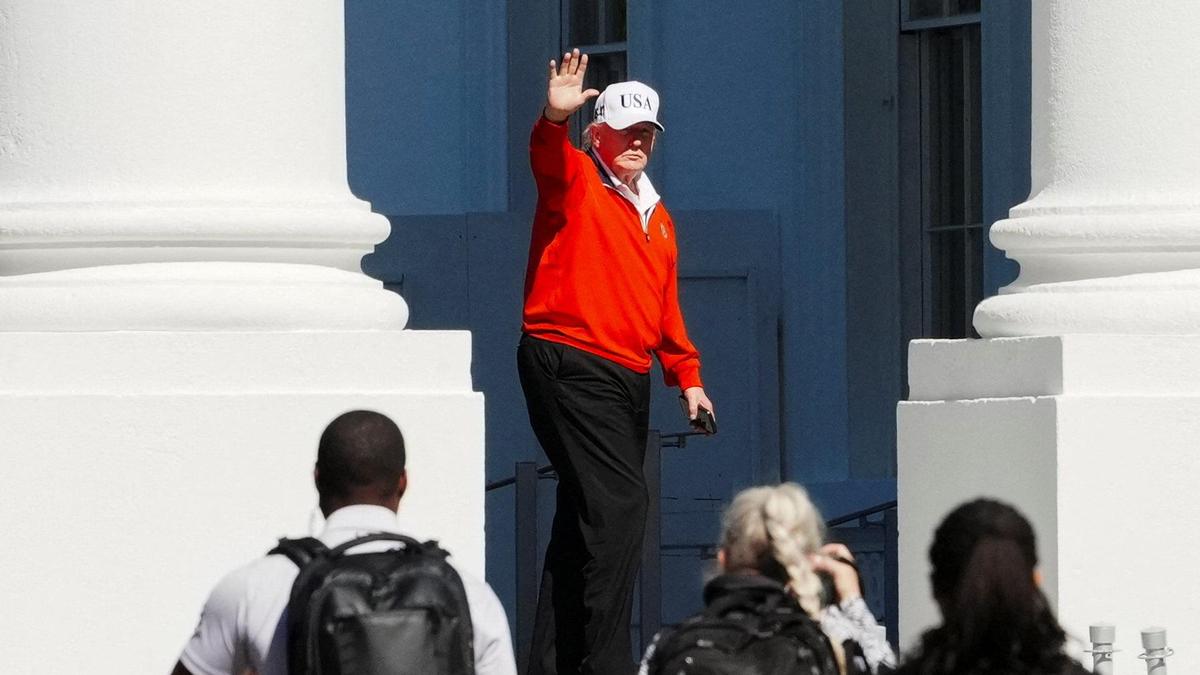
The white flag came in the form of a late-afternoon Justice Department memo, but the real surrender happened behind closed doors on Capitol Hill. Facing a dual assault from federal judges and his own party, President Donald Trump is actively reconsidering the future of his controversial $1.776 billion Anti-Weaponization Fund. The administration publicly announced a temporary pause on the initiative to comply with an emergency court order. Privately, however, advisers concede that the sweeping plan to compensate political allies may be fundamentally broken.
This sudden retreat marks the most significant administrative bottleneck of Trump's current term. What began as a sweeping legal settlement intended to reward supporters and punish institutional foes has transformed into a fiscal and political liability. The pause is not merely a routine compliance measure. It is a symptom of a deeper structural failure that has alienated Senate leadership, frozen vital spending bills, and triggered allegations of judicial fraud. You might also find this related story interesting: The Quiet Arithmetic of the Indian Ocean.
The Closed Door Rebellion
To understand why this massive financial mechanism is stalling, one must look past the courtroom battles and into the private corridors of the Republican party. The public narrative focuses on progressive advocacy groups filing lawsuits. The structural damage, however, was inflicted by a bruising, closed-door confrontation between Republican senators and acting Attorney General Todd Blanche.
During that meeting, lawmakers launched an aggressive cross-examination of the administration's plan. Senator Ted Cruz described the encounter as one of the roughest sessions he had witnessed during his entire tenure in the Senate. As reported in recent coverage by Reuters, the effects are notable.
The core of the congressional panic rests on a total absence of legislative oversight. The administration structured the $1.8 billion fund using executive settlement authorities, completely bypassing the House and Senate appropriations committees. For institutional conservatives, this mechanism represents a dangerous expansion of executive spending power.
More pressingly, Capitol Hill is terrified of the political optics. Because the eligibility criteria remained entirely undefined, lawmakers realized that individuals convicted of violent offenses during the January 6 Capitol riot could technically apply for federal payouts. The thought of taxpayer-funded checks landing in the mailboxes of high-profile federal inmates sent shockwaves through the Republican conference.
The legislative consequences were immediate. Senate Majority Leader John Thune signaled that the White House needs to dismantle the program entirely rather than wait out a temporary court injunction. Rank-and-file Republicans returned to Washington this week with an ultimatum. They flatly refuse to provide the votes needed to pass the critical Homeland Security spending bill until the executive branch permanently scraps or radically curtails the fund.
The Dual Judicial Pincers
While Congress strangled the fund's political lifeline, two federal judges systematically dismantled its legal architecture within a span of 24 hours.
In Virginia, U.S. District Judge Leonie Brinkema issued a temporary restraining order that froze all operations of the program. Her ruling prevents the Justice Department from establishing the proposed five-member commission, accepting applications, or transferring a single dollar into the account. Brinkema reasoned that an immediate freeze was mandatory to prevent federal funds from being irreversibly disbursed before the court could rule on the constitutionality of the program.
Simultaneously, a separate legal crisis erupted in a Florida federal courtroom.
The entire $1.8 billion fund was originally engineered as a settlement agreement to resolve Trump's personal lawsuit against the Internal Revenue Service regarding the historical leak of his tax returns. In exchange for dropping his multi-billion-dollar claims against the government, the Justice Department agreed to set up this massive compensatory pool for victims of alleged lawfare.
U.S. District Judge Kathleen Williams, who presided over the underlying IRS lawsuit, reacted with fury to the settlement terms. She ordered Trump’s personal legal team to respond to grave allegations from external critics asserting that the presidency was used to engineer a collusive, self-serving deal. Williams has demanded a full written accounting to determine if the court itself was the victim of a fraud designed to evade judicial scrutiny.
The Mechanics of Administrative Lawfare
The Justice Department continues to publicly project absolute defiance. Staff spokespersons maintain that the fund is grounded in solid historical precedent, pointing to complex administrative settlements executed during the Obama administration to resolve systemic discrimination claims against minority farmers.
The comparison is legally fragile.
In traditional civil rights settlements, funds are distributed to a clearly defined class of plaintiffs who suffered quantifiable economic injury under specific statutory violations. The Anti-Weaponization Fund, by contrast, relies on a highly subjective premise. It proposes to hand out taxpayer money based on ideological targeting.
[The $1.776B Settlement Loop]
Trump IRS Lawsuit dropped -> DOJ creates Settlement Fund -> Paid to Political Allies
The administration's formal statement insisted the program would remain strictly non-partisan, claiming it was accessible to Democrats, Republicans, and Independents alike. Yet, the political reality contradicts the official rhetoric. The entire apparatus was birthed from a personal legal settlement involving the sitting president, and its chief cheerleaders have been individuals explicitly prosecuted by federal authorities over the past four years.
The Escalation to June Twelve
The White House is finding that its options are rapidly narrowing. The administration cannot simply wait out the clock because the legislative freeze on the Homeland Security bill threatens to spark a wider government funding crisis.
All eyes are now fixed on June 12. That date represents a critical legal nexus where Trump's lawyers must simultaneously defend the integrity of the Florida settlement and convince Judge Brinkema in Virginia not to convert her temporary pause into a permanent injunction.
Some West Wing strategists are quietly floating compromise measures. These options include imposing a strict statutory ban on any payouts to individuals indicted for violent crimes or introducing an independent inspector general to audit every approved claim. For an administration that campaigned heavily on dismantling institutional checks and balances, accepting such oversight would represent a severe ideological climbdown.
The alternative is an outright abandonment of the project. If the White House refuses to blink, the standoff will likely paralyze the legislative calendar and force a constitutional showdown over executive spending powers. Trump is discovering that writing a check from the federal treasury is radically different from signing one from a private corporate account.