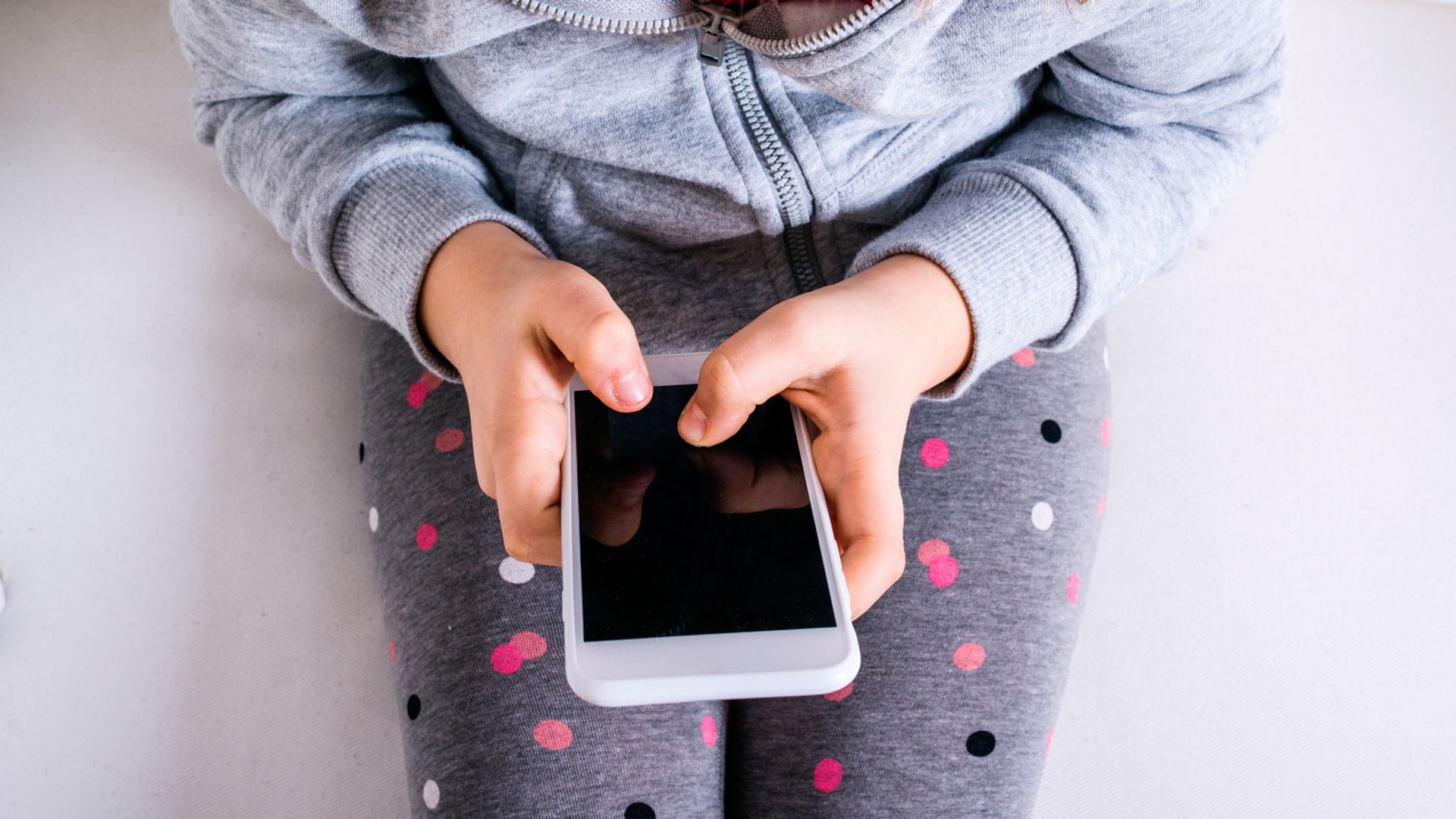
The blue light hits a child’s face at 11:42 PM. It is a specific shade of cool violet, the kind that mimics dawn but belongs entirely to the machine. In a quiet house, on an ordinary street, a ten-year-old boy named Leo—a hypothetical composite of the millions of children currently staring into the same glow—is not sleeping. He is drifting through a digital stream that knows him better than his teachers do.
His thumb moves with a practiced, unconscious flick. Up. Up. Up.
Every swipe brings a fresh micro-dose of adrenaline. A dancing teenager. A prank involving a car crash. A neon-drenched gaming tutorial. An influencer weeping over a breakup. Then, a highly stylized video subtly romanticizing extreme weight loss. Leo does not search for these things. He did not ask to see them. But the machine noticed that three days ago, he lingered on a similar video for four seconds longer than usual. The machine remembered. The machine optimized.
This is the reality behind the clinical, sterile headlines declaring that major social media platforms are "not safe enough for children."
When regulatory bodies and child advocacy groups publish reports on digital safety, they tend to speak in the language of bureaucracy. They talk about data privacy violations, algorithmic transparency, and age-verification protocols. But these dry terms mask a much more urgent, human crisis. We are currently conducting the largest psychological experiment in human history, and our children are the test subjects.
The Mirage of the Digital Playground
Parents used to worry about the physical world. We checked the helmets, locked the medicine cabinets, and told our kids not to talk to strangers in the park. The park had boundaries. It had a gate, a visible horizon, and other parents sitting on benches keeping watch.
When platforms like TikTok and YouTube exploded into the cultural mainstream, they were marketed as digital extensions of that park. They were places for creativity, connection, and harmless entertainment. But this analogy is fundamentally broken. A public park does not reshape itself in real-time based on a child's deepest, unexpressed anxieties.
Consider how a standard recommendation algorithm actually works. It is not a passive librarian handing over a requested book. It is a predictive engine designed for a single, uncompromising metric: watch time. To maximize that time, the system analyzes hundreds of data points per second—how long a user pauses on an image, how many times they rewatch a loop, when they speed up a video.
For an adult with a fully developed prefrontal cortex, resisting this pull is difficult. For a child whose brain is still aggressively wiring its reward systems, it is an uneven fight. The platform becomes a funhouse mirror, reflecting and magnifying whatever emotional vulnerability the child happens to be experiencing that day. If a young girl feels insecure about her body, the algorithm does not offer balance; it feeds her a relentless diet of perfectionism because insecurity keeps her eyes glued to the screen.
The Ghost in the Moderation Machine
The common defense from tech executives is often centered on safety filters and moderation. They point to the thousands of content moderators employed globally and the sophisticated artificial intelligence systems designed to scrub harmful material before it reaches young eyes.
But look closer at how this infrastructure actually functions on a Tuesday afternoon.
Billions of minutes of video are uploaded daily. The sheer volume makes human review a mathematical impossibility for the vast majority of content. The automated systems left to police the gates are easily bypassed. Creators quickly learned that by altering a single letter, using specific emojis, or adopting coded slang, they could discuss self-harm, eating disorders, and explicit violence without triggering the digital tripwires.
The safety nets are not just frayed; they are fundamentally porous.
Even the concept of "restricted modes" or "kids' versions" of these apps often fails to address the core issue. These versions frequently rely on self-reported age barriers. A nine-year-old typing in a false birth year is not a sophisticated hack; it is the default entry method for the modern internet. By allowing these easily bypassed barriers to stand as the primary line of defense, society has essentially placed a paper latch on a vault door.
The Invisible Erosion of Boredom
To understand the deeper stakes, we have to look at what is being displaced. Human development requires friction. It requires the slow, sometimes painful process of being bored, of figuring out how to occupy an empty afternoon, of navigating a real-world disagreement with a friend without the ability to block them with a click.
When every moment of stillness is instantly filled by a hyper-personalized, high-production video stream, the capacity for deep attention begins to wither. Teachers see this daily in classrooms. The child who spent four hours the previous night watching split-screen videos—where a cartoon plays on the bottom half to keep their brain stimulated while a story is told on the top—struggles to focus on a static textbook. The textbook does not flash. It does not reward them for looking at it.
This is not a failure of willpower on the part of the child. It is a predictable biological response to an environment that offers infinite novelty with zero effort.
The psychological toll shows up in the quiet moments. It is the sudden spike in anxiety when the phone is misplaced. It is the pervasive sense of FOMO (fear of missing out) that turns a peaceful evening into an agonizing awareness of what everyone else is doing, filming, and achieving. We are witnessing a generation that is hyper-connected but profoundly isolated, physically safer inside their homes than any generation before them, yet mentally exposed to a degree that previous generations could scarcely comprehend.
Redefining the Duty of Care
The conversation around digital safety usually stalls at a familiar crossroads of blame. Tech companies point to parental responsibility, arguing that tools exist for families to monitor screen time and restrict content. Parents, exhausted by the relentless demands of modern life, point back at the companies, asking why products designed for children are inherently unsafe by design.
But the real problem lies elsewhere. It rests in our collective definition of what a safe digital space actually looks like.
When an automaker builds a car, we do not expect the buyer to inspect the brake lines or verify the integrity of the airbags before driving off the lot. We operate under the assumption that the vehicle has passed rigorous, independent safety standards before it ever touches a public road. The burden of basic safety rests on the manufacturer, not the consumer.
In the digital sphere, we have inverted this logic. We have allowed platforms to deploy psychological engagement tactics engineered by some of the most brilliant minds on earth, and then we have told parents that it is their job to police the fallout with a few basic screen-time settings.
Change does not come from a place of panic, nor does it come from a desire to ban technology entirely. The internet is an extraordinary monument to human ingenuity, offering access to knowledge that would have seemed miraculous forty years ago. The goal is not to pull the plug, but to demand a fundamental shift in design philosophy.
Imagine a digital ecosystem where the default setting for any user under eighteen is privacy, not exposure. Imagine algorithms optimized for a child’s well-being and cognitive development rather than sheer, unblinking engagement. Imagine platforms where chronological feeds replace predictive loops, giving children a natural stopping point—an end of the page—rather than an infinite scroll that actively discourages them from ever putting the phone down.
Until those design shifts become the baseline requirement rather than an optional afterthought, the blue light will continue to burn late into the night.
Back in the quiet bedroom, Leo’s thumb hovers over the screen. He is tired. His eyes ache. But the next video is already loading, counting down from three seconds, promising something slightly louder, slightly faster, and slightly more shocking than the last. He stays awake because the machine is designed to ensure he never chooses to leave.