The mainstream defense press is throwing a victory lap for New Delhi. Analysts are breathless over India’s expanding military trade with the United Arab Emirates, calling recent ammunition and artillery contracts a definitive breakthrough. They see a rising export superpower proving its mettle on the global stage.
They are completely misreading the board.
What the crowd calls a major confidence booster is actually a diagnostic symptom of a structurally flawed defense strategy. Celebrating the export of low-margin ammunition, towed artillery, or joint-venture missiles to the Gulf misses the entire point of sovereign defense industrialization. Buying Indian weapons is a geopolitical hedging strategy for Abu Dhabi, not a validation of Indian engineering superiority.
If you think a few export contracts mean India has broken its chronic dependency on foreign military tech, you are falling for a carefully constructed public relations mirage.
The Asymmetry of the Gulf Buy
Let's dissect why the UAE is buying from India in the first place. The lazy consensus assumes Abu Dhabi looked at Indian defense hardware, compared it to Western alternatives, and decided Indian tech was superior.
It wasn't. The decision is purely transactional geopolitics.
The UAE operates a foreign policy model built on radical diversification. They buy American F-16s, French Rafales, Russian anti-air systems, Chinese drones, and now, Indian ammunition and artillery. By spreading their capital across multiple capitals, they buy diplomatic goodwill and insulate themselves from singular arms embargoes.
[Global Arms Buyers] ──> Hedging Strategy ──> Spreading Capital across US, France, India
                                          └──> Buying Goodwill, Not Technical Superiority
When India sells artillery or munitions to the Gulf, it isn't competing on pure performance metrics; it is filling a low-tech niche while the host nation keeps its primary Western suppliers on their toes.
Worse, look at the composition of these exports. Selling conventional artillery shells or unguided rockets is a low-margin, high-volume commodity business. It does not fund the multi-billion-dollar research and development cycles required to build next-generation stealth fighters, advanced submarine propulsion, or high-altitude long-endurance drones. India is celebrating winning the low-end manufacturing race while remaining locked out of the high-value intellectual property brackets.
The Illusion of Indigenous Tech
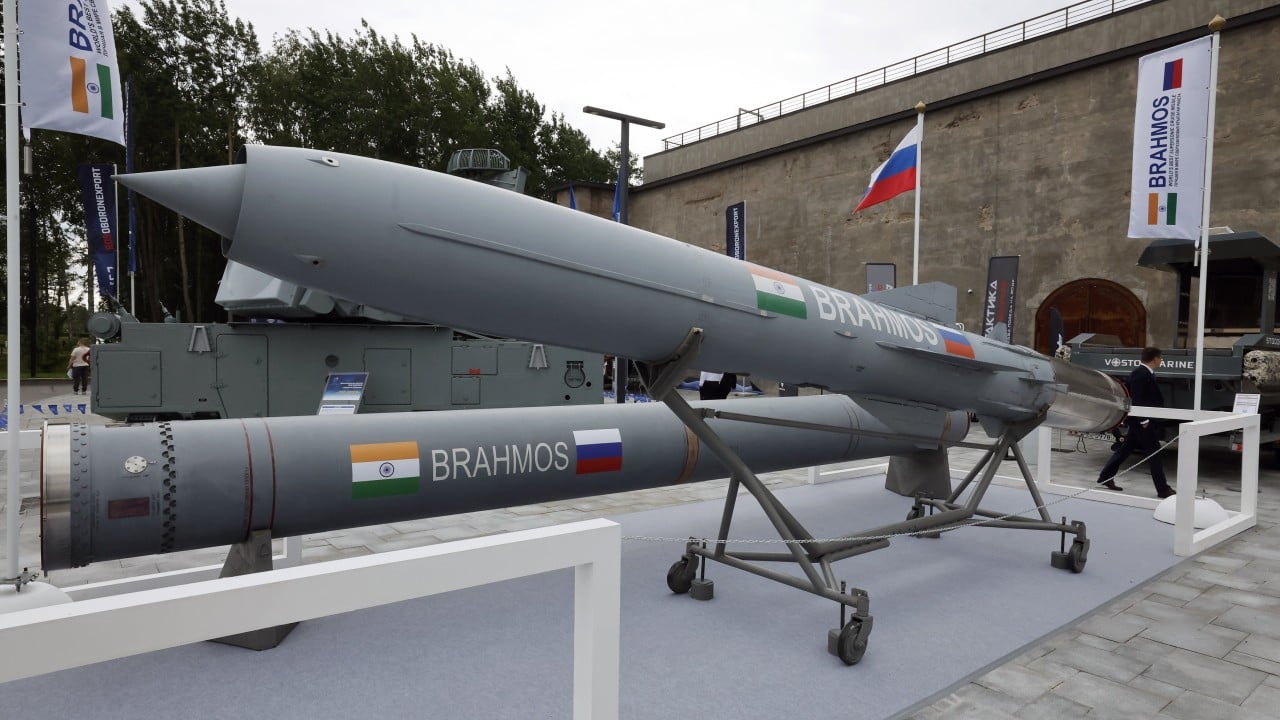
The crown jewel of India's export pitch is often the BrahMos supersonic cruise missile. Whenever Gulf nations express interest, headlines claim it as a triumph for domestic manufacturing.
This claim ignores basic supply chain realities.
The BrahMos is a joint venture with Russia’s NPO Mashinostroyeniya. The propulsion system—the ramjet engine that gives the missile its terrifying speed—and the critical seeker technology have deep Russian roots. When India exports a BrahMos missile, a significant portion of that capital flows directly back to Moscow, or remains dependent on Russian supply chains for sub-components.
The same structural flaw undermines the Advanced Light Helicopter (ALH) Dhruv. India pitched it heavily across the global south. Yet, the helicopter relies on the Shakti engine, developed jointly with Safran Helicopter Engines of France.
If a foreign nation can veto your export deal by halting component supplies, you do not possess an independent defense sector. You run a highly sophisticated assembly line.
I have watched defense firms burn through millions trying to market platforms globally, only to realize too late that their core subsystems are shackled by foreign end-user monitoring agreements. Until India owns the underlying intellectual property for engines, advanced radars, and seekers, every export success story comes with a silent, foreign beneficiary holding a veto power.
The Export Imports Paradox
The ultimate proof that the current celebratory narrative is broken lies in a single, devastating paradox: India remains one of the world's largest importers of arms, according to the Stockholm International Peace Research Institute (SIPRI).
How can a nation be a rising export titan while simultaneously spending tens of billions of dollars importing French fighter jets, American heavy-lift aircraft, and Russian air defense systems?
| High-Value Imports (The Reality) | Low-Value Exports (The Hype) |
|---|---|
| Jet Engines (US/France) | Artillery Shells & Ammunition |
| Air Defense Systems (Russia) | Towed Artillery Pieces |
| Maritime Patrol Aircraft (US) | Light Utility Helicopters (with foreign engines) |
This imbalance exposes the domestic defense split. The state-run Defense Public Sector Undertakings (DPSUs) are pushed by political mandates to hit export targets. They achieve this by offloading basic hardware. Meanwhile, the Indian Armed Forces—the Army, Navy, and Air Force—frequently bypass domestic designs for their most critical, frontline requirements because the local industrial base cannot produce top-tier technological parity.
The army imports specialized assault rifles and winter gear while the state exports artillery. This is not a sign of industrial health; it is systemic failure masked by creative accounting.
Dismantling the Consensus
The defense establishment constantly asks: How can India increase its defense export volume to five billion dollars by next year?
This is completely the wrong question.
Chasing an arbitrary export revenue target forces the industry to build what is easy to sell rather than what is vital to own. It prioritizes selling cheap components to secondary military powers over solving the core technological deficits that leave the homeland vulnerable.
Let's dismantle the common assumptions driving this flawed premise:
The Flawed Premise: Exporting weapons to the UAE proves India can replace traditional suppliers like Russia or the West.
The Reality: No major power views Indian defense hardware as a replacement for tier-one Western or Russian platforms. It is treated as a secondary tier for non-critical mission profiles or low-intensity operations.
The Flawed Premise: High export numbers automatically mean self-reliance at home.
The Reality: You can manipulate export numbers by selling high volumes of low-tech soft goods, protective gear, and basic ammunition. This does nothing to reduce dependency on foreign companies for heavy transport, fighter engines, and electronic warfare suites.
The Hard Realities of the Private Sector Shift
If India wants to turn its defense sector into something genuinely formidable, it must stop treating defense production as an employment guarantee scheme for state-run labs.
The state-owned DPSU ecosystem is slow, risk-averse, and insulated from market realities. True innovation requires shifting the center of gravity to the domestic private sector—and not just as sub-contractors making components for state blueprints.
The downside to this contrarian path is brutal. If you open the floodgates to private defense majors, legacy state factories will fail. Thousands of public-sector jobs will vanish. The political fallout would be severe, which is exactly why successive administrations choose the safer path: inflating export metrics using state-backed lines of credit to friendly nations.
But continuing down the current path ensures India remains a permanent generation behind.
Stop celebrating the sale of ammunition to the Gulf. It is a financial band-aid on a structural hemorrhage. Until the domestic industry can build a fighter jet engine from scratch without Western or Russian blueprints, the defense export boom is just noise.
Uncouple the industry from political metric-chasing. Force the state labs to compete with private capital without a safety net. Anything less is just maintaining an expensive illusion.