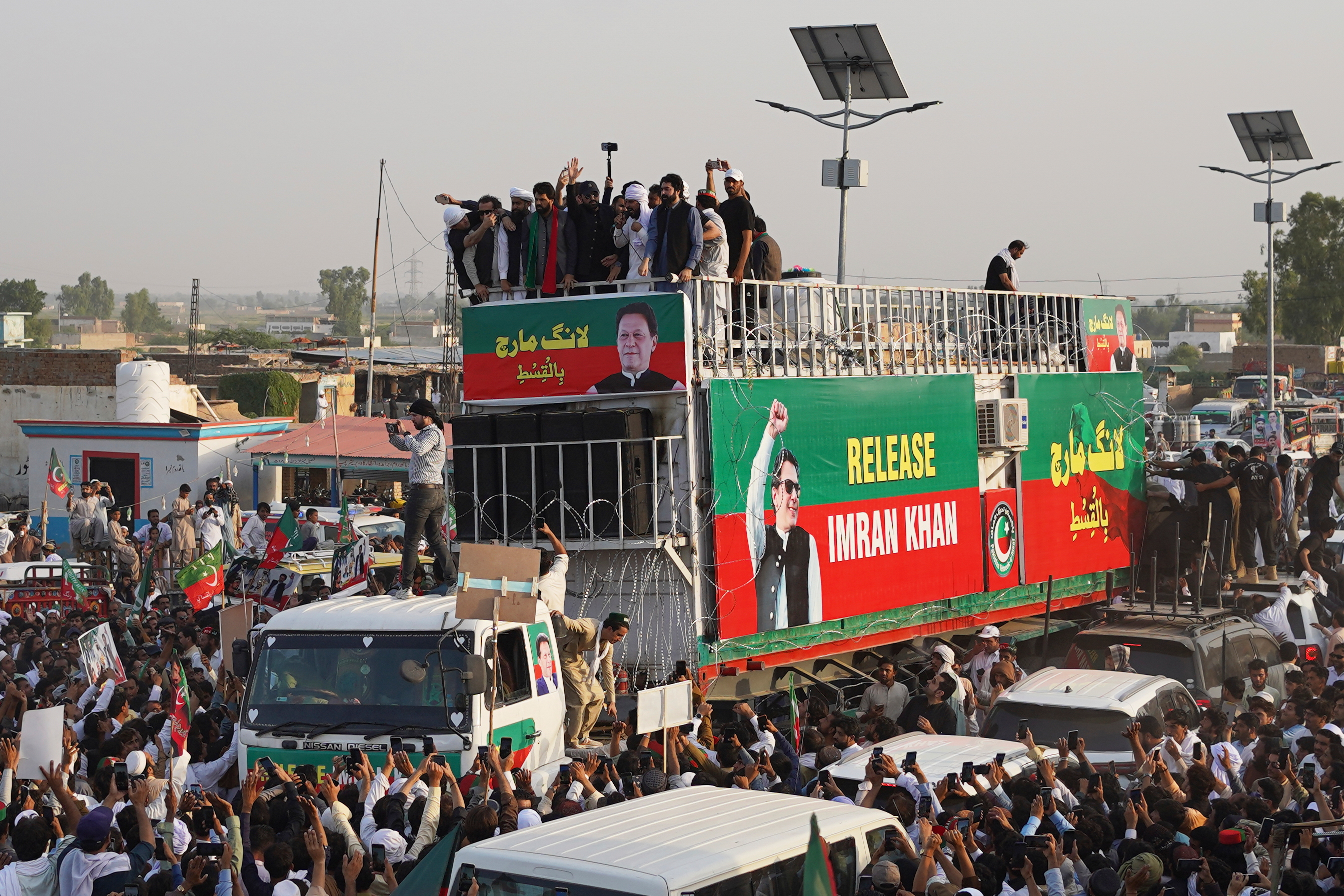
When negotiations between Pakistan Tehreek-e-Insaf and the federal government broke down in early October 2026, thousands of Imran Khan supporters poured onto roads in northwestern Pakistan to demand his release. The convoy set out from Lakki Marwat in Khyber Pakhtunkhwa on October 4, 2026. Protesters weren't just asking for prison doors to open. They were demanding his transfer to a hospital and reliable family visits after talks stalled.
Most standard wire recaps read like a checklist of dates and roadblocks. That misses the real story. When you look closely at what happened on the ground and behind closed doors, this wasn't a sudden outburst. It was a pressure cooker that had been building for months.
What Actually Sparked the March After Talks Failed
Talks to avoid the demonstration collapsed two days before the march kicked off. Organizers had already pushed the demonstration back from late September to early October, trying to see if backchannel negotiations would give their imprisoned leader real relief. When those talks went nowhere, patience ran out.
You have to understand what had been happening around Khan's detention in the weeks leading up to the march. Concerns over his health, particularly a right-eye condition requiring specialist care, had turned his custody into a flashpoint. His party and family accused authorities of defying court orders regarding hospital treatment and family access. Even his sisters faced arrest ahead of protest plans, which only deepened anger among rank-and-file workers.
From a political standpoint, marching from Lakki Marwat toward Islamabad was a calculated move. Khyber Pakhtunkhwa has long served as a vital base of backing for Khan's party, and mobilising convoys of buses, cars, and trucks from there let organizers show they could still move crowds despite heavy state pressure. As KP Chief Minister Sohail Afridi framed it in coverage of the protest wave, a long march isn't a quick twenty-over match—it's a five-day Test match. That line captures the mindset pretty well. Instead of expecting a one-day miracle, supporters treated endurance itself as leverage.
Why Shipping Containers Became Islamabad's Fifth Season
If you've followed Pakistani politics over the past few years, the sight of steel shipping containers blocking highways won't surprise you. Ahead of the autumn 2026 protests, authorities sealed key routes and barricaded entry points into Islamabad—including areas around the capital's high-security Red Zone—using rows of containers.
Locals and analysts have joked darkly about "Containerabad," treating the steel walls like an unwanted fifth season. Honestly, it's hard not to see why. Locking down major arteries like the Peshawar motorway and Grand Trunk Road is meant to stop protesters from reaching the capital. Yet it also hits ordinary people who have nothing to do with party politics.
Reporting by Al Jazeera and Reuters highlighted a glaring blind spot in how lockdowns get discussed: the collateral hit to freight and daily wages. Truck drivers get stuck for days or weeks when vehicles are seized or routes close. Foreign shipping lines charge steep daily demurrage penalties—often tens of thousands of rupees per container a day—while cargo backs up hundreds of miles away at Karachi's port.
From a policy angle, that's a massive trade-off. Short-term crowd control can look decisive on television. Meanwhile, blocking trade corridors squeezes household budgets, frustrates business owners, and feeds general economic resentment. Political analyst Habib Akram pointed out in Al Jazeera reporting that authorities worry most when anger over high living costs merges with anger over Khan's imprisonment. Sealing off roads might keep marchers out of a square, yet it risks turning everyday commuters and merchants into angry bystanders.
Common Misconceptions About This Stand-Off
People outside Pakistan—and sometimes even folks following headlines casually—often fall for a few oversimplifications when Imran Khan supporters hit the streets.
- Myth one: Every march is just a spontaneous riot. While past protests have seen clashes and casualties, including violent episodes in late 2024, organized marches are heavily coordinated political operations. Leaders negotiate timelines, debate whether to hold sit-ins or keep moving, and test organizational reach across districts.
- Myth two: The standoff is purely about one politician's ego. Khan's personal popularity and imprisonment sit right at the center of the dispute. Still, voters and activists bring layered grievances to the road: disputes over the February 2024 election results, frustration with inflation and debt, arguments over military influence in politics, and basic demands for due process and medical care.
- Myth three: Roadblocks settle the underlying conflict. Containers and security cordons can delay a rally or break up a gathering. They don't resolve disputed political legitimacy or court battles over detention and healthcare. Once the steel barriers move aside, the same political questions usually come right back.
There is also real debate over how to interpret the aftermath. Supporters and PTI leaders argue that persistent street mobilization and legal pressure are the only ways to force compliance with court orders and push back against what they view as political victimisation. Government officials and critics of the protests argue that mass marches disrupt public order, strain security forces already stretched by militant violence in parts of Khyber Pakhtunkhwa, and hurt economic stability. Both sides point to real stakes—one side sees survival and rights, the other sees law, order, and state security.
What Happened Next and Why It Still Matters
The October march didn't happen in a vacuum, and its ripple effects kept building over the weeks that followed. Tensions escalated sharply in mid-October when federal authorities placed Khyber Pakhtunkhwa under emergency and governor's rule and detained hundreds of party figures. By mid-November, Khan's legal team circulated a letter addressed to judges renewing pleas for court-ordered medical care.
If you're trying to make sense of these headlines without getting whiplash from social media rumors, a few practical habits help a lot:
- Check primary court and official updates before reacting to viral claims. Rumors spread fast during crackdowns and internet or road disruptions. Look for verified court orders, official notifications, and established wire or international reporting rather than unverified clips.
- Track three indicators rather than a single protest headline. Watch court hearings and medical/visitation rulings, provincial governance moves in Khyber Pakhtunkhwa, and highway/port logistics around Islamabad and Karachi. Those three threads show whether pressure is cooling down or hardening.
- Separate humanitarian and legal questions from partisan slogans. Demands for medical treatment, family access, and adherence to judicial orders involve legal standards and basic welfare, even when wrapped in fierce political rhetoric. Keeping those lines clear helps you judge claims fairly.
In the end, Imran Khan supporters marching after failed talks shows a political system stuck in a high-stakes loop: negotiations stall, barricades go up, and neither side backs down easily. Until real compromise or clear judicial enforcement replaces brinkmanship, the streets and highways will keep bearing the weight of the stalemate.
AP Archive footage of Imran Khan supporters marching on Islamabad after talks failed shows demonstrators gathering and setting out on the road in Lakki Marwat after negotiations broke down.