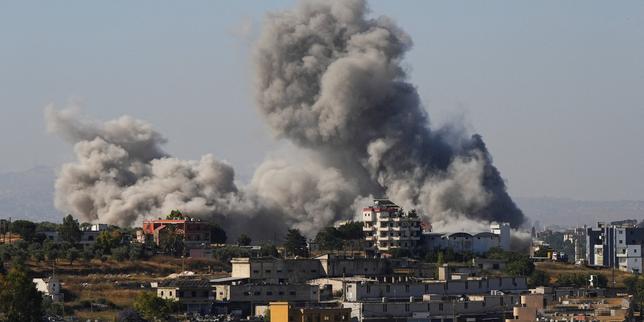
Iran’s sudden announcement on Saturday that it is re-closing the Strait of Hormuz exposes the structural rot at the heart of the newly signed U.S.-Iran interim peace deal. Tehran’s justification—unrelenting Israeli airstrikes against Hezbollah targets in southern Lebanon—reveals a fatal flaw in the diplomatic framework. While Washington claims the strategic waterway remains fully operational, Iran’s military command has explicitly ordered a halt to vessel traffic. This confrontation directly threatens global energy markets just days after a tentative breakthrough appeared to ease a grueling regional war.
The core tension rests on a fundamental disconnect between international diplomacy and ground-level combat. Iran insists that the memorandum of understanding signed earlier this week required an absolute cessation of hostilities on all fronts, explicitly including Lebanon. Yet, neither Israel nor Hezbollah are signatories to this agreement.
The Paper Agreement and the Reality of Fire
Diplomats in Washington and Tehran celebrated a milestone when the 14-point memorandum of understanding was finalized. Under those terms, the United States lifted its naval blockade on Iranian ports, and Tehran agreed to reopen the Strait of Hormuz while waiving planned transit fees. It was supposed to buy 60 days of calm to negotiate a permanent settlement, including restrictions on Iran’s nuclear program.
The calm lasted less than 48 hours.
On the ground in southern Lebanon, the fighting never truly stopped. A heavy exchange of fire killed four Israeli soldiers and dozens of Lebanese citizens, immediately putting the fragile understanding to the test. Even as mediators from Qatar and Pakistan scrambled to salvage the truce, Israeli warplanes launched fresh waves of strikes in Nabatieh and the Bekaa Valley. Prime Minister Benjamin Netanyahu made it clear that Israel intends to maintain a forward defense zone in southern Lebanon regardless of agreements struck in Washington or Switzerland.
Tehran viewed this as a direct breach of contract by proxy. The Islamic Revolutionary Guard Corps Navy immediately issued warnings to commercial vessels to steer clear of the strait, asserting that maritime security could no longer be guaranteed.
The Logistics of a Contested Chokepoint
A fifth of the world’s liquefied natural gas and oil passes through this narrow body of water. When Iran blockaded the strait earlier in the conflict, global energy markets spiked, driving up shipping insurance costs and disrupting international supply chains. The temporary reopening was supposed to be President Donald Trump's signature economic victory.
Now, confusion reigns on the water.
United States Vice President JD Vance countered the narrative from Washington, stating there is no concrete evidence that the Iranian navy is actively turning away commercial vessels. U.S. Central Command confirmed that dozens of merchant ships transited the strait on Saturday, moving millions of barrels of crude oil.
This creates a highly volatile situation where commercial captains must choose between conflicting directives. On one side, the U.S. military guarantees safe passage. On the other, the Iranian military declares the zone an active risk. Historical precedent shows that even the threat of Iranian naval intervention is enough to make commercial insurers pull coverage, effectively shutting down traffic without a single shot being fired.
The Swiss Delegation Dilemma
Despite the escalating rhetoric and the renewed closure announcement, an Iranian diplomatic delegation departed for Switzerland. The team includes high-ranking figures like parliamentary Speaker Mohammad Bagher Qalibaf and Foreign Minister Abbas Araghchi.
Their mission is not to negotiate new concessions, but to issue an ultimatum.
Iranian Foreign Ministry spokesperson Esmail Baghaei signaled that technical-level talks will remain deadlocked until the United States forces Israel to comply with a comprehensive ceasefire. If Washington cannot control its closest ally in the region, Tehran views the entire memorandum of understanding as completely jeopardized.
The Western negotiators, including Jared Kushner and Steve Witkoff, face an uphill battle. They are trying to build a long-term nuclear framework on top of a regional conflict that refuses to cool down. The assumption that Iran would tolerate the destruction of its most critical proxy, Hezbollah, in exchange for sanctions relief and asset unfreezing has proven to be a massive miscalculation.
Structural Flaws in Trilateral Diplomacy
The current crisis highlights the limits of indirect diplomacy. Washington negotiated with Tehran, assuming that regional actors would fall into line.
They did not.
Hezbollah representatives have stated they will honor a truce only if Israel completely withdraws from occupied positions in southern Lebanon. Meanwhile, the Israeli military has received zero instructions to alter its operations. For Netanyahu, eliminating the cross-border threat remains a core national security objective that takes precedence over American diplomatic timelines.
This leaves the interim agreement in a state of suspended animation. The U.S. lifted its naval blockade, giving Iran an immediate economic reprieve, but the primary leverage to keep the Strait of Hormuz open has now been spent. If the military escalation in Lebanon continues, the global economy will bear the cost of a diplomatic framework that was built on sand.
Shipping companies are already instructing vessels to prepare for alternative routes around Africa, a costly detour that adds weeks to transit times. The financial impact will ripple through energy sectors before the weekend concludes, forcing the international community to realize that a ceasefire on paper means nothing when the bombs are still falling.