When politicians vote to cut their own pay, you should usually look for the hidden trap. It’s almost always a theatrical stunt, a cheap PR trick to distract from a scandal, or a prelude to a massive quiet raise down the line.
But what just happened in Budapest isn’t your typical political theater.
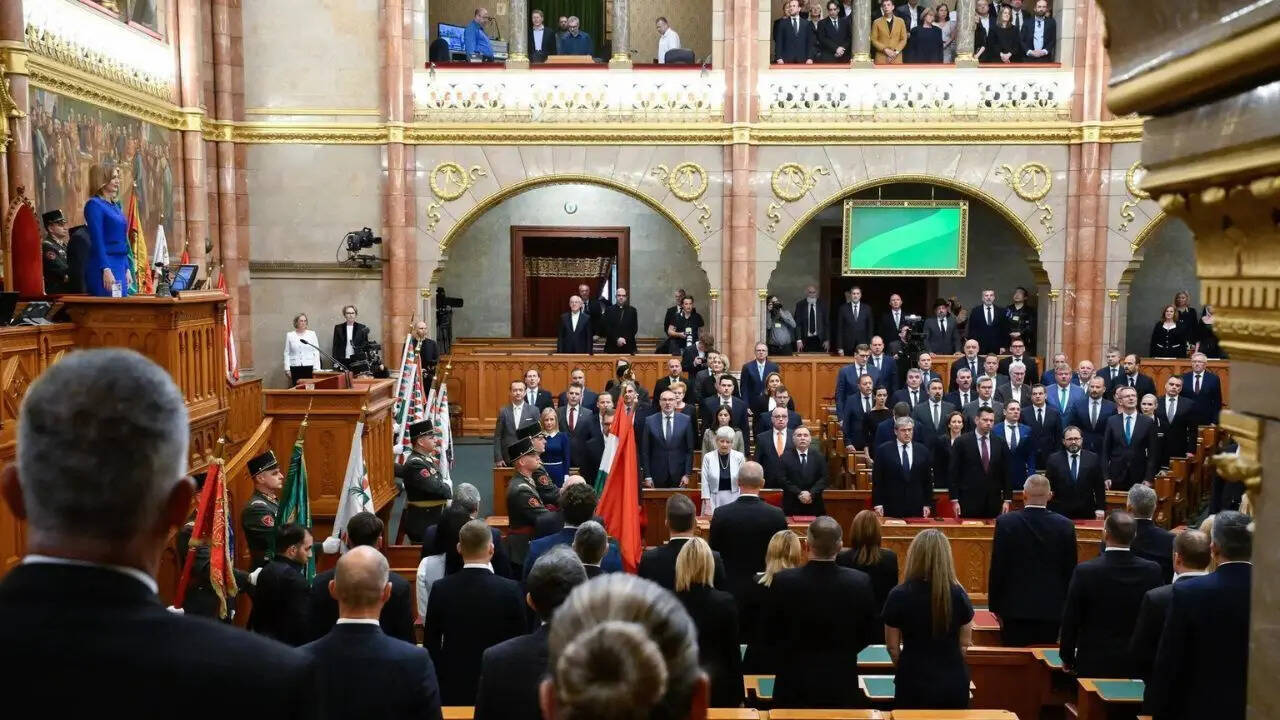
In a rare display of total legislative agreement, Hungarian lawmakers voted unanimously to slash their own base salaries by a massive 40 percent. Let that sink in. A room full of career politicians actually agreed to take home significantly less money.
The sweeping bill, pushed heavily by the newly elected Prime Minister Péter Magyar and his Tisza Party, cruised through the 199-member legislature with all 189 representatives present voting in favor. Starting next month, an MP’s gross monthly base salary drops to 3,690 euros.
It's a brutal pay cut. But if you look beneath the surface, this historic vote tells us everything about the brutal new political reality in Hungary and the heavy financial clean-up the new government is facing.
The Death of the Opposition Cushions
To understand why this bill passed without a single dissenting vote, you have to understand how the previous administration under Viktor Orbán operated. For years, critics accused the former Prime Minister of keeping opposition deputies quiet and comfortable by inflating parliamentary wages and approving bloated expense accounts. It was a golden cage. If you were an opposition lawmaker, you couldn't pass bills, but you sure could get rich.
Péter Magyar ran his recent April landslide campaign on blowing up this exact system. He called out the cozy relationship between the old ruling elite and the toothless opposition. By forcing this vote immediately after taking power, Magyar backed every single lawmaker into a corner.
Imagine trying to vote "no" on a 40 percent salary cut when your electorate is struggling with a high cost of living and a massive budget deficit. Voting against the bill would be political suicide. The opposition had no choice but to smile, nod, and vote away their own income.
But Magyar didn't just target the regular lawmakers. He took a meat cleaver to his own paycheck too.
The new Prime Minister slashed his own official gross monthly earnings to 3.8 million forints (roughly 10,600 euros). That is less than half of what Orbán was raking in, which totaled a cool 7.8 million forints a month. When the guy at the top halves his own pay, it becomes impossible for anyone else in the building to argue that they're underpaid.
Stripping the Secret Perks
If you think this bill is just about the base salary, you're missing the most painful parts of the legislation. Politicians are experts at surviving on low base salaries because they usually make up for it with insane fringe benefits. This bill systematically hunts down those perks and kills them.
Here is what the Tisza Party’s austerity package actually does to parliamentary life:
- The Gas Card Ban: Lawmakers representing Budapest are losing their state-funded fuel cards entirely. If they want to drive around the capital, they're paying at the pump like everyone else.
- No More Free Phones: The state is completely cutting off funding for mobile phone bills. Representatives will see those charges deducted directly from their newly thinned wages.
- Expense Account Ceilings: Previously, politicians could milk up to 7 million forints every month for fuel, housing, and personal staff. The new law slams a ceiling on this, dragging it well below 5 million forints.
- Faction Fund Lockdown: In the past, political factions could easily shuffle their state-allocated operating budgets directly into the main party accounts. This loophole is now officially welded shut.
This isn’t just about making politicians look humble; it's about scraping together cash. The government estimates that trimming down parliamentary costs, cutting supervisory board seats, and lowering executive pay at state-owned companies will save the state around 50 billion forints (about 139 million euros).
The Grim Financial Reality Behind the Humility
Magyar claims this move is about "restraint and humility," stating that public office is a service, not an enrichment scheme. That sounds great on a campaign poster. Honestly, though, the real driver here is a terrifying fiscal black hole.
During the recent government handover, the incoming administration discovered that the nation's financial health was in far worse shape than the public was led to believe. The previous government claimed the 2026 budget deficit would hover around 3.7 percent. Then they quietly revised it above 5 percent.
According to Magyar, outgoing officials whispered the real number during the transition: a staggering 6.8 to 7 percent deficit.
The country is broke, and Finance Minister András Kármán is currently pulling apart the national budget to find out where the money went. The new administration found a trail of massive, last-minute spending commitments signed by the outgoing government right before they lost power. We're talking about billions of forints funneled into specific foundations, cultural funds, and massive framework contracts.
When a country faces that level of fiscal distress, a government cannot ask regular citizens to tighten their belts while politicians live like kings. You can't cut public services or restructure taxes without showing that you're willing to bleed first.
The Deep Risks of Underpaying a Government
While the public is understandably cheering this move, anyone who understands governance knows that aggressive political pay cuts carry a massive, built-in risk.
When you drastically lower the official salaries of lawmakers, ministers, and state executives, you run into the talent problem. Why would a highly competent, uncorrupt expert leave a comfortable private-sector job to run a government ministry or sit in parliament for a fraction of the market rate? You risk filling the state apparatus with two types of people: wealthy oligarchs who don't need the salary anyway, or incompetent ideologues who can't get a job anywhere else.
There is also the dark cloud of corruption. A low official salary has never stopped a fundamentally greedy politician from taking a bribe. In fact, if a lawmaker is struggling to cover their own bills because their salary was chopped by nearly half, they become significantly more vulnerable to corporate lobbying, backroom deals, and outright embezzlement.
Magyar’s team is betting that their aggressive anti-corruption stance and a planned overhaul of the nation's "obsolete and deficient" asset declaration system will keep people honest. They are also moving toward a wealth tax targeting the country's ultra-rich oligarchs to balance the scales. But history shows that starving the state apparatus often feeds the black market of political influence.
What Happens Next
The bill is signed, the votes are counted, and the cuts take effect next month. If you are watching this unfold from outside Hungary, don't look at this as a local anomaly. Look at it as a blueprint for a new kind of aggressive, populist governance that we're likely going to see spread across a financially strained Europe.
If you want to see if this reform actually works or if it's just a spectacular flash in the pan, keep your eyes on these specific markers over the next six months:
- Watch the asset declarations: Check if the Hungarian parliament actually delivers on its promise to build a transparent asset-tracking mechanism that satisfies European Union funding requirements by early next year.
- Monitor the state corporate departures: Keep tabs on whether top-tier executives at Hungarian state-owned companies start resigning en masse due to their own upcoming salary caps.
- Track the deficit numbers: See if Finance Minister Kármán’s budget review can actually bring that runaway 7 percent deficit down without triggering mass public protests.
The Hungarian ruling class just took a collective 40 percent financial hit to prove a point. Now comes the hard part: running a country on a budget.