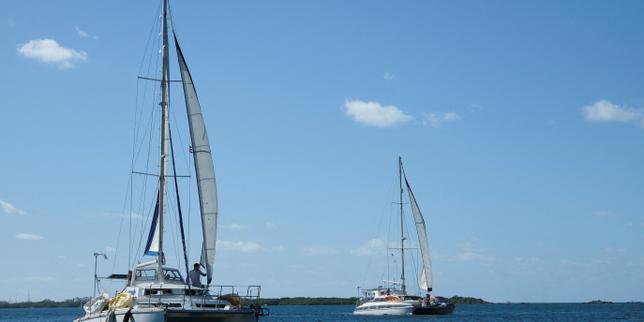
The feel-good narrative of the "humanitarian sailor" is a romanticized relic that creates more danger than it solves. We just watched the media cycle spin a frantic tale about two missing sailboats—the Serenity and the Love and Peace—purportedly lost in the Caribbean void while carrying aid to Cuba. When the U.S. Coast Guard finally confirmed they were docked safely in Havana, the collective sigh of relief from the public masked a much uglier reality: the amateurization of international logistics is a disaster waiting to happen.
The "lost at sea" trope sells papers, but it hides the systemic incompetence of recreational sailors playing at being NGOs.
The Amateur Savior Complex
Stop calling every private boat with a few boxes of aspirin a "humanitarian mission." This isn't just semantics; it’s a matter of maritime safety and international law. When a private vessel departs for a country under complex sanctions like Cuba, the margin for error is zero. Yet, we continue to celebrate the "bravery" of crews who lack the communication redundancy or the professional discipline to check in with their home ports.
The Coast Guard spent days burning taxpayer dollars searching for boats that were never actually missing. They were just silent. In the world of maritime operations, silence isn't "peaceful"—it's negligence. If you are operating a vessel in one of the most heavily patrolled and scrutinized corridors on the planet and you can't manage to ping a satellite or hit a VHF relay to say you’ve arrived, you aren't a hero. You’re a liability.
I have seen dozens of these "mercy missions" fail before they even leave the pier because the organizers prioritize the aesthetic of the voyage over the logistics of the delivery. They want the sunset photos and the "salt in the hair" credibility, but they skip the rigorous filing of float plans that would prevent an international search and rescue (SAR) incident.
The Myth of the Caribbean Dead Zone
The competitor articles love to frame the Caribbean as a mysterious Bermuda Triangle-esque expanse where boats simply vanish. This is a fairy tale. Between the Automated Mutual-Assistance Vessel Rescue (AMVER) system, ubiquitous AIS (Automatic Identification System) tracking, and the sheer density of commercial shipping, you have to try very hard to be "lost" in 2026.
The "mystery" of the Serenity and the Love and Peace wasn't a failure of technology; it was a failure of protocol.
- The AIS Gap: Many amateur sailors turn off their AIS to save power or because they have a misguided sense of "privacy." On a humanitarian run, this is bordering on criminal.
- The Paperwork Void: A real NGO handles customs, immigration, and maritime manifests weeks in advance. Amateurs often "wing it," leading to delays at the dock that their families back home interpret as a shipwreck.
- The Hubris of the Wind: Sailing is subject to the elements, yes. But a professional navigator accounts for the doldrums. If a boat is three days late, it’s usually because the captain didn't account for current or failed to maintain their engine.
We need to stop asking "Where are they?" and start asking "Why didn't they call?"
The High Cost of "Free" Aid
Let’s talk about the math of these small-scale humanitarian sailings. It is the most inefficient way to move goods ever devised.
If you take a 40-foot monohull, you might be able to carry a few hundred pounds of medical supplies and food after you account for the crew’s water, fuel, and personal gear. The cost of the diesel, the wear and tear on the sails, and the eventual SAR response when they miss a check-in far outweighs the value of the cargo.
Imagine a scenario where the money spent on those two yachts was instead funneled into bulk shipping through established Caribbean trade routes. You could move ten times the volume at a fraction of the risk. But bulk shipping isn't "soulful." It doesn't make for a good Instagram story about "sailing for a cause."
The "humanitarian" label is being used as a shield against criticism for poor seamanship. If a commercial tanker went dark for four days, the owners would be fined into oblivion. When a "humanitarian" sailboat does it, we call it a miracle when they turn up.
The Coast Guard is Not Your Personal Concierge
The U.S. Coast Guard’s District 7, based in Miami, is one of the busiest units in the world. They deal with human trafficking, massive drug interdictions, and genuine life-and-death SAR cases. Every time an amateur sailor forgets to charge their satellite phone or fails to understand the range of their radio, they pull assets away from actual emergencies.
The narrative that "the Coast Guard is searching" gives a false sense of security. It suggests that the government is a safety net for your lack of planning.
- Search Costs: A single HC-130 Hercules search flight costs roughly $15,000 per hour.
- Resource Diversion: While planes were looking for these "humanitarian" boats, they weren't patrolling for migrant vessels in genuine distress.
- The False Alarm Effect: Constant "missing" reports for boats that are actually just docked in Havana leads to "alarm fatigue" among rescue coordinators.
Rethinking the Mission
If you actually care about the people in Cuba or any other island nation, stop supporting amateur yacht missions. They are a vanity project for the affluent under the guise of charity.
A real maritime insider knows that the most effective aid is invisible. It’s palletized. It’s tracked. It arrives on a schedule. It doesn't require the Seventh District to launch a search party because the captain decided to take a nap and forgot to check in with his wife.
The fact that these boats arrived "safely" isn't a success story. It’s a warning. It’s a testament to the fact that we have more luck than sense. We are rewarding incompetence with headlines, and that is a recipe for the next tragedy.
Next time you see a headline about a "humanitarian sailboat" missing at sea, don't pray for their safety. Ask to see their manifest and their communication log. If they don't have both, they aren't on a mission; they’re on a vacation with a tax-deductible excuse.
Sell the boat. Buy a shipping container. Stay off the radio unless you’re actually sinking.


