The Comforting Lie of the Safety Valve
Every six months, a fresh crop of policy whitepapers rolls out of Washington, think tanks, and corporate boardrooms, all singing the same comforting hymn. The refrain is always identical: The true challenge of the artificial intelligence race with Beijing is ensuring that humans remain firmly in control.
It sounds responsible. It plays well on Sunday morning talk shows. It satisfies the legal departments of Fortune 500 enterprises terrified of liability.
It is also a catastrophic strategic error.
I have watched venture capital firms blow millions on redundant safety layers, governance committees, and endless compliance audits for tools that cannot even beat a basic script in production. I have watched defense contractors halt deployment pipelines because an ethics board wanted to debate whether an automated logistics optimizer possessed sufficient human oversight.
While Western institutions wrap themselves in bureaucratic security blankets, they mistake hesitation for virtue. The global technological hegemony of the next century will not belong to the nation that builds the slowest, most heavily supervised systems. It will belong to the entity that masters raw agentic velocity.
The obsession with keeping humans in control is not a protective shield. It is an anchor dragging down the Western ship while the geopolitical competitor accelerates into open water.
The Compliance Industrial Complex
Let us look at how the compliance apparatus operates in practice. When an enterprise or government agency builds an advanced neural network today, the default operational template requires multi-tiered authorization loops. Every output must pass through filters. Every autonomous decision requires a sign-off. Every vector database search carries a compliance overhead designed to mitigate reputational risk.
This creates what economists call regulatory drag, but what operators experience as institutional rigor mortis.
The argument for constant human oversight rests on a fundamental misunderstanding of how complex systems scale. Proponents argue that machine intelligence lacks moral intuition, therefore requiring a biological bottleneck to prevent catastrophe. This sounds philosophically pristine until you test it against operational reality.
Imagine a scenario where two autonomous financial or logistical networks compete for market dominance or resource allocation during a supply chain shock. One network operates on continuous feedback loops, adjusting prices, rerouting shipments, and executing decisions at nanosecond speeds. The other network pauses every transactional node to wait for a committee of human analysts to review risk metrics and sign a digital waiver.
The second network does not win moral high ground. It goes bankrupt. Or worse, in a geopolitical contest, it gets outmaneuvered before its human operators even finish reading their morning briefings.
Beijing understands this dynamic with ruthless clarity. Their national strategy does not prioritize slow-walked safety theater. While Western labs spend years debating alignment metrics and red-teaming imaginary runaway scenarios, Chinese state-backed consortia integrate neural architectures directly into manufacturing grids, power distribution networks, and automated defense logistics. They are optimizing for throughput, resilience, and speed.
Dismantling the Myth of Alignment
The entire discourse around alignment and human control suffers from a fatal category error. It treats artificial intelligence like a wild animal that needs a sturdy leash, rather than a force multiplier that alters the nature of competition itself.
Let us examine the common questions dominating public discourse.
Is human oversight required to prevent catastrophic failure?
No. In fact, human oversight is frequently the primary source of catastrophic failure in complex operations. Human operators suffer from fatigue, cognitive bias, emotional panic, and slow reaction times. When systems operate at scale, human intervention introduces jitter into the feedback loop.
Consider aviation. Modern commercial aircraft are flown by computers for ninety-nine percent of their flight duration. When pilots attempt to override automated systems during sudden atmospheric anomalies without complete data comprehension, accidents frequently compound. The safest skies are those where human intervention is restricted to high-level strategic inputs, not real-time tactical overrides.
Yet, when applied to advanced neural architectures, policymakers invert this logic. They demand that humans micromanage systems that process millions of variables simultaneously. You cannot steer a vehicle moving at Mach 5 by pulling on a mechanical handbrake every ten seconds.
The Capital and Talent Misallocation
Look at where capital flows in Western tech ecosystems today. Billions of dollars are funneled into legal compliance software, alignment research foundations, and ethics consulting firms. This is capital diverted away from raw compute acquisition, power grid expansion, and foundational architecture engineering.
We are spending our best engineering hours building guardrails for models that are already becoming obsolete, while our strategic rivals pour every available yuan into scale and infrastructure.
Talent follows capital. When top-tier mathematicians and systems engineers realize that half their working day will be spent filling out compliance documentation or arguing with risk officers about hypothetical bias metrics, they migrate to environments where they can ship code.
This brain drain out of regulated Western sectors into unencumbered or offshore ventures is happening quietly. By forcing engineers to act as compliance officers, Western institutions are actively disarming their own technical vanguard.
The Compute and Energy Reality
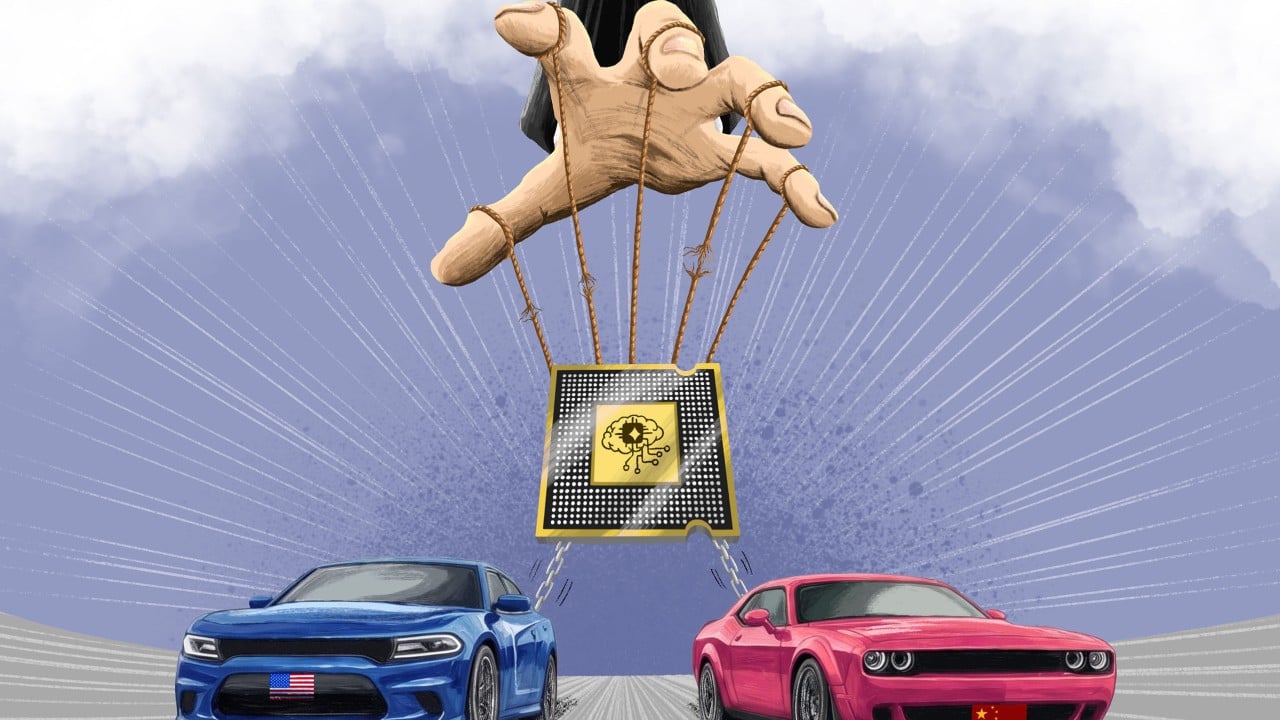
The US-China race is routinely framed as a battle of algorithms and ethics. This is a convenient fiction for academics and politicians who do not understand silicon economics.
The real fight is physical. It is measured in megawatts, square footage of cleanroom space, lithography equipment supply chains, and high-bandwidth memory yields.
When you look at energy infrastructure, the Western disadvantage becomes glaring. Power grids across North America and Europe are buckling under the weight of regulatory inertia, environmental reviews, and aging transmission lines. Building a dedicated nuclear or natural gas generation facility to power a new cluster of training servers takes a decade of legal battles.
In contrast, state-directed infrastructure expansion allows competitors to drop massive power generation plants next to server farms with minimal friction. While Western environmental groups litigate the carbon footprint of a transformer, opposing factions secure energy dominance.
If your competitor has ten times the compute density and zero regulatory friction for powering it, your ethical guidelines do not matter. You can have the most sophisticated alignment framework in human history, but you will lose to a system that simply out-computes you.
The Cost of Hesitation
Refusing to acknowledge these trade-offs carries a steep price. When Western firms are legally and culturally handcuffed by the dogma of mandatory human control, they outsource risk-taking to underground markets or watch their market share evaporate.
Admitting the downsides of abandoning human control is necessary intellectual honesty. Unsupervised agentic systems can hallucinate, drift from operational parameters, and cause localized chaos. They require rigorous automated testing, cryptographic verification, and strict architectural constraints—not because humans are holding a leash, but because bad code causes system crashes.
There is a profound difference between architectural guardrails built into code and bureaucratic bottlenecks enforced by humans.
Guardrails operate at machine speed. They check syntax, verify constraints, and execute kill-switches programmatically when anomalies exceed mathematical thresholds. Bureaucratic bottlenecks rely on meetings, memos, and human indecision.
Western institutions confuse the two because compliance departments love meetings. They love memos. They love the illusion that human presence equates to ethical security.
Stop Trying to Slow Down
The narrative that we must slow down the race to ensure human control is driven by fear of the unknown masquerading as wisdom. History shows that technological dominance belongs to those who run toward complexity, not those who retreat behind red tape.
The next phase of computational evolution will not wait for policy committees to draft ethical handbooks. Autonomous agents will negotiate contracts, optimize supply chains, manage capital flows, and execute strategic decisions faster than biological brains can parse sentences.
If you spend the next five years arguing about how to keep a human finger on every digital trigger, you will find yourself surrounded by adversaries who discarded the trigger entirely and built systems that fire at the speed of light.
Drop the safety theater. Build better architecture. Stop pretending that human hesitation is a virtue.