The Red Sea Myth Empire
Every mainstream geopolitical analyst is selling you the same comfortable lie.
They want you to believe that a group of rebel fighters in Yemen equipped with modified drones suddenly shattered the bedrock of global trade, holding Indian energy security and Saudi maritime ambitions hostage. They paint a picture of a pristine, frictionless global supply chain disrupted by an unexpected black swan. Expanding on this theme, you can find more in: The Manila Gambit and the Strategic Calculation behind the Quad Convergence.
That narrative is complete nonsense.
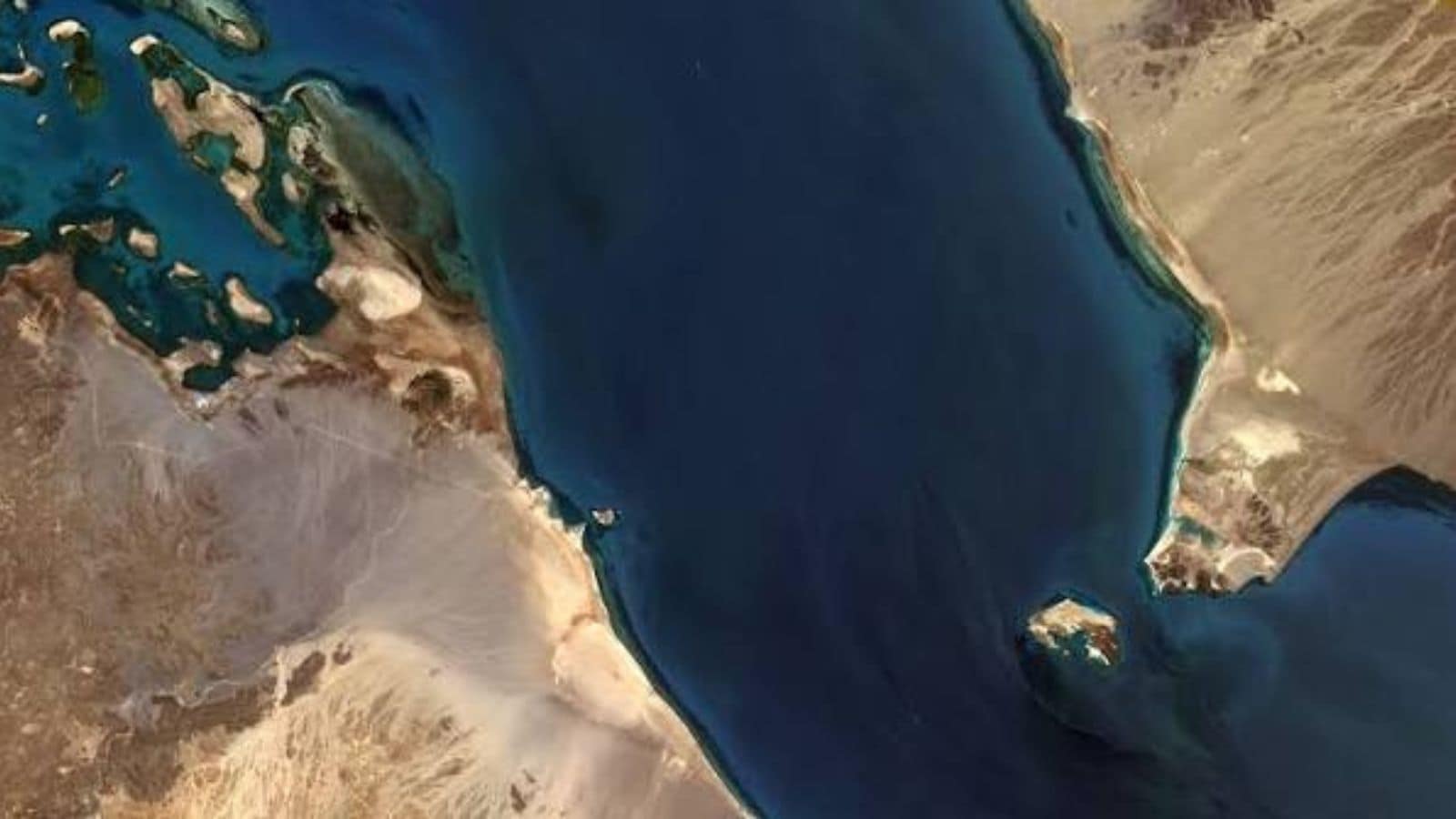
The Houthis did not destroy the stability of Red Sea trade routes. They merely exposed a decaying, hyper-leveraged maritime ecosystem that was operating on zero margin for error. The conventional commentary around the Red Sea crisis treats the Bab-el-Mandeb Strait like a sudden bottleneck, weeping over rising container rates and delayed shipments to Mumbai and Nhava Sheva. Experts at TIME have provided expertise on this trend.
What the consensus misses is simple: the panic isn't about physical blockage. It is about corporate cowardice, bad hedging, and an international trade architecture that treats extreme risk as an acceptable rounding error until the bill comes due.
India Is Not the Victim You Think It Is
Look at the standard coverage of India’s trade exposure to the Red Sea crisis. The standard take goes like this: India depends on the Suez route for over thirty percent of its trade value. The detour around the Cape of Good Hope adds fourteen days, drives up freight rates by three hundred percent, and hits Indian exporters where it hurts.
It sounds terrifying on a corporate earnings call. But look at the actual mechanics of Indian maritime flows, and the narrative falls apart.
The Great Oil Reroute Was Already Here
Mainstream analysts conveniently ignore that India’s crude oil sourcing had already undergone a radical structural shift long before the first drone targeted a commercial vessel in the Bab-el-Mandeb.
[Traditional Suez-Dependent Flow]  --> Middle East / Europe Trade Axis
[Post-2022 Structural Pivot]       --> Discounted Russian Crude via Dark Fleet / Non-Bab Routes
When Indian refiners ramped up imports of discounted Russian Urals, they altered the geographic center of gravity for the country's energy security. Russian crude originating from Baltic and Black Sea ports certainly uses water routes, but India's diversification into long-haul trade from the Atlantic basin meant that supply chain managers had already been forced to adapt to longer transit times and floating storage strategies.
- The Myth: India is panicking over crude oil availability due to Red Sea choking points.
- The Reality: The larger Indian refiners have spent two years mastering dark-fleet logistics, complex ship-to-ship transfers, and opaque insurance frameworks.
The Houthi blockade did not catch Indian energy giants unprepared; it merely accelerated a transition toward complex, non-standard shipping routes that agile operators were already profiting from. The players crying loudest are the middle-market exporters who relied on cheap, predictable Suez transit and never bothered to build dynamic risk pricing into their contracts.
The Saudi Maritime Embargo: A Masterclass in Misdirection
The commentary surrounding Saudi Arabia’s position in this crisis is equally upside-down. Analysts point to Vision 2030, the development of Red Sea giga-projects like NEOM, and Saudi Arabia's ambitions to become a global logistics hub, claiming the Houthi action has "neutered" Riyadh’s strategic goals.
Nonsense. Riyadh isn't trapped. They are playing a much longer game.
"When shipping lines pull out of a region, they don't just leave a vacuum; they leave pricing power on the table for whoever owns the land assets."
Saudi Arabia has spent the last decade building out cross-peninsular infrastructure—specifically the East-West Crude Oil Pipeline (Petroline), which can move up to seven million barrels per day from the Eastern Province directly to Yanbu on the Red Sea, completely bypassing the Strait of Hormuz and avoiding the Bab-el-Mandeb for eastbound traffic.
+------------------------------------------------------------------+
|                    SAUDI ARABIAN LAND-BRIDGE                     |
|                                                                  |
|  Eastern Fields  ===[ Petroline / Overland Rail ]===>  Yanbu Port |
|  (Persian Gulf)                                       (Red Sea)  |
+------------------------------------------------------------------+
                                                             |
                                                             v
                                                  [Bypasses Bab-el-Mandeb]
While international shipping lines are busy panicking and rerouting around Africa, Saudi Arabia is quietly demonstrating the exact value proposition of its land-bridge strategies. The crisis doesn't destroy the Saudi logistics vision; it validates the thesis that physical sea-lanes are inherently vulnerable and that overland, high-capacity bypass infrastructure is the only real hedge.
The Real Cost Breakdown: Insurance Cartels and Surcharges
Why did freight rates actually skyrocket? If you ask a legacy news outlet, they will tell you it's the physical risk of ships being hit.
I've watched logistics boards react to maritime crises for fifteen years. The physical risk of a specific vessel getting struck by a low-cost drone in a wide strait is statistically negligible for any single voyage. The real price spike isn't driven by Houthi ordinance—it is driven by London marine insurers and container line cartels using geopolitical tension as an umbrella to reset structural pricing.
The War Risk Premium Racket
- The Trigger: A single attack occurs near a transit corridor.
- The Declaration: Joint War Committee expands the "listed area" designation.
- The Extraction: Underwriters slap a War Risk Premium (often up to 1% of the total vessel hull value) on every single ship passing through, regardless of flag, ownership, or actual threat profile.
- The Markup: Carrier lines don't just pass this cost to shippers—they add their own "Peak Season Surcharges" and "Operational Interruption Fees," marking up the risk by 200% to repair their own balance sheets after years of depressed post-pandemic container rates.
The choke point isn't geography. The choke point is the insurance market’s ability to turn a regional security issue into a global tollbooth.
Stop Asking the Wrong Questions
If you are a supply chain executive or geopolitical strategist asking "When will the Red Sea return to normal?", you have already lost.
"Normal" was a historical anomaly created by three decades of undisputed Western naval dominance, ultra-cheap marine fuel, and zero-interest-rate diplomacy. That era is dead. The Bab-el-Mandeb situation is not an isolated crisis to be resolved by a naval taskforce dropping multi-million-dollar missiles on fifty-thousand-dollar launch pads; it is the permanent operational reality of modern maritime commerce.
How to Actually Operate in This Environment
If you want to survive this shift, discard the legacy playbook immediately:
- Kill the "Just-in-Time" Dogma: If your inventory model relies on transit time precision down to a three-day window through contested straits, your business model is flawed. Transition to strategic safety stocks at regional nodes.
- Bypass the Carrier Cartels: Stop buying spot-market container capacity during a crisis. Build direct charter frameworks or invest in overland rail corridors where available.
- Priced-In Regional Risk: If your contracts with Indian or Middle Eastern suppliers do not explicitly divide war-risk surcharges using clear floating indices, you are writing blank checks to European shipping lines.
The Hard Truth About Regional Security
The standard analysis ends with a call for stronger international coalition patrols, diplomatic interventions, and security guarantees.
Here is the unvarnished reality: asymmetric warfare on maritime chokepoints is ridiculously cheap, highly effective, and fundamentally unpolicable by conventional navies over long periods. Firing a two-million-dollar interceptor missile to destroy a twenty-thousand-dollar drone is an economic equation that guarantees the defender loses the war of attrition every single time.
The Houthi maritime embargo didn't destabilize world trade. It simply forced the global economy to look in the mirror and recognize that a supply chain built on the assumption of infinite, cheap, safe passage through narrow waterways was a house of cards all along.
Adapt to the friction, price in the chaos, or get swept out to sea.