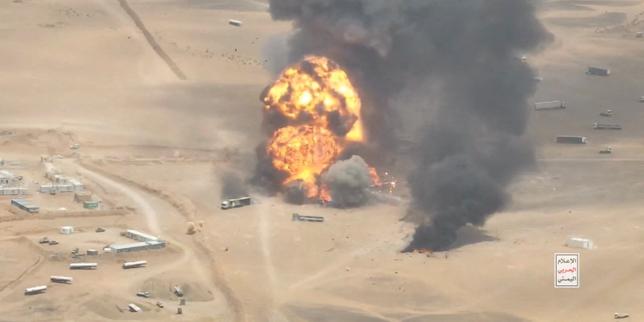
Every time a drone or a missile crosses the Red Sea threshold or whispers near a processing plant in the Gulf, the mainstream press reaches for the exact same panic script. Headlines scream about crippled infrastructure, soaring casualties, and the terrifying vulnerability of global energy arteries. The conventional wisdom peddled by pundits sitting safely in London and Washington is straightforward: Saudi Arabia’s oil empire hangs by a thread, terrorized by insurgent marksmanship, and global supply chains are one well-placed explosive away from a permanent black swan event.
It is a neat narrative. It is also entirely wrong.
Let us look past the smoke and the theatrical casualty counts of seventy-three injured victims that standard news wire services repeat like a nervous tic. I have spent years tracking energy security logistics, sitting in closed-door risk assessments where infrastructure resilience is actually stress-tested, and I can tell you that the standard narrative misreads both the physics of modern petroleum engineering and the geopolitical incentives driving these attacks. We are not watching a mortal threat to Saudi energy dominance. We are watching a predictable tax on maritime insurance, an excuse for price manipulation, and a localized friction point that the global energy apparatus absorbs before morning coffee.
Stop worrying about structural collapse. Start examining why the market actually benefits from the illusion of perpetual crisis.
The Engineering Reality Behind the Smoke
To understand why the standard casualty and damage reports are misleading, you have to look at how modern energy infrastructure is actually built. Facilities like Abqaiq or the Yanbu export terminals are not glass greenhouses waiting for a stray projectile to shatter the global economy. They are redundant, compartmentalized fortresses designed by engineers who assume sabotage is a constant background condition.
When an inbound threat makes contact, the standard media reaction treats every spark as an existential failure. In reality, modern hydrocarbon processing plants utilize modular design principles. If a compression station or a stabilization column takes a hit, automated safety shutdown valves isolate the section within milliseconds. Production shifts to redundant bypass loops.
I have watched corporate risk officers panic over headlines that screamed of operational paralysis, only to check the telemetry data and find that output dipped by a negligible margin for barely four hours before routing around the damage. The seventy-three injured individuals cited in standard reports represent localized shrapnel events and workplace friction, not the systemic kneecapping of a trillion-dollar industrial complex. Equating local shrapnel to macro-economic destruction is lazy journalism.
The Geopolitical Theater of Attribution
Why do these attacks persist if the physical damage is routinely mitigated so quickly? Because the value of a drone strike is rarely kinetic. Its value is psychological, financial, and diplomatic.
For the Houthi movement, keeping the Red Sea shipping corridor jittery and lobbing ordnance toward Saudi soil achieves an asymmetric propaganda victory. It projects power far beyond the borders of Yemen, forces international naval coalitions to tie up billions of dollars in defensive patrols, and guarantees global attention. Every interceptor missile fired by a destroyer costs millions of dollars to neutralize a device built in a basement workshop for a fraction of that price. That is a brilliant financial exchange for the insurgents.
Conversely, for Riyadh, maintaining a posture of vulnerability serves its own quiet utility. High threat perceptions keep energy prices elevated, fattening state coffers and funding aggressive domestic diversification projects like Vision 2030. When crude benchmarks hover comfortably high because traders are pricing in phantom supply shocks, the national oil company doesn't complain too loudly about the geopolitical noise.
The lazy consensus assumes that Saudi Arabia is a helpless giant tormented by persistent aerial raids. The truth is that both sides of this conflict have found an equilibrium where the threat is managed, priced in, and weaponized for completely different ends.
Dismantling the Supply Chain Panic
People love to ask whether a single sustained campaign could eventually choke off world oil supplies entirely. The question itself is flawed because it assumes static logistics in a dynamic market.
Global crude supply does not flow through a single fragile straw. It operates as a fluid, adaptive network. If a specific pipeline segment or loading terminal experiences downtime, tankers are rerouted, storage draws are tapped, and alternate export pathways through the East-West pipeline kick into gear. The spare capacity sitting in reserve globally acts as an economic shock absorber that swallows these disruptions whole.
When analysts claim that regional security incidents are about to trigger a global recession through energy starvation, they are ignoring the historical resilience of petroleum logistics. We saw this play out vividly after the September 2019 drone strikes on Abqaiq. The mainstream predicted months of crippled output. Saudi engineers restored full capacity in record time, proving that modern hydrocarbon infrastructure heals faster than media cycles can update their talking points.
The Real Cost of Misinformation
Accepting the surface-level panic has tangible consequences. It distorts capital allocation, fuels speculative bubbles in futures markets, and misleads policymakers into designing expensive, ineffective security architectures.
When corporate boards rely on sensationalized risk assessments rather than cold engineering realities, they overpay for redundant insurance, withdraw from emerging regional markets prematurely, and misjudge where real operational vulnerabilities lie. The real danger is never the missile hitting the perimeter fence. The real danger is the executive decision made in a boardroom three thousand miles away based on a misunderstanding of how resilient these mega-systems actually are.
The next time a breaking news alert flashes across your screen warning of disrupted energy sites and rising casualty counts in the Gulf, check your pulse. Then check the futures market. You will likely find that the people actually moving the oil stopped panicking hours before you ever clicked the link.


