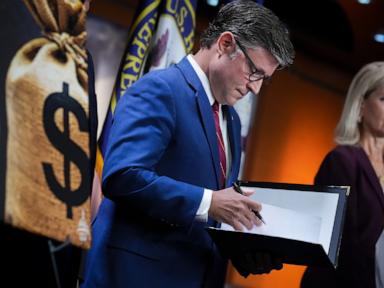
Congress just did something it hasn't managed to pull off since this whole messy conflict started back in February. By a razor-thin margin of 215 to 208, the House of Representatives passed a war powers resolution aimed at forcing President Donald Trump to halt military action against Iran.
If you're tracking the news, you might think this is just another round of political theater in Washington. After all, the resolution faces an incredibly steep hill in the Senate, and even if it somehow clears that hurdle, a presidential veto is basically guaranteed. But dismissing this vote as pure symbolism misses the tectonic shift happening beneath the surface of American foreign policy.
For the first time in this ninety-day conflict, the wall of Republican solidarity is showing serious cracks.
The Anatomy of a Rebellion
Let's look at the raw numbers because they tell the real story. House Speaker Mike Johnson did everything in his power to keep this vote from happening. Two weeks ago, right before the May recess, he abruptly shut down floor action because he knew the leadership didn't have the votes to protect the administration from an embarrassing defeat.
The strategy didn't work. The extended break didn't chill the dissent; it gave it room to breathe. When lawmakers came back to Washington, the pressure from constituents back home was too loud to ignore.
Four Republicans broke ranks to vote with a unified Democratic caucus. Representatives Thomas Massie of Kentucky, Brian Fitzpatrick of Pennsylvania, Tom Barrett of Michigan, and Warren Davidson of Ohio crossed the aisle. It's an eclectic mix of liberty-minded conservatives, populists, and moderates, all united by a sudden, intense discomfort with an undeclared war that has already drained over $100 billion from the American taxpayer.
Representative Fitzpatrick laid it out plainly after the vote. He pointed out that under the 1973 War Powers Act, the executive branch has a 60-day window to seek explicit congressional authorization for military hostilities. We're well past that deadline. You either follow the law or you change it. You can't just pretend it doesn't apply because the White House claims a shaky, unverified ceasefire means hostilities have technically stopped.
Why This Fight is Happening Right Now
The Trump administration and its fiercest defenders on Capitol Hill, like Secretary of State Marco Rubio, argue that a congressional check like this completely destroys American leverage. Rubio testified that passage of the resolution signals weakness to Tehran, convincing the Iranian leadership that the president's hands are tied and giving them zero incentive to negotiate a permanent peace deal. Speaker Johnson echoed this, reminding anyone who would listen that Iran has been actively hostile to the U.S. for nearly half a century.
But the reality on the ground paints a much messier picture.
Operation Epic Fury—the Pentagon's name for the military campaign aimed at dismantling Iran's nuclear infrastructure—began on February 28 with joint U.S. and Israeli air strikes. Three months later, the administration's stated goals look further away than ever.
Instead of backing down, Iran has used its proximity to the Strait of Hormuz to choke off global shipping networks, sending energy prices soaring and sparking serious economic fallout back home. Just hours before the House cast its historic vote, U.S. and Iranian forces were actively trading strikes in the Persian Gulf. The conflict isn't winding down; it's grinding down into an expensive, open-ended war of attrition.
The Hypocrisy of Executive War Powers
What makes this legislative showdown so fascinating is how it exposes the deep structural rot in how modern America goes to war. The Constitution gives Congress the sole power to declare war. The president, as commander-in-chief, directs the military. For decades, the White House—regardless of which party occupies it—has used that commander-in-chief title to wage massive, multi-billion-dollar military operations without ever asking Congress for permission.
Representative Gregory Meeks, the top Democrat on the House Foreign Affairs Committee who introduced the resolution, noted that the bipartisan vote is a direct reaction to being left completely in the dark. Lawmakers are tired of learning about major military operations from social media or late-night press briefings.
Even some staunch conservative allies of the president are getting twitchy. Take Senator Bill Cassidy of Louisiana. He voted to advance a similar war powers measure in the Senate last month, explicitly stating that while he supports taking a hard line on Iran's nuclear ambitions, the administration's absolute refusal to provide clarity or an exit strategy means an open-ended authorization is completely unjustified.
What Happens Next on Capitol Hill
If you're waiting for American troops to pack up and leave the region tomorrow, don't hold your breath. This resolution is heading straight to the Senate, where Democrats are still fighting a grueling battle to get a final vote scheduled. While four GOP senators crossed party lines last month to help advance a procedural version of the bill, the Republican leadership in the upper chamber still holds the keys to the schedule.
Even if the Senate surprises everyone and passes it, the White House has already made its position clear: it won't matter. They're prepared to use the veto pen, and neither chamber has the two-thirds majority required to override a presidential veto.
But don't call this a waste of time. The true value of Wednesday's vote isn't the immediate policy change—it's the political leverage. Every time a vote like this happens, the tally inches higher. The political cost of sustaining an unauthorized war goes up.
If you want to understand where American foreign policy is going, stop looking at the press releases coming out of the Pentagon and start watching the internal fractures within the Republican party. The era of writing blank checks for executive wars is facing its toughest challenge in years, and the white-knuckle vote on the House floor proved that the status quo is becoming unsustainable.
Keep a close eye on the upcoming Senate floor debates and the defense authorization amendments next week. That's where the real budget teeth will be attached to this symbolic rebellion.


