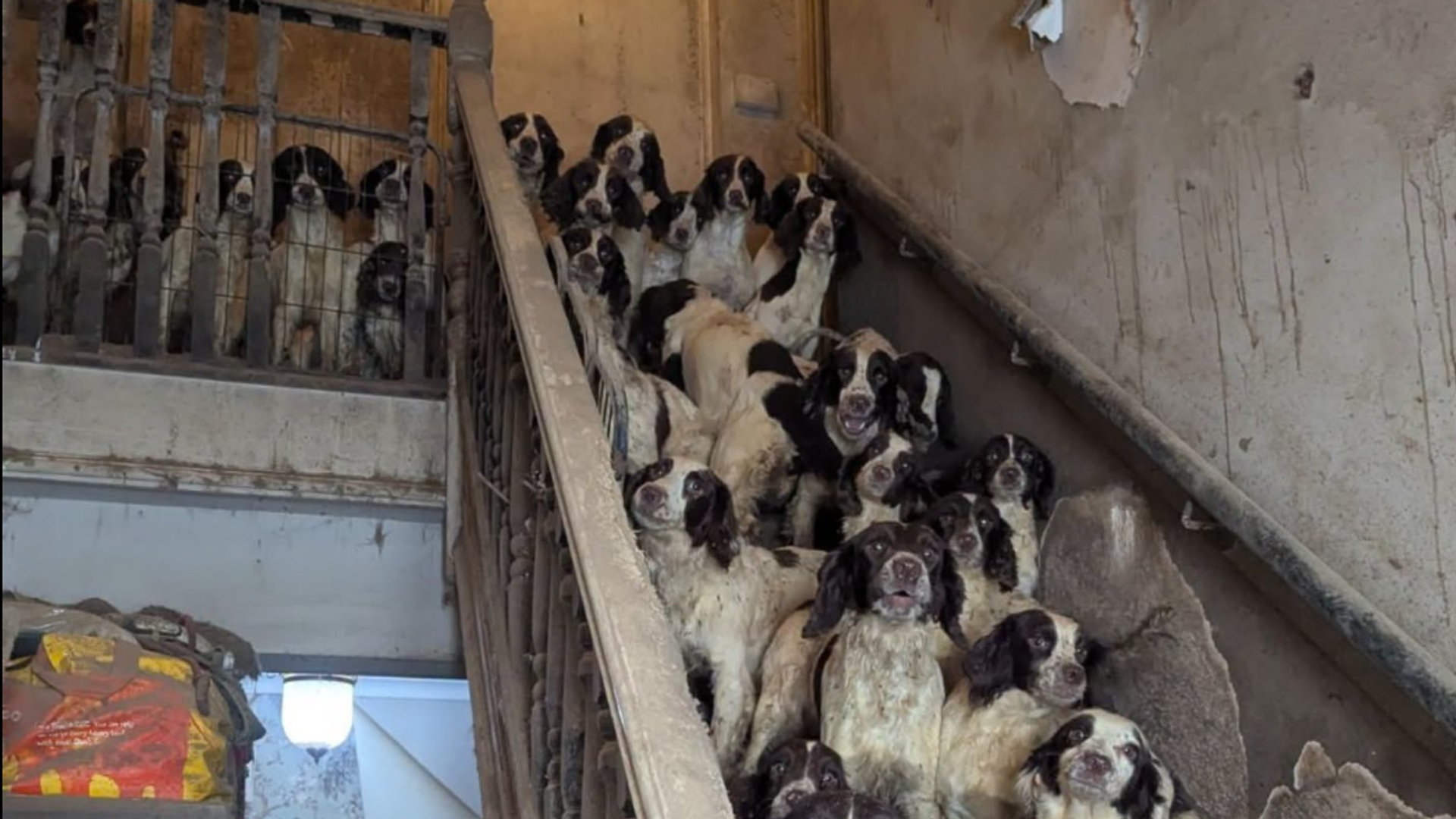
The air hits you before anything else. It is a dense, suffocating weight that clings to the back of your throat, thick with the chemical burn of ammonia and the heavy, sweet rot of decay. It smells like a secret kept too long. It smells like a failure so total it defies comprehension.
When animal rescue officers finally crossed the threshold of that suburban home, they did not just step into a crime scene. They stepped into an alternate reality. If you enjoyed this post, you might want to check out: this related article.
Eighty-four dogs. Let that number settle in the mind for a moment. Eighty-four distinct beating hearts, eighty-four sets of pleading eyes, eighty-four distinct souls crammed into a space meant for a single family. They were not running through fields or chasing tennis balls. They were wading. The floors were buried under layers of faeces and urine, a suffocating crust that had built up over months, perhaps years, sealing the doors shut against the outside world.
It is easy to point a finger at the man who stood in the center of that filth. It is easy to label him a monster, to lock the cell door, throw away the key, and wash our hands of the collective horror. Courts recently did just that, finding him guilty of gross animal neglect. Justice, in the sterile language of the courtroom, was served. For another look on this story, refer to the latest update from The Washington Post.
Yet, locking up the villain does not fix the machine that manufactured him.
To understand how a human being descends into a nightmare of hoarding eighty-four living creatures, we have to look past the tabloid headlines. We have to examine the dark, quiet architecture of isolation.
Consider a hypothetical neighbor living three doors down, someone who remembers when the man first moved in. He had a dog. Just one. A small, anxious terrier mix that barked at the mailman. Back then, the house looked normal. The lawn was mowed. The trash bins went out on Tuesday nights.
Somewhere along the line, the gears slipped.
Psychologists call it animal hoarding, but that clinical phrase sanitized the human tragedy underneath. It usually starts with an excess of empathy, warped and twisted by trauma or profound loneliness. One rescue animal follows another. A stray found shivering in the rain. A surrender from a shelter facing euthanasia. Each rescue feels like a moral victory, a small shield against an uncaring world. But the walls close in. The math stops working. Feed bills mount, space shrinks, and the shame begins.
Shame is a terrible architect. It builds walls higher than any concrete fortress.
As the conditions in the house deteriorated into what investigators bluntly termed "filthy and squalid," the man stopped inviting people over. He stopped opening the mail. He watched through the blinds as the world moved on without him, trapped in a self-made purgatory of fur, feces, and silent desperation. He was drowning in plain sight, and nobody reached out a hand because the stench kept everyone far away.
The dogs themselves lived in a state of suspended animation. Many had never felt the cool caress of grass beneath their paws or the warmth of direct sunlight. Their world was defined by four walls, the overwhelming odor of their own waste, and the desperate scramble for the next scrap of food. Some cowered in corners, their eyes wide with a permanent, trembling terror. Others fought with the dull, instinctual desperation of animals pushed to the absolute edge of survival.
When the raid happened, the rescue workers wore full hazmat gear. Respirators strapped tight. Gloves doubled over. They moved through the gloom like astronauts landing on a dead planet.
And yet, amidst the horror, something astonishing happened.
As the first cages were opened, the dogs did not snarl. They did not attack. In a testament to the staggering, unearned grace of the canine spirit, many of them crawled forward on trembling legs to lean against the rubber boots of the strangers in spacesuits. They wanted touch. They wanted a voice that did not shout. Even after a lifetime of neglect, their capacity for forgiveness was infinite, a silent rebuke to the cruelty that had caged them.
The legal system deals in verdicts. It tallies charges of neglect, counts the violations, and hands down sentences. That is its job. But the legal system cannot heal the psychological fractures that allow such horror to incubate in our neighborhoods.
We live in a culture that isolates the vulnerable. We pride ourselves on privacy, on keeping to ourselves, on not meddling in our neighbors' business. We value the right to be left alone so fiercely that we often leave people entirely alone to fall off the edge of the earth.
The house on that quiet street has since been emptied. Industrial cleaners have scrubbed the floors down to the bare wood, tearing out the drywall, trying to exorcise the ghost of eighty-four lives gone wrong. The air is clear now.
But the question remains, hanging in the empty space where the cages once sat.
How many other houses on how many other quiet streets are hiding the exact same silence, waiting for the floorboards to give way?


