A hospital ward completely shuts down. Patients get turned away at the door. Staff members are sent home in a panic, scrubbing their skin until it turns raw. This isn't a scene from a Hollywood contagion movie. It's what happens when a single case of crusted scabies slips through admission screening and sits in a medical ward for weeks.
When news breaks that a hospital ward closed after a highly contagious crusted scabies outbreak, the public reaction is usually a mix of disgust and confusion. People think of scabies as a minor nuisance, something school children get. They picture a bit of itching between the fingers. They don't understand how a modern medical facility with millions of dollars in infection control protocols can be brought to its knees by a tiny mite.
The truth is simple. Hospitals are built to fight bacteria and viruses, but they are surprisingly terrible at spotting parasitic infestations until it's far too late.
The Terrifying Reality of the Crusted Variant
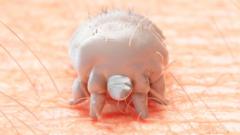
Standard scabies is annoying. A person infested with regular scabies usually harbors about 10 to 15 microscopic Sarcoptes scabiei mites on their entire body. It causes intense itching, mostly because of an allergic reaction to the mite's waste products. It spreads through prolonged, direct skin-to-skin contact. You usually won't catch it just by shaking hands or brushing past someone in a hallway.
Crusted scabies changes all the rules.
Formerly known as Norwegian scabies, this variant occurs in individuals with compromised immune systems, elderly patients, or those with neurological conditions that prevent them from scratching. Because their body doesn't fight off the mites or scratch them away, the population explodes.
A single patient with crusted scabies can harbor up to several million mites at one time.
Think about that scale. We're moving from a dozen bugs to literal millions crawling under thick, hyperkeratotic crusts of skin. Because the mite load is so astronomical, the transmission dynamics completely shift. The skin becomes flaky, brittle, and constantly sheds. Every single skin flake that drops onto a bedsheet, a hospital gown, a privacy curtain, or the floor is packed with live, hungry mites.
At this stage, the infestation becomes highly airborne through dust and debris. You don't need prolonged skin contact anymore. A nurse simply changing the bed linen of an undiagnosed patient can inhale or catch thousands of mites in seconds. A doctor using a stethoscope can pass them to the next five patients down the hall.
Why Medical Professionals Miss the Signs
You might wonder how doctors fail to notice millions of mites on a patient. They miss it because crusted scabies looks almost identical to severe psoriasis, crusted eczema, or Darier's disease.
The classic, intense itch of standard scabies is often completely absent in crusted scabies. The patient's immune system isn't reacting normally, so they don't complain of the desperate nighttime itching that usually tips off a clinician. Instead, they present with thick, grey, yellow, or brown crusts over their hands, feet, scalp, and elbows.
A busy attending physician looks at an elderly, bedridden patient with thick, scaly skin and writes a prescription for a topical steroid cream.
This is the exact moment the trap snaps shut.
Applying topical steroids to crusted scabies is like throwing gasoline on a fire. The steroid suppresses the local immune response even further. The mites throw a party. They multiply at an even faster rate while the crusts get thicker, hiding the true nature of the infestation beneath layers of dead skin.
By the time someone finally decides to scrape the skin and look at it under a microscope, weeks have passed. The patient has been rolled, lifted, bathed, and examined by dozens of healthcare workers. They've been wheeled to radiology. They've shared a room with vulnerable patients who have open wounds or surgical incisions.
The ward is already fully infested.
The Massive Fallout of a Ward Closure
When the lab finally confirms the presence of millions of mites, the hospital administration goes into absolute crisis mode. Closing a ward isn't as simple as turning off the lights and locking the door. It's a logistical nightmare that costs healthcare systems hundreds of thousands of dollars per day.
First, you have the immediate containment. No new patients can enter. Current patients cannot be discharged to nursing homes or other facilities because you risk spreading the infestation to the wider community. They must be isolated right where they are.
Then comes the contact tracing. Hospital epidemiologists have to track down every single person who stepped foot in that ward over the past month. That means reviewing shift logs for nurses, doctors, physical therapists, janitorial staff, food service workers, and laundry handlers. It also means contacting every single family member who came to visit a patient.
Everyone exposed needs treatment, regardless of whether they are itching.
The financial strain is immense. You lose the revenue of those hospital beds. Staff members must be placed on paid medical leave while they undergo treatment, leaving the rest of the hospital critically short-staffed. The cost of mass-prescribing anti-parasitic medications to hundreds of people adds up instantly.
The Broken Playbook of Hospital Cleaning
Most hospital disinfection protocols are designed to kill invisible pathogens like MRSA, C. diff, or norovirus. Environmental services teams use powerful ultraviolet light robots and chemical bleach wipes that strip the walls bare.
The problem? Mites don't care about bleach. They are animals, not bacteria.
Standard hospital disinfectant wipes do absolutely nothing to an arachnid crawling inside a physical flake of skin. If a skin flake lands on top of a privacy curtain or gets wedged into the wheels of a rolling tray, a quick wipe with a chemical cloth won't kill the mites.
To clear crusted scabies from an environment, you have to completely change how you clean. Mites can survive away from human skin for up to several days, especially in humid, cool environments. Every fabric surface must be treated as a biohazard.
How to Actually Control the Outbreak
Stopping a crusted scabies outbreak requires a scorched-earth policy. Half-measures fail every single time, leading to re-infestation cycles that can drag on for months. If a facility wants to reopen its doors, it must execute a strict, multi-phase containment strategy.
Aggressive Dual-Action Treatment
You cannot treat crusted scabies with a single application of cream. The thick crusts protect the mites from topical treatments, meaning the medication can't reach the deepest layers where the females are laying eggs.
- Oral Ivermectin: Patients must receive multiple doses of oral ivermectin, usually given on specific days (like days 1, 2, 8, 9, and 15) depending on the severity. This attacks the mites systematically from the inside out.
- Topical Permethrin 5%: The entire body, from the hairline down to the soles of the feet, must be coated in permethrin cream. Because the crusts block the cream, medical staff must use keratolytic creams (like salicylic acid or urea cream) beforehand to break down and dissolve the thick plaques.
- Mass Prophylaxis: Every single staff member, roommate, and close contact must be treated simultaneously with topical permethrin, even if they show zero symptoms. Scabies has an incubation period of up to six weeks. If you wait for people to start itching before treating them, you'll never catch up to the spread.
Environmental Decontamination
The physical ward itself requires a deep manual clean that targets the physical removal of skin flakes rather than just chemical sanitization.
- Vacuuming with HEPA Filters: Every inch of flooring, upholstered furniture, and baseboard must be vacuumed thoroughly using heavy-duty HEPA filter machines. The vacuum bags must be sealed and discarded immediately in outdoor dumpsters.
- Thermal Laundering: All bed linens, pillows, gowns, and privacy curtains must be removed with minimal shaking. Shaking sheets tosses mite-filled skin flakes into the air. Everything must be bagged immediately in water-soluble bags and laundered in hot water (at least 60°C or 140°F) and dried on a high-heat cycle for at least 20 minutes.
- Sealing Unwashable Items: Items that can't be washed, like blood pressure cuffs, plastic clipboards, or specialized monitoring equipment, must be sealed in airtight plastic bags and stored away from human contact for a minimum of seven days. Starved of human warmth and blood, the mites will naturally die off.
Moving Past the Stigma
The biggest barrier to stopping these outbreaks early is the intense social stigma attached to the word "scabies." People associate it with poor hygiene, poverty, or living in squalor. When a patient presents with skin issues, healthcare workers are often hesitant to even consider scabies as a diagnosis because they assume their patient is "too clean" to have it.
Mites don't care about your socioeconomic status. They don't care how many times a day you shower. They want a human host, and an immunocompromised body in a clean hospital bed is just as attractive to them as any other environment.
Until hospitals implement routine skin scrapings for any patient presenting with unexplained, widespread scaling or crusting—especially those coming from nursing homes or other long-term care facilities—wards will continue to close. Early suspicion is the only weapon that works. If you wait for the breakout to tell you it's there, you've already lost the battle.