Hollywood has a massive problem with neurodiversity. For decades, films featuring autistic characters have forced audiences into one of two boxes. You either get the tragic, helpless victim who needs constant rescuing, or you get the sainted, hyper-intelligent savant who can calculate prime numbers in their sleep but can't hold a conversation. Both options are exhausting. Both options strip away the messy reality of actually living on the spectrum.
Lauren Meyering’s indie dramedy Horsegirls completely rejects that lazy binary. The story follows Margarita, a 22-year-old woman with autism living in Portland. She has a hyper-fixation on horses, refuses to wear "hard pants" like jeans, and struggles deeply with ambient noise. She also lands a job at a costume shop, negotiates her own independence, and acts as a primary emotional pillar for her single mother, Sandy, who is dealing with Stage IV breast cancer.
The film could have easily spiraled into cheap melodrama or quirky, pretentious indie bait. Instead, it hits theaters as one of the most grounded, authentic, and emotionally raw family dramas in years. It does this by understanding that an autistic adult is a whole human being, not a plot device.
The Power of Actual Representation
We need to talk about casting because it makes or breaks a project like this. When neurotypical actors play autistic characters, the performance often degenerates into a collection of rehearsed tics and exaggerated mannerisms. It feels like an exercise in mimicry rather than acting.
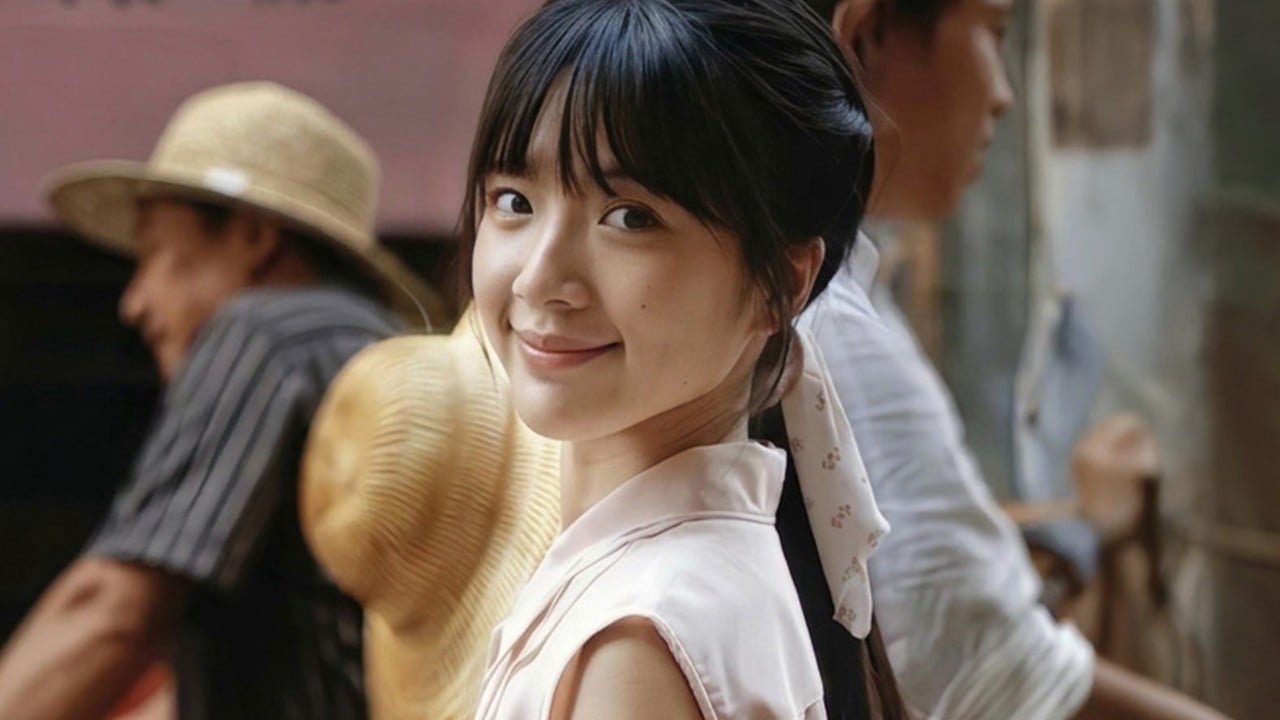
Horsegirls avoids this completely by casting Lillian Carrier, an actress who is actually on the autism spectrum, to play Margarita.
Carrier’s screen presence is a revelation. She infuses Margarita with a fierce, stubborn independence that contrasts beautifully with her natural social vulnerabilities. She plays Margarita with zero desire to be pitied. When she explains the backstory of her name to strangers—she was named after what her parents drank the night she was conceived—it isn't played just for a cheap laugh. It shows her total directness, a trait that makes her both incredibly endearing and occasionally difficult for the people around her to manage.
Carrier’s lived experience brings a quiet precision to the character's sensory issues. Watching her cover her ears when a room full of teammates starts cheering wildly doesn't feel like a director's cue. It feels like a genuine response to an overwhelming world. That kind of specificity cannot be faked, and it elevates the film far above typical studio tearjerkers.
Taking Hobbyhorsing Seriously
The narrative engine of the movie revolves around an obscure European phenomenon: competitive hobbyhorsing. Originating in Finland, this sport involves athletes executing complex equestrian routines—jumping, galloping, and dressage—while riding a decorated stick horse.
On paper, this sounds ridiculous. It looks like something ripe for mockery, and the film openly acknowledges that most people would look at a gym full of teenagers riding broomsticks and laugh. Margarita herself actually cuts the head off a stuffed animal horse named Cheeseburger and attaches it to a broom handle to join the squad.
But Horsegirls refuses to treat the sport as a joke.
Under the direction of Coach, played with a fantastic "tough love" energy by Jerod Haynes, hobbyhorsing becomes a legitimate athletic and artistic outlet. It requires immense physical stamina, rhythm, and choreographic precision. For Margarita, who tried traditional equine therapy as a child but hated the rigid rules, hobbyhorsing offers pure freedom. She just wanted to gallop, and on a stick horse, she can.
The sport provides a structured environment where her hyper-fixation becomes an asset rather than a social barrier. She doesn't just fit into the team; her deep understanding of horse movement helps her choreograph routines that push the younger girls toward a sectional championship. It gives her a community where her differences are absorbed into the collective effort of the team.
A Realistic Look at the Fear of Leaving a Child Behind
While the hobbyhorsing provides the structure of a classic sports underdog movie, the emotional weight sits entirely with Gretchen Mol, who plays Margarita’s mother, Sandy. Mol delivers a devastatingly raw performance as a single parent facing a terminal diagnosis while trying to figure out if her daughter can survive without her.
The tension between Sandy and Margarita drives the entire second act. Sandy isn't an idealized, infinitely patient saint. She gets frustrated. She snaps. She pushes Margarita into a job at a local Halloween store run by Hank (Iqbal Theba) because she desperately needs to see her daughter build a safety net.
Sandy’s central anxiety is something every parent of an atypical child faces: What happens when I am gone?
The film handles this beautifully by showing that Margarita is far more capable than her mother gives her credit for. Yes, Margarita is deceptive sometimes; she sneaks out of her retail job early to make dance practice. But she also functions well in the workplace, connecting naturally with customers and building a great working relationship with her coworker Felix (Matthew Schwab). The movie suggests that the world isn't entirely an adversarial place; if you look closely, it is filled with regular people willing to offer a bit of grace.
Skip the Big Studio Tearjerkers and Catch This Indie Instead
Horsegirls is not a flashy movie. It doesn't use a widescreen format, and it avoids high-concept cinematic tricks. It succeeds entirely on the strength of its writing, its performances, and its stubborn refusal to compromise on its authenticity. It manages to be sweet without becoming sickeningly sentimental, a balance that very few filmmakers ever achieve.
If you are tired of Hollywood treating disability like a marketing gimmick or a tragic burden, find a theater showing this film. Look up your local independent cinema schedules, check for limited release times, and go support a project that actually gets representation right. It will change how you view coming-of-age stories completely.