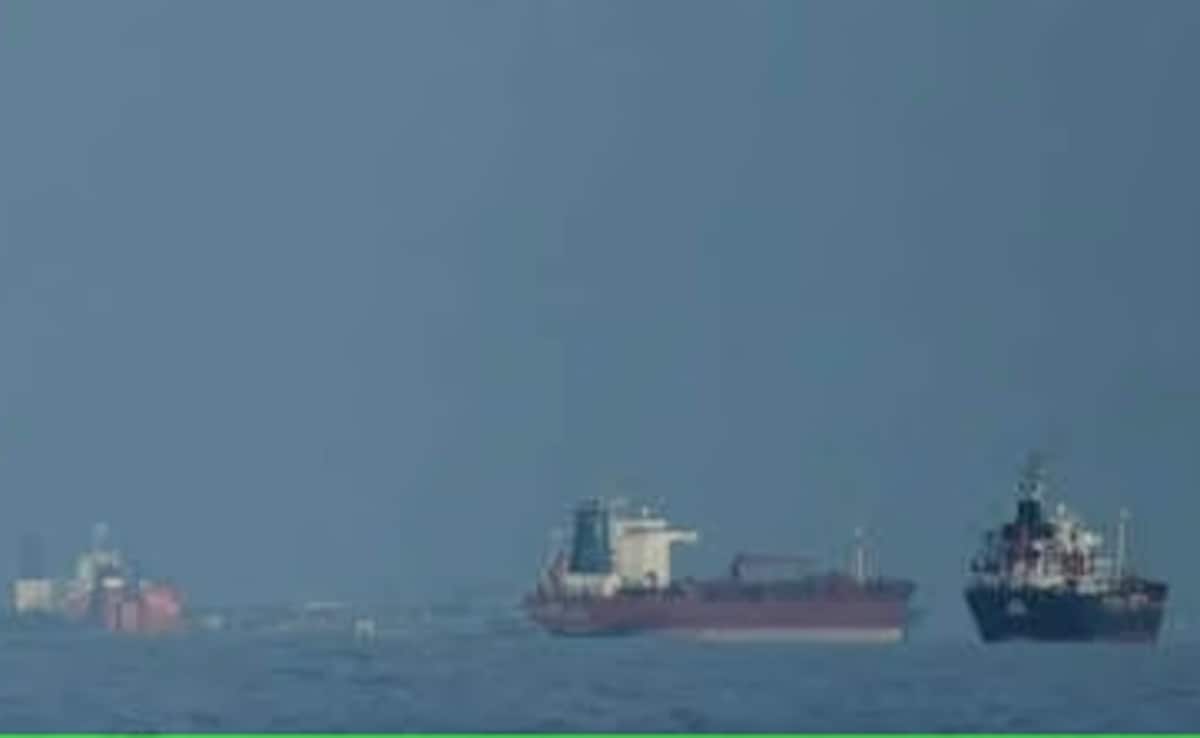
The media is obsessed with a recording. We’ve all heard the crackle of the radio, the stern Iranian commands, and the frantic insistence from an Indian-flagged tanker that they "gave clearance." It makes for great drama. It paints a picture of a David versus Goliath struggle in the Strait of Hormuz where maritime law is the shield and the radio is the sword.
It is also largely irrelevant.
The fixation on "who said what" in the minutes leading up to a seizure or a firing incident misses the brutal reality of modern naval chicken. In the shipping industry, we spend millions on security protocols, AIS (Automatic Identification System) encryption, and legal counsel. Yet, when the footage or audio leaks, the public reverts to a courtroom drama mindset. They think the "truth" is buried in the transcript.
It isn't. The audio isn't evidence of a legal misunderstanding; it is a weapon of psychological warfare designed to be leaked.
The Myth of Maritime Consent
The competitor reports focus on the tanker’s plea: "You gave clearance." This implies that the incident was a mistake—a tragic slip of communication between a sovereign navy and a commercial vessel.
That is a fantasy.
At the mouth of the Persian Gulf, nobody "mistakes" a tanker's position. The Strait of Hormuz is one of the most monitored patches of water on the planet. Between land-based radar, satellite surveillance, and the sheer density of naval assets from the US Fifth Fleet to regional players, everyone knows exactly where every hull is sitting.
When a naval force engages a tanker, they aren't looking for a "reason" in the legal sense. They are establishing a footprint. If you are sitting in a boardroom in London or Singapore, you look at these audio leaks and see a breach of protocol. If you are on the bridge of that ship, you realize the protocol died the moment the first fast-attack craft appeared on the horizon.
Consent in these waters is not a verbal agreement over a VHF radio. It is a shifting calculation of kinetic risk. The tanker captain’s insistence on "clearance" was a desperate attempt to appeal to a rules-based order that had already been suspended for that specific 20-minute window.
Sovereignty is a Liquid Asset
We talk about "Indian-flagged" or "British-flagged" as if the fabric of the flag provides a physical barrier. In reality, the flag is a tax and regulatory preference, not a tactical defense system.
The industry likes to pretend that the Law of the Sea (UNCLOS) governs these interactions. While UNCLOS provides a wonderful framework for peacetime commerce, it is functionally useless the moment a regional power decides to use "environmental concerns" or "navigation errors" as a pretext for a boarding party.
I have seen shipping firms lose millions because they trusted the "paper trail" of their route. They believed that because they were in international waters, or because they had received initial radio contact, they were safe. They ignored the geopolitical temperature.
The Cost of the Wrong Question
Most analysts are asking: Did the tanker violate Iranian waters?
The real question is: Why did the intercept happen on a Tuesday when fifty other tankers passed through the same corridor on Monday?
The audio leak provides a convenient distraction. It lets the public debate the "he-said, she-said" of the encounter while ignoring the strategic signaling. The firing wasn't about that tanker. It was about the insurance premiums for every other tanker in the fleet. It was about the "War Risk" surcharges that spike the moment that audio hits the news cycle.
Audio as Asymmetric Tech
Let's talk about the tech of the leak itself.
In a high-intensity naval environment, communication is usually encrypted or handled via satellite. The fact that we have high-quality VHF audio available for public consumption should tell you everything you need to know. VHF is an open broadcast. It is the town crier of the sea.
When a naval force engages in these theatrics, they want the recording to exist. They want the hesitation in the captain's voice to be heard in the offices of maritime insurers.
- The Stutter: It signals a lack of clear command and control.
- The Repetition: It shows the futility of legalistic appeals.
- The Static: It adds a layer of "boots-on-the-ground" authenticity that raw data lacks.
This is "Proof of Presence" marketing for a military force. By releasing or allowing the release of these clips, the aggressor isn't trying to win a legal case in The Hague. They are trying to win a psychological case in the global markets. They are proving that they can disrupt the "Great Energy Highway" at will, regardless of what "clearance" was supposedly given.
The Data Gap
The "lazy consensus" argues that better communication technology will prevent these incidents. They want more transparent AIS, better ship-to-shore links, and perhaps AI-mediated bridge translations to avoid "misunderstandings."
This is nonsense. You cannot "optimize" away a geopolitical confrontation.
If a state actor wants to seize a ship, they will find a reason. If the radio works perfectly, they will cite a "mechanical failure" that poses a risk to their coastline. If the AIS is clear, they will claim the ship was involved in a "hit and run" with a local fishing vessel three days prior.
The audio is the garnish. The meal is the projection of power.
Why the Shipping Industry is Failing the Bridge
We have spent decades training captains to be administrators. They are experts at fuel efficiency, ballast management, and port paperwork. We have not trained them for the reality of being a pawn in a regional cold war.
When that captain shouted into the radio, he was reciting a script he believed still mattered. He was a man holding a library card in a gunfight.
The industry's refusal to acknowledge this gap is the real scandal. We send these crews into high-risk chokepoints with nothing but a radio and a prayer, then we act shocked when the "rules" don't protect them.
The contrarian truth? The more "clear" the communication, the more likely the incident was a staged escalation. Silence is usually a sign that things are going according to plan. High-decibel radio drama is a sign that someone wants a headline.
The Strategy of Discomfort
If you are a stakeholder in maritime logistics, stop listening to the tapes. Start looking at the local naval exercises, the domestic political pressures of the littoral states, and the movement of the "shadow fleet."
The audio of the Indian-flagged tanker isn't a smoking gun. It’s a smoke screen.
It keeps us arguing about the legality of a "clearance" that never existed in the minds of those who pulled the trigger. It keeps us focused on the micro-interaction of two vessels while the macro-stability of the global energy supply is being systematically picked apart.
Next time you see a headline about a "shocking radio leak" from the Persian Gulf, remember that you are hearing exactly what you were meant to hear. You aren't an observer; you're the target audience.
Stop looking for the truth in the static. The static is the point.
The ship didn't have clearance because clearance is an illusion granted by those with the biggest guns, and they reserved the right to revoke it before the captain even picked up the handset.